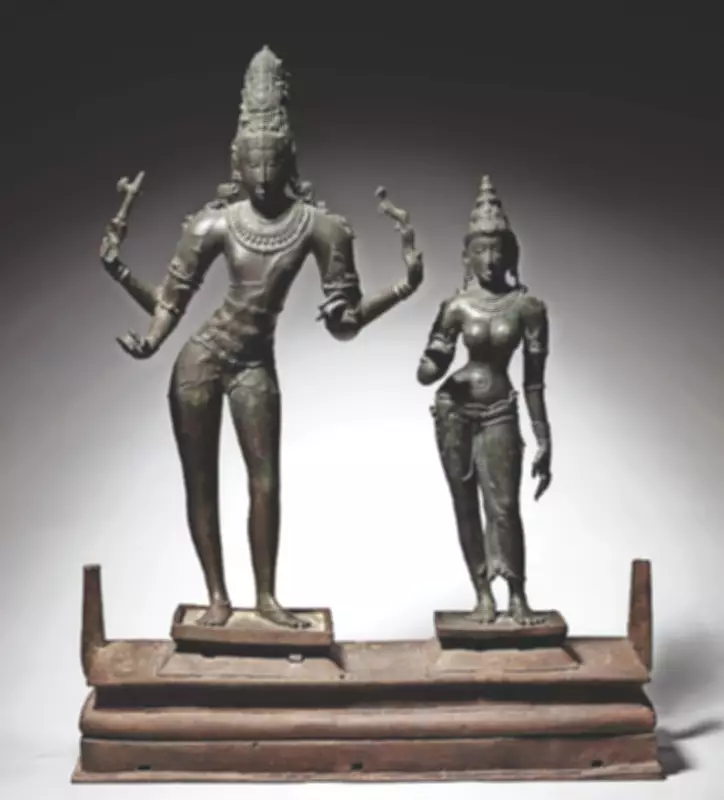
Smithsonian's Landmark Decision on Temple Bronzes Closes One Injustice, Opens New Chapter
The Smithsonian’s National Museum of Asian Art has taken a decisive step by restituting bronzes from the Alattur and Veeracholapuram temples in Tamil Nadu, effectively closing a long-running chapter of historical injustice. However, this action has simultaneously opened another critical phase in the global fight for cultural heritage recovery. By acting on robust archival evidence and formally acknowledging the unlawful removal of these sacred artifacts, the Smithsonian has established a clear and workable standard that now places significant responsibility on other institutions worldwide.
Archival Evidence and Provenance: A New Benchmark for Restitution
The bronzes returned by the Smithsonian were meticulously documented in situ by the Institut Français de Pondichéry (IFP) during the 1950s. These photographs capture the idols inside living temples in Tamil Nadu, decades before they illicitly surfaced on the international art market. The visual records provide undeniable provenance, linking named idols to specific temples where they were actively worshipped. By accepting this evidence, the Smithsonian has validated what heritage researchers have long asserted: these bronzes never ceased to belong to their original temples. This conclusion must not be applied selectively; it extends equally to all other bronzes taken from the same shrines, now dispersed across museum collections and auction catalogues globally.
Once a temple is recognized as having been looted, every surviving icon from that shrine inherently carries the same legitimate claim for return. The implications are profound, demanding coordinated and sustained action from Indian authorities. The idol wing of the Tamil Nadu police should consolidate all IFP archival matches, dealer pathways, and accession timelines into comprehensive dossiers for each 'murthi' from Alattur and Veeracholapuram. This effort must include reopening or expanding criminal investigations to trace the illicit networks involved.

Systematic Looting and Market Pathways: A Historical Overview
The Alattur temple cluster in Tiruvarur district was systematically stripped of its bronzes in the mid-20th century. Photographed by the IFP on June 15, 1959, these artifacts did not vanish into obscurity; instead, they entered the Western art market through a small cadre of repeat dealers and were absorbed into major institutions. For instance, a Vishnu with Sridevi and Bhudevi entered the Los Angeles County Museum of Art in 1970, while a Standing Vishnu was acquired by the Metropolitan Museum of Art in 1962. Similarly, Yoganarasimha and Ganesha from the same cluster found their way into the Nelson-Atkins Museum of Art in 1963 and 1962, respectively—all years after their documented presence in active worship.
What connects many of these acquisitions is the art market itself. Multiple Alattur bronzes passed through the hands of William H. Wolff, a New York dealer whose name recurs across U.S. museum collections of South Indian sculpture. Wolff’s invoices and sales records reveal a steady pipeline of temple bronzes entering American institutions during a period when such removals faced little to no challenge. The Veeracholapuram case is even more direct, with bronzes from the Nareeswara Sivan Temple, including Somaskanda, Nataraja, and Vinadhara Shiva, photographed in situ by the IFP on September 1, 1956. Despite this, a Somaskanda from the temple entered the Cleveland Museum of Art in 1961, and decades later, a Nataraja and Vinadhara Shiva from the same shrine appeared at Christie’s for sale in March 2013.
Call for Coordinated Action: Legal, Diplomatic, and Cultural Measures
With the Smithsonian having returned figures of Sundarar and Paravai from Veeracholapuram, the reality of looting is no longer contested. Yet, it remains unexplained why other institutions continue to retain or market bronzes from shrines whose violation has been acknowledged. The evidence does not vary from object to object; only the willingness to act does. No further delay is defensible, as museums and auction houses can no longer plausibly cite uncertainty. The IFP archives existed long before these acquisitions, accession dates are known, and dealer pathways are well-documented.

The Smithsonian has demonstrated that this evidence is sufficient to justify restitution, making further delay attributable not to caution but to reluctance. Institutions holding Alattur and Veeracholapuram bronzes must now act without postponement. Auction houses must withdraw objects linked to these temples from sale, and museums need to initiate restitution processes. Every additional year of inaction compounds an injustice that has already been proven beyond doubt.
Transparency, legal preparedness, and diplomatic firmness must move in tandem. The Ministry of External Affairs (MEA) should escalate these cases by issuing diplomatic demarches to museums and U.S. authorities, seeking time-bound provenance reviews and restitution commitments. Simultaneously, the Union Ministry of Culture (MoC), in collaboration with the Archaeological Survey of India (ASI) and temple authorities, should publicly notify these claims, publish verified temple-to-museum object lists, and request voluntary returns before initiating civil recovery proceedings where necessary.
Conclusion: A Test of Institutional Integrity and Global Accountability
The Smithsonian precedent has effectively lowered the evidentiary threshold for restitution, setting a new standard that India must now press consistently across all institutions. The goal is clear: identify, acknowledge, and return every stolen 'murthi' from these temple clusters. The Smithsonian chapter is closed, and the evidence is settled. What remains is a critical test of institutional integrity for museums and auction houses worldwide. The time for action is now, as the pursuit of justice for Tamil Nadu's cultural heritage demands unwavering commitment and global cooperation.