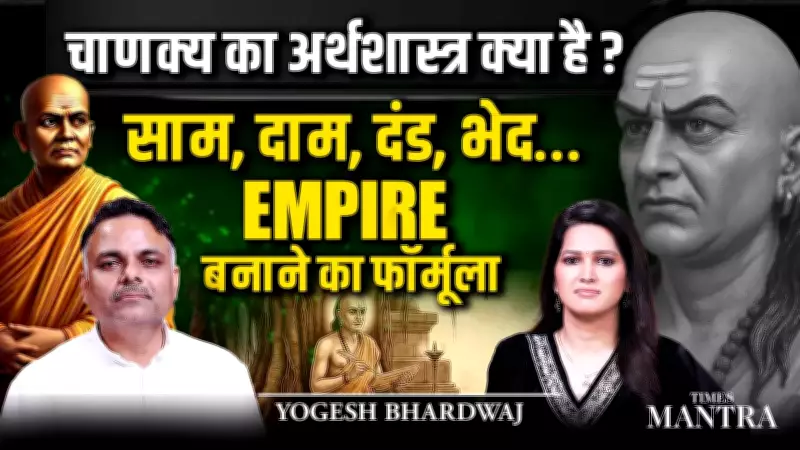
Chanakya's Arthashastra: The Enduring Blueprint for Power and Governance
Chanakya's Arthashastra stands as one of the most formidable and influential political and economic treatises from ancient India. This comprehensive work delves into the intricate mechanics of governance, offering a masterclass in statecraft that has captivated scholars and leaders for centuries. Its teachings encompass a wide array of strategic domains, including diplomacy, warfare, taxation, and the art of ruling, providing a holistic framework for building and sustaining empires.
The Core Doctrine: Sam, Daam, Dand, Bhed
At the heart of Arthashastra lies the famous fourfold strategy known as Sam, Daam, Dand, Bhed. This principle is often hailed as the ultimate power framework for empire building, offering a nuanced approach to leadership and control.
- Sam (Persuasion): This involves using conciliation and diplomacy to win over allies and subjects through peaceful means.
- Daam (Reward): The strategy of offering incentives and rewards to motivate loyalty and cooperation.
- Dand (Punishment): Employing force or punitive measures to maintain order and discipline when necessary.
- Bhed (Division): The tactic of creating divisions among enemies or within opposing groups to weaken them.
Together, these elements form a dynamic and adaptable system for managing power, emphasizing that effective leadership requires a balance of soft and hard tactics.

Modern Relevance: Insights from Yogesh Bhardwaj
In a recent enlightening discussion, Yogesh Bhardwaj, an expert on ancient Indian texts, breaks down the deeper meanings embedded within Arthashastra. He explains how these age-old strategies continue to exert a significant influence on contemporary leadership, politics, and business dynamics.
Bhardwaj highlights that the principles of Arthashastra are not merely historical artifacts but living concepts that resonate in today's complex world. For instance, the emphasis on strategic diplomacy and economic management in the treatise parallels modern corporate governance and international relations. The nuanced understanding of human behavior and power dynamics offered by Chanakya provides valuable lessons for leaders navigating the challenges of the 21st century.
"Arthashastra teaches us that empire building is as much about wisdom and foresight as it is about strength," Bhardwaj notes. "Its teachings encourage a proactive and calculated approach to leadership, where every decision is informed by a deep understanding of strategy and ethics."
Legacy and Impact
The enduring legacy of Arthashastra is evident in its continued study and application across various fields. From political theorists analyzing statecraft to business leaders crafting competitive strategies, the treatise offers timeless insights. Its holistic view of governance, which integrates economic policies with military and diplomatic strategies, serves as a model for comprehensive planning and execution.
Moreover, Arthashastra's focus on ethical governance and the welfare of the state underscores the importance of responsible leadership. It reminds us that true power lies not just in control but in the ability to foster prosperity and stability for all subjects.
As we reflect on Chanakya's wisdom, it becomes clear that Arthashastra is more than a historical document; it is a vital guide for anyone seeking to understand the art of empire building and effective governance in any era.