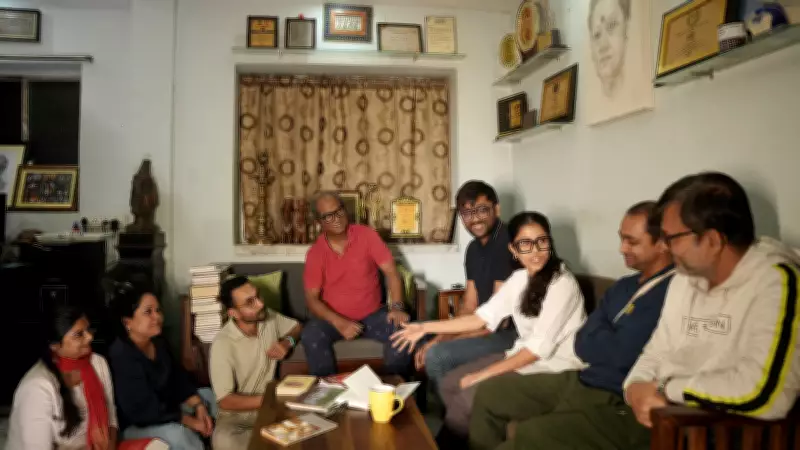
Chandan Sen: A Lifetime of Theatre as Resistance and Reflection
For over three decades, Chandan Sen has stood as both torchbearer and trailblazer in Bengali theatre – an accomplished actor, visionary director, and the indefatigable driving force behind the renowned Ashokenagar Natyanan. From humble alternative stages to prestigious international collaborations, his work consistently urges audiences to think deeply and question boldly.
Theatre as a Record of Its Era
A lifelong student who describes himself as more a friend to his students than a traditional mentor, Sen views theatre not as mere comfort but as a powerful mirror to society, a persistent challenge to complacency, and a vital space of artistic resistance. As Ashokenagar Natyanan celebrates its 35th anniversary and Calcutta Times marks 25 years, we engage in an exclusive conversation about his remarkable journey shaped by art, inquiry, and profound influence.
Evolution of a Theatre Philosophy
How has Ashokenagar Natyanan's philosophy evolved over 35 years?

"We aim to tell stories of our time," Sen explains thoughtfully. "Theatre serves as a living record of its era: it reveals how people think, love, and perceive death across different historical periods. That essential human experience is what we continuously seek to capture and present."
He elaborates on their distinctive approach: "We practice what we call spordhito theatre. Many critics claim the word isn't 'proper' or conventional, but it perfectly reflects ordinary people questioning imposed systems and structures. When rulers and authorities assume they won't be questioned, theatre must look them directly in the eye and ask difficult questions. That fundamental principle is what we've pursued consistently for 35 years."
Passing the Torch to New Generations
How do you pass this philosophy to new generations of theatre practitioners?
"Newcomers don't always agree with our approach initially," Sen acknowledges. "Each brings their own unique social, philosophical, and political perspectives. Over time, through immersion and dialogue, most come to understand that our theatre is not merely a political tool, but rather an authentic reflection of the demands and voices of its specific historical moment."
He emphasizes their inclusive methodology: "However, if someone genuinely objects to our core ideology and chooses not to participate, we respect that decision completely. We've never faced significant backlash for this open approach, but we do ask them to explain their reasons logically and thoughtfully."
Sen recalls a memorable observation from his mentor: "Utpal da used to say profoundly, 'Three bearded men – Shakespeare, O'Neill, and Rabindranath Tagore, have fundamentally disrupted our creative lives. Whenever you think you've created something truly grand and original, you'll inevitably discover one of them has already explored similar territory before you.'"
The Current Generation's Awareness
How socio-politically aware is the current generation of theatre enthusiasts?
"They're often more interested in social media engagement than in reading books," Sen observes candidly. "We don't force traditional learning methods, but we actively encourage reading and substantive discussion within our creative community."
He details their educational approach: "We also foster rigorous debate within the group to nurture not just free thinking, but disciplined critical thinking. The biggest cultural challenge today is the widespread lack of critical inquiry. People must courageously question why things are the way they are in society. This essential space for questioning has been historically suppressed, and something we consciously aim to nurture in new generations of artists and audiences."
Audience Reception to Experimentation
Are contemporary audiences still open to theatrical experimentation?
"Abroad, I've witnessed remarkably wide-ranging experimentation in theatre," Sen notes from his international experience. "Here in Bengal, much creative work remains rooted in Tagore's monumental legacy. In our specific region, even during Girish Ghosh's pioneering time, theatre powerfully moved audiences across different spaces and explored angik (physical expression) in genuinely creative ways."

He offers a crucial distinction: "Yet modern Bengali theatre has rarely pushed physical and conceptual experimentation to its absolute limits. We consciously emphasize substantive content over pure experimentation, unlike visual arts or literature, where formal experimentation has become widespread and celebrated."
Forever a Student, Never a Master
Rejecting the conventional idea of being a traditional "master," Sen insists he remains, above all, a perpetual student of theatre and life. "I can only share practical experience, not abstract wisdom," he humbly states, urging his students not to accept his words blindly but to "read independently, check sources thoroughly, discuss passionately, and then decide thoughtfully what to accept."
For him, diverse exposure remains absolutely essential – "watch plays voraciously, attend seminars regularly, experience cinema broadly" – because without this rich immersion, artistic learning inevitably remains limited and provincial.
Greatest Artistic Influences
Sen acknowledges several towering figures who have shaped his artistic vision:
- Utpal Dutt – The revolutionary playwright and actor
- Ramaprasad Banik – The innovative director
- Indrashis Lahiri – The contemporary theatre maker
- Mohit Chattopadhyay – The experimental dramatist
- Badal Sircar – The pioneer of Third Theatre
Through thirty-five years of dedicated work, Chandan Sen has established Ashokenagar Natyanan as more than just a theatre group – it stands as a living testament to theatre's power to question, reflect, and transform society through artistic integrity and intellectual courage.