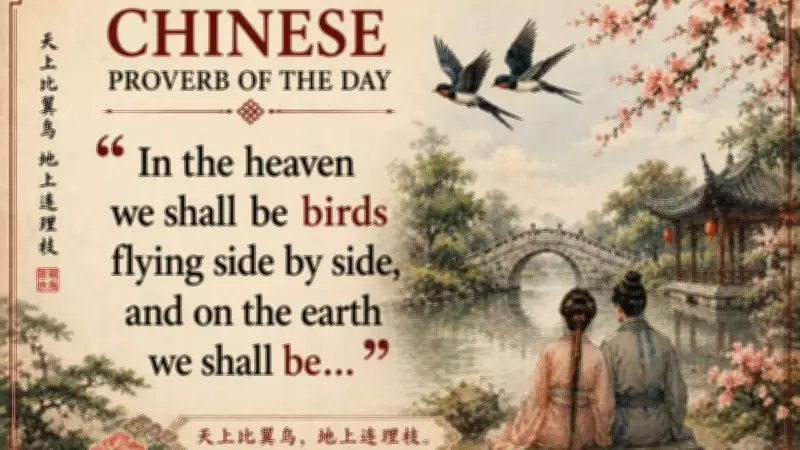
Most cultures have sayings about love. Some are practical, some humorous, and some sound like advice from grandparents who have seen everything. Then there are expressions like this one: "In the heaven we shall be birds flying side by side, and on the earth we shall be twinned trunks flowering sprigs on the same branch."
A Poetic Vision of Love
This does not read like a typical proverb. It feels more like poetry—a line from an old love letter, written by candlelight and discovered decades later. Even those unfamiliar with its history can grasp the emotion behind it. The imagery does the work: two birds sharing the sky, two trees so intertwined that their branches seem to belong to one another. It is a vision of companionship that transcends ordinary affection, emphasizing togetherness wherever life leads.
Love's Search for Symbols
Humans often find ordinary language insufficient for love. We compare it to oceans, stars, mountains, gardens, and endless skies. This proverb follows that tradition. Instead of explaining devotion, it paints a picture that lingers in the mind: birds gliding through an open sky, trees growing side by side through storms and seasons. The scene is peaceful, perhaps intentionally so.

More Than Romance
At first glance, the saying seems romantic. Yet it describes a broader partnership—not the dramatic kind from films, but a quiet companionship that endures time. Long-lasting relationships often evolve this way: excitement gives way to familiarity, shared experiences outweigh grand gestures, and lives intertwine through ordinary moments—breakfast conversations, difficult years, inside jokes.
The Beauty of Growing Together
The image of twinned trunks is striking because trees grow slowly. Change is gradual, almost invisible. Relationships are similar. Strong bonds emerge through patience, compromise, trust, and shared experience. People often cannot pinpoint when a relationship became deeply rooted; it simply happened, season after season, until two separate lives became connected in unexpected ways.
Why Birds Appear in Love Stories
Birds symbolize freedom, loyalty, migration, and partnership across cultures. The image of two birds flying side by side is particularly moving. Flight suggests movement, change, distance, and uncertainty—yet they remain together. This symbolism feels modern: life pulls people in different directions, yet true partnership endures. The birds are not still; they travel together.
Love Is Not Ownership
This proverb differs from traditional romance by emphasizing balance. The birds fly beside each other, not one behind the other. The trees grow together but remain distinct trunks. There is closeness without loss of identity. Healthy relationships involve connection without control: two individuals share a life while remaining themselves. Strong couples support and challenge each other, growing alongside one another.
Why Old Expressions Survive
Thousands of sayings fade, but this one endured. Its vivid imagery is hard to forget, and the desire for lasting connection remains constant across generations. Technology and fashion change, but the hope of sharing life with someone persists. The proverb touches that hope directly.
The Quiet Wisdom Behind the Words
The saying focuses not on passion but on continuity. Love is not a single feeling; it grows, endures, and adapts. The birds continue their journey, the trees continue to bloom, and the relationship continues alongside. This message is both simple and profound.
What this ancient Chinese saying reveals about lasting companionship: It is a poetic vision of a relationship built on shared experience, loyalty, and growth—not possession or perfection. It celebrates two lives moving in the same direction while remaining distinct. Centuries later, that image remains beautiful, reminding us that while the world changes, the human desire to walk through life with someone endures.