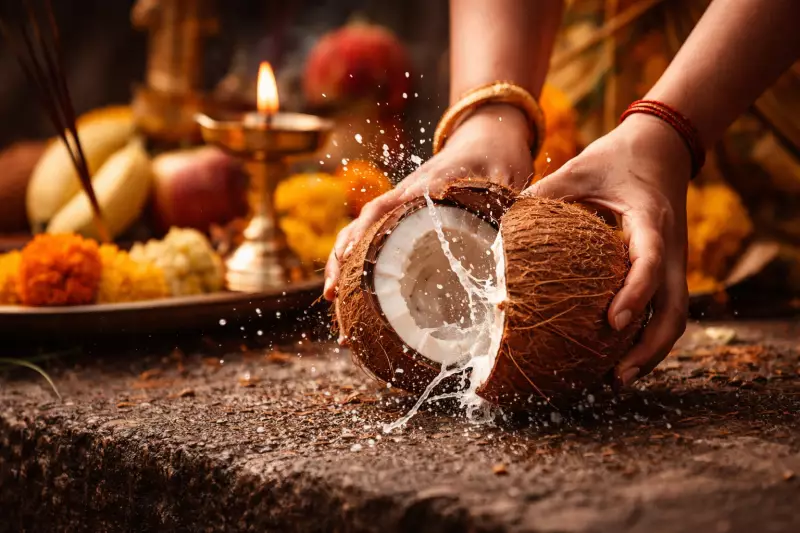
The Crack That Signals New Beginnings
In India, a distinct sound marks the start of something important. The sharp crack of a coconut hitting the ground announces new beginnings. People perform this ritual before moving into a new home, opening a business, getting married, or even buying a vehicle. Many do it automatically without questioning why. Yet this common practice carries profound meaning that connects symbolism, psychology, and ancient spiritual wisdom.
A Tradition Deeper Than Habit
Breaking a coconut for auspicious starts has deep roots in Hindu tradition. These rituals serve more than ceremonial purposes. They help align the mind with intention, humility, and surrender. The coconut, called shriphala or "God's fruit," represents one of the purest offerings available. Unlike flowers that fade quickly or sweets that spoil, coconuts remain intact for long periods. This durability symbolizes the stability and wholeness people desire when starting new ventures.
Historically, coconuts served practical purposes too. In coastal regions, they were easily available, nutritious, and valuable. Over centuries, their symbolic importance grew stronger than their material usefulness.

Breaking the Ego's Shell
The ritual centers on a powerful metaphor about ego destruction. A coconut has a hard outer shell hiding a pure white interior. Spiritually, this shell represents ahamkara - the ego, pride, and self-importance that cloud human judgment. When someone breaks the coconut, they symbolically surrender their ego before beginning something new.
This act becomes a quiet declaration: "I don't rely solely on my own strength. I submit my efforts to something greater." In a culture viewing arrogance as the root of downfall, this gesture provides a spiritual reset.
Purity, Sacrifice, and Clear Intentions
Coconut water remains naturally pure until the shell breaks. This untouched purity explains why temples accept whole coconuts rather than cut fruits. When the water spills onto the ground, it symbolizes offering one's inner purity, intentions, prayers, and hopes without expecting anything in return.
Breaking a coconut involves deliberate sacrifice too. Something whole gets destroyed intentionally, reminding participants that creation often requires letting go. Indian philosophy teaches that no beginning feels complete without a conscious act of giving.
Removing Obstacles From the Path
Traditionally, this ritual invokes divine blessings for obstacle removal. Hindu belief holds that every new beginning carries unseen challenges. The practice doesn't aim to avoid effort but seeks clarity and protection from unnecessary hindrances. This explains why people break coconuts before exams, court cases, long journeys, or business deals.
The act serves as a psychological anchor, calming minds, reducing anxiety, and building confidence that one doesn't travel alone.
The Psychology Behind the Practice
Beyond spirituality, psychological dimensions explain why this ritual endures. Rituals provide structure during uncertain moments. The physical act of breaking a coconut marks a clear transition from intention to action. It helps minds recognize that something important is starting and demands full presence.
The loud crack, decisive motion, and following pause signal the brain that this moment matters. In that brief stillness, people feel the weight of their upcoming step. This fleeting mindfulness aligns thought with action, grounding individuals before their journey begins. Modern psychology might call it a grounding practice; ancient tradition simply called it shubharambh - an auspicious beginning.
Why Coconuts and Not Other Items?
Coconuts differ from fragile offerings because they require force to break. This requirement is intentional. It reminds us that meaningful beginnings demand effort. The act isn't passive or ornamental. It needs commitment, presence, and clear intention.
Furthermore, every coconut part proves useful: shell, fiber, water, and flesh. This completeness mirrors the ideal approach to life's beginnings - practical, balanced, and respectful of resources.

Beyond Religious Boundaries
Interestingly, coconut-breaking has moved beyond strictly religious spaces. You'll see it at construction sites, film launches, political inaugurations, and corporate events. For many participants, it's less about religious doctrine and more about seeking favor. This cultural instinct roots itself in collective belief that beginnings carry weight and deserve reverence with goodwill.
In our fast-moving world obsessed with outcomes, this small ritual asks us to pause briefly. To bow our heads. To acknowledge uncertainty. And to begin not with arrogance but with humility. That's why, in India, breaking a coconut isn't destruction. It's an opening to new possibilities.