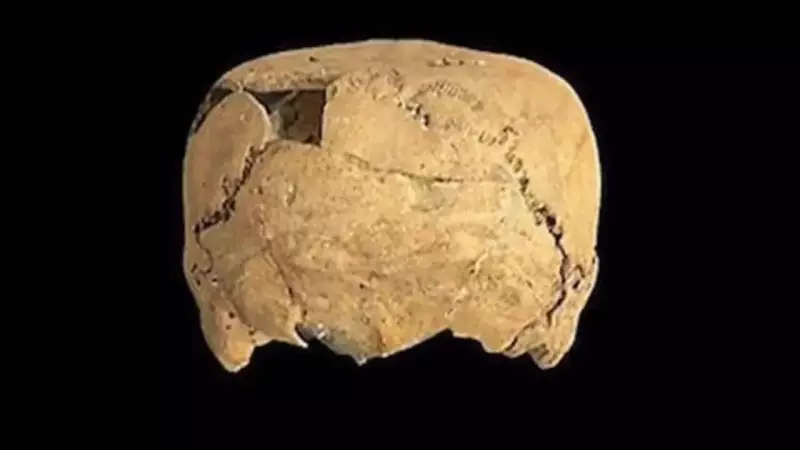
Archaeology, the thrilling science of unearthing the past, has once again delivered a stunning discovery. In the rugged terrain of Mexico's Sierra Madre Oriental, researchers have uncovered a human skull with a startlingly geometric shape—a near-perfect cube. This 1,000-year-old relic is rewriting our understanding of ancient body modification practices in the region.
The Discovery of the Geometric Skull
According to a press release from Mexico's prestigious National Institute of Anthropology and History (INAH), the skull belonged to a man who died around the age of 40. He lived during the Mesoamerican Classic period, between 400 and 900 AD. The skull's most striking feature is its intentional, artificial reshaping into a cube-like form, a practice anthropologists call "intentional cranial deformation."
This modification was not an accident of nature. It was a deliberate cultural act performed in infancy. As explained by the researchers, boards and tight bandages were wrapped around the soft, developing skull of a child to gradually mold its shape over time. "Not only was intentional cranial deformation identified for the first time for this type of site, but also a variant [was found] with respect to the models recognised in Mesoamerica not reported until now in the area," stated anthropologist Jesus Ernesto Velasco Gonzalez.

A Unique Shape in Mesoamerican Tradition
While cranial deformation was common across many ancient Mesoamerican societies, this particular find is exceptional. Typically, modified skulls from the Balcón de Montezuma site are described as "erect" or "alien-like." The more common shapes found elsewhere in Mesoamerica are elongated or conical.
This skull, however, is uniquely cube-shaped or "parallelepiped"—closer to a parallelogram than a sphere. Anthropologist Velasco Gonzalez detailed that this shape was achieved by applying a specific "compression plane" to the baby's head during the modification process. The purpose of such dramatic reshaping was deeply social and spiritual. It served to alter the individual's appearance permanently, likely to signify elevated social class and to better emphasize elaborate headdresses and ornaments that set the person apart in life.
Cultural Ties and Historical Significance
The discovery of this cube-shaped skull is more than a curious anomaly; it is a potential key to understanding ancient cultural connections. Flat-topped skull modifications have been previously associated with Maya civilization, where they were part of "ritual ensoulment" believed to grant lifelong protection.
Researchers now speculate that this find may support theories of historical links between the ancient peoples of the northern Huasteca mountain region and other groups. These connections could stretch to the Mesoamerican Lowlands on the Gulf Coast, communities in northern Mexico, and even populations in what is now the southern United States.
Analysis of the skull's bones and teeth confirmed the man lived his entire life in the area of present-day Tamaulipas, Mexico, a region historically inhabited by tribes like the Olmec, Chichimec, and Huastec. Scientists believe this peculiar cubic form was likely a common and specific marker within his own cultural group, though the full meaning and tribal affiliation behind the practice remain a mystery waiting to be solved by future discoveries.