Maharani Kamasundari Devi, Last Queen of Darbhanga Raj, Passes Away at 96
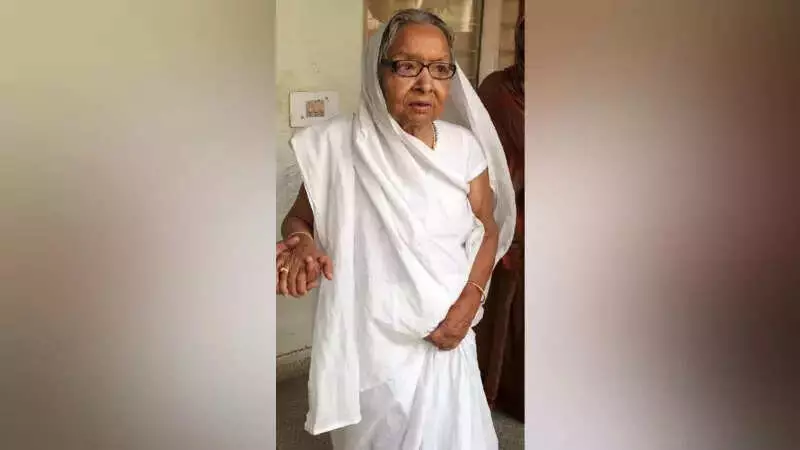
Maharani Kamasundari Devi, the third and only surviving queen of Maharaj Kameshwar Singh, died on Monday. She was 96 years old. The Maharani passed away at her residence, Kalyani Niwas, in Darbhanga. She had been unwell for several months before her death.
Her passing marks the end of an era closely linked to one of India's most illustrious royal lineages. The last rites took place at the Shyama Mai Temple complex within the royal estate. The Darbhanga royal family followed its long-standing tradition for the ceremony.
Political Leaders Offer Condolences
Senior political leaders expressed their condolences after the Maharani's death. JD(U) national working president Sanjay Jha offered his sympathies. BJP state president Sanjay Saraogi also shared his condolences. Social welfare minister Madan Sahni paid tribute to the late queen.

Marriage and Family Life
Maharani Kamasundari Devi married Maharaj Kameshwar Singh in 1940. She became his third wife. His earlier marriages were to Maharani Rajlakshmi Devi and Maharani Kameshwari Priya Devi. The Maharaj died in 1962. Rajlakshmi Devi passed away in 1976. Kameshwari Priya Devi died in the same year as Kamasundari Devi's marriage.
The Maharani had no children. Maharaj Kameshwar Singh also had no children from any of his three marriages. Despite being childless, Maharani Kamasundari Devi played a defining role in preserving the legacy of the Darbhanga Raj after the Maharaj's death.
Preserving the Royal Legacy
To ensure continuity of the estate's religious, cultural and philanthropic responsibilities, Maharani Kamasundari Devi later appointed Kumar Kapileshwar Singh as trustee of the Darbhanga Raj. He is a member of the extended Darbhanga royal family from a collateral branch.
Known for her dignified public silence, Maharani Kamasundari Devi focused her efforts on institution-building. After the Maharaj's death, she established the Kalyani Foundation in his memory. She also set up a library named after him.
The library today houses more than 15,000 books. This reflects the Darbhanga Raj's deep association with learning and scholarship. Though she largely stayed away from public life, her stewardship symbolised the enduring values of a royal house.
Contributions to Education and Culture
The Darbhanga royal family was known for its contributions to education, culture and national causes. Her death marks the passing of the last direct link to the personal world of the Darbhanga Maharajs. Their influence once extended far beyond Mithila and into the making of modern India.
Beyond its regal lineage, the Darbhanga royal family occupied a singular place in India's public life. They made sustained contributions to education, culture and nation-building. Long before independence, the estate emerged as one of the country's foremost patrons of learning.
The family donated land and resources for universities and colleges across eastern India. They played a key role in the establishment of Banaras Hindu University. The Darbhanga rulers also extended support to Patna University, Allahabad University and institutions in Darbhanga.
Support for India's Freedom Movement
The Darbhanga rulers were among the earliest supporters of India's freedom movement. They extended financial and organisational backing to national leaders at critical moments. Their support helped sustain early political mobilisation and public discourse during a formative phase of the struggle.