In the unforgiving theatre of the wild, survival often hinges on a single, brutal attribute: the power of the jaw. For predators and defenders alike, bite force is a critical tool for feeding, combat, and securing a meal. But which creatures on our planet possess the most terrifyingly powerful bites? Let's delve into the fascinating science and raw power behind nature's ultimate crushing machines.
The Undisputed King of the Bite
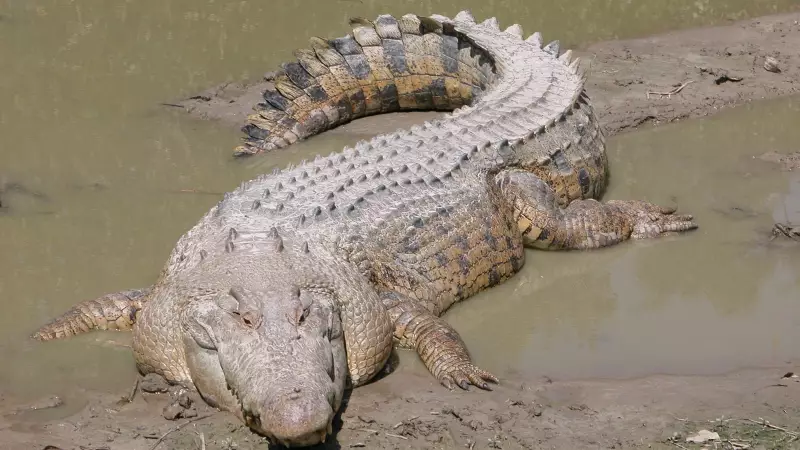
Reigning supreme in the realm of bite force is the formidable saltwater crocodile. This ancient reptile, one of the largest alive today, doesn't just intimidate with its size. Scientific measurements have recorded its bite at a staggering 3,700 pounds per square inch (psi), equivalent to about 16,414 newtons, as reported by BBC’s Science Focus magazine. This immense power allows it to crush bone with ease. The saltwater crocodile employs this fearsome weapon in its signature ambush tactic, using a powerful "death roll" to subdue and dismember its prey underwater.
Ocean's Apex Predator and a Vegetarian Giant
Beneath the waves, the great white shark commands respect with more than just its speed and size. Detailed computer models estimate its bite force could reach an astonishing 4,000 psi (around 18,000 newtons), a figure difficult to verify in the wild but essential for capturing the ocean's swiftest swimmers.
Perhaps the most shocking entry on this list is the hippopotamus. Despite being a herbivore that grazes on grass, the hippo is deceptively dangerous. It boasts a bite force of approximately 1,800 psi and is infamously responsible for more human fatalities in Africa than lions, according to Encyclopaedia Britannica. This strength enables it to snap a crocodile in half or easily puncture the hull of a boat.
Big Cats, Primates, and Bone Crushers
The jaguar distinguishes itself from other big cats with its unique hunting method. Instead of targeting the throat, it often delivers a skull-piercing bite, thanks to an estimated 1,500 psi of force. Its shorter, stockier jaws and immense muscle power are perfectly evolved to penetrate turtle shells and the robust skulls of prey like capybaras.
In the primate world, the gorilla showcases impressive jaw strength, with a bite force of about 1,300 psi. Primarily used for chewing tough vegetation like roots and stems, this power can become a formidable defense tool if the animal is threatened.
The bear family is well-represented. The polar bear, adapted to the harsh Arctic, bites with around 1,200 psi, enough to break through ice and thick seal blubber. Its cousin, the grizzly bear, follows closely with roughly 1,160 psi, using its combined dental and claw power to tackle diverse prey from moose to fish.
Specialists in scavenging, spotted hyenas possess jaws generating about 1,100 psi, an adaptation specifically for crushing bones to access the nutritious marrow inside.
Finally, proving that size isn't everything, the Tasmanian devil holds the record for the strongest bite relative to its body size. This small but mighty marsupial can crack bones and tough hides with ease, truly embodying the phrase "chota packet, bada dhamaka."
From the aquatic depths to the forest floor, these animals demonstrate that in the natural world, jaw strength is a universal currency of power, survival, and dominance.