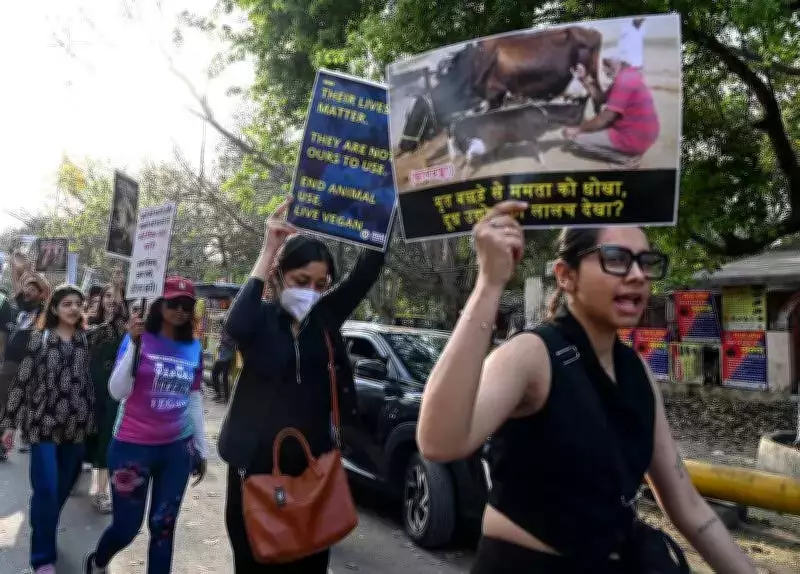
Delhi Citizens Unite in Powerful March for Animal Rights and Justice
Hundreds of concerned citizens participated in a peaceful yet impactful demonstration on Sunday, walking from Tagore Garden to Rajouri Garden as part of the Animal Rights March Delhi 2026. This organized event served as a collective call for comprehensive structural reforms aimed at eliminating institutional animal cruelty across various industries.
A Diverse Coalition Demanding Compassionate Change
Activists, working professionals, students, and families marched side by side, united by their shared commitment to compassion and justice for animals. Their central message resonated clearly: break every cage, liberate all animals from exploitation, and actively challenge the pervasive speciesism embedded within modern society.
As participants held their posters and banners toward passing traffic, numerous vehicles slowed their pace. Several drivers rolled down their windows to read the messages, while other onlookers observed with genuine curiosity and interest.

Personal Journeys Fueling the Movement
Among the demonstrators was Sabir, a man in his thirties working in the information technology sector. Behind his simple placard lay a profound personal transformation spanning two decades. He maintained a vegetarian diet for ten years before fully committing to veganism another decade ago, a decision that initially set him apart from his immediate community.
"We are systematically conditioned to believe we cannot survive without these animal products," explained the Faridabad resident during the march. "For example, humans do not biologically require the milk of other species. An infant needs only its mother's milk. Beyond that developmental stage, it becomes unnecessary. This same principle applies to leather and numerous other commodities. We perceive them as essential, but they truly are not. The fundamental first step must involve shutting down slaughterhouses and industrial dairy farming operations."
Organizational Backing and Core Demands
The march was organized by Delhi Unites for Animal Liberation, in collaboration with several partner organizations including YV Care, One Just World, Vegan India Movement, and World Vegan Vision. Their collective demands focused on:
- Stronger enforcement of existing animal protection legislation
- The systematic phasing out of industrial animal agriculture
- Implementation of stricter penalties for acts of animal cruelty
Manjira Banerjee, a key member of the organizing team, emphasized the urgency of their mission. "We advocate for animals through consistent protests, including our annual march on World Vegan Day, because the current legal consequences for animal cruelty remain negligible," she stated. "Billions of animals are slaughtered annually for food, fashion, and experimentation. This scale of suffering is utterly unacceptable in our contemporary era. We are demanding stricter laws and substantially stronger punitive measures to halt such systemic cruelty."
Voices from Across the Country
Pratik traveled specifically from Indore to participate in the Delhi march. "Leather, dairy, honey, silk," he remarked, shaking his head in dismay. "We rarely pause to consider what animals endure to provide these products. They deserve freedom and dignity just as we do. If people were simply educated about the truth behind these industries, many would undoubtedly reconsider their choices."
Not far away walked Pankaj Sharma and his wife, who made the journey from Ghaziabad. They arranged care for their eight-month-old child with family members specifically to attend the demonstration. Pankaj gently held his wife's hand as they walked the route.
"When you become parents," Pankaj reflected, "you develop a deep understanding of what separation truly means. A baby fundamentally needs its mother. Learning that animals in dairy and other industries are routinely separated from their offspring felt completely unbearable to us."

Their personal journey began two years ago after encountering an Instagram post that led them to a documentary about animal slaughter. The footage they witnessed transformed their perspective entirely. Within months, they adopted a vegan lifestyle and began actively participating in animal rights advocacy movements.
A Call for Accountability and Legislative Action
As the march progressed toward Rajouri Garden, the collective voices grew louder and more determined. Manjira Banerjee, walking at the front of the procession, addressed a common misconception. "People are frequently told that animals are 'happy' prior to slaughter, but the harsh reality is dramatically different," she asserted. "The punishment for cruelty remains minimal. What we urgently require are stronger legislative frameworks and genuine accountability for those who perpetuate this violence."
Upon reaching their destination, the marchers understood they were amplifying voices for those who cannot speak for themselves—the countless animals subjected to institutionalized suffering. The event stood as a powerful testament to growing public consciousness and the demand for ethical reform in humanity's treatment of other species.