Phool Waalon Ki Sair Festival Makes a Triumphant Return to Delhi After Extended Hiatus
The vibrant and historic Phool Waalon Ki Sair festival, a cherished symbol of Delhi's rich communal harmony and syncretic traditions, has been joyously revived after a pause of more than one year. The week-long celebrations commenced on Sunday, marking the return of this centuries-old cultural event that had faced potential discontinuation due to administrative hurdles and environmental concerns.
Traditional Rituals and Floral Offerings Resume
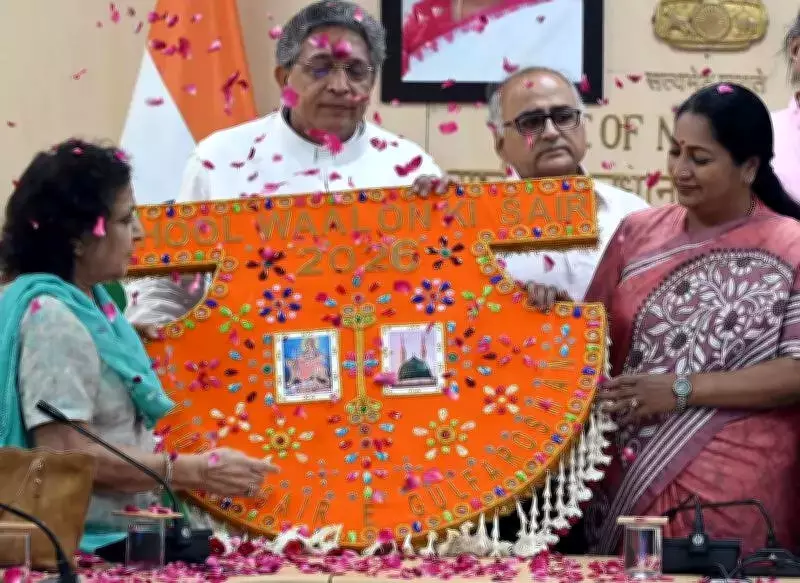
On Monday, representatives from the Anjuman Sair-e-Gul Faroshan, the organizing body that has meticulously managed the festival for decades, presented a beautifully crafted floral pankha to Chief Minister Rekha Gupta and Art and Culture Minister Kapil Mishra. This ceremonial gesture signifies the official inauguration of the festival's activities and honors the dignitaries' support for preserving Delhi's cultural legacy.
The festival's schedule is packed with traditional events. The Sadbhavna Yatra, a significant procession that traverses historic parts of Old Delhi, is set for Tuesday. This colorful parade, accompanied by the melodic sounds of shehnai and nagada, along with decorative floral pankhas, will commence from the revered Gauri Shankar Temple. It will then proceed through iconic landmarks including Town Hall and various areas of the bustling Chandni Chowk, showcasing the festival's deep roots in the city's fabric.

Another pivotal ritual is scheduled for Thursday, where devotees will offer a floral chadar and pankha at two sacred sites: the dargah of Khwaja Bakhtiyar Kaki and the Yogmaya Temple in Mehrauli. This dual offering beautifully encapsulates the festival's essence of interfaith harmony and mutual respect.
Overcoming Challenges and Administrative Hurdles
Usha Kumar, the General Secretary of the Anjuman, provided insights into the festival's revival. She mentioned that on Tuesday, the organization plans to present a pankha to Lieutenant Governor Taranjit Singh Sandhu and extend an invitation for him to participate in the floral chadar offering ritual, emphasizing the event's inclusive nature.
The festival, traditionally held in November, faced significant disruptions in recent years. Last year, it could not proceed as the Delhi Development Authority (DDA) did not grant permission to the Anjuman to host programs at Aam Bagh, a DDA park situated in front of Jahaz Mahal near Mehrauli's Shamsi Talab. Similarly, in 2024, authorities withheld consent for organizing the traditional Jhoola Mela at the same venue, raising concerns about the festival's continuity.
Kumar explained that authorities were initially hesitant to permit the event last November due to multiple factors, including heightened air pollution levels, severe traffic congestion in the city during that period, and its proximity to major festivals like Dussehra and Diwali. These concerns prompted extensive discussions, ultimately leading to a decision to reschedule the festival to March this year.
New Schedule and Expanded Celebrations
Following successful negotiations, the DDA has granted approval to hold the celebrations at the original venue in Mehrauli. This year's festivities are set to feature a diverse array of cultural performances and events, including traditional dangal (wrestling matches), soulful ghazal performances, and energetic qawwali sessions throughout the week. Additionally, the Sahitya Kala Parishad will present a special cultural program at Jahaz Mahal on March 21, enriching the festival's artistic offerings.
Kumar noted that holding the festival in March is an experimental shift. If the celebrations conclude smoothly and receive positive feedback, the Anjuman may consider permanently moving the annual schedule to this time of the year, adapting to contemporary logistical and environmental considerations while preserving tradition.
Historical Significance and Enduring Legacy
The Phool Waalon Ki Sair festival boasts a profound historical lineage, dating back to 1812 during the reign of Mughal Emperor Akbar Shah II. It has since stood as a resilient emblem of Delhi's shared cultural heritage and syncretic traditions. The festival continued uninterrupted until 1942, when it was banned by the British colonial administration.

In a testament to its cultural importance, the festival was revived in 1962 by the Anjuman with robust support from the Union government. Since then, it has been celebrated annually at the picturesque park in Aam Bagh, serving as a living reminder of Delhi's pluralistic ethos and communal unity. The festival's revival this year not only honors this legacy but also reinforces the city's commitment to preserving its unique cultural tapestry for future generations.