Hyderabad's Historic Kite-Making Hub Faces Quiet Transformation
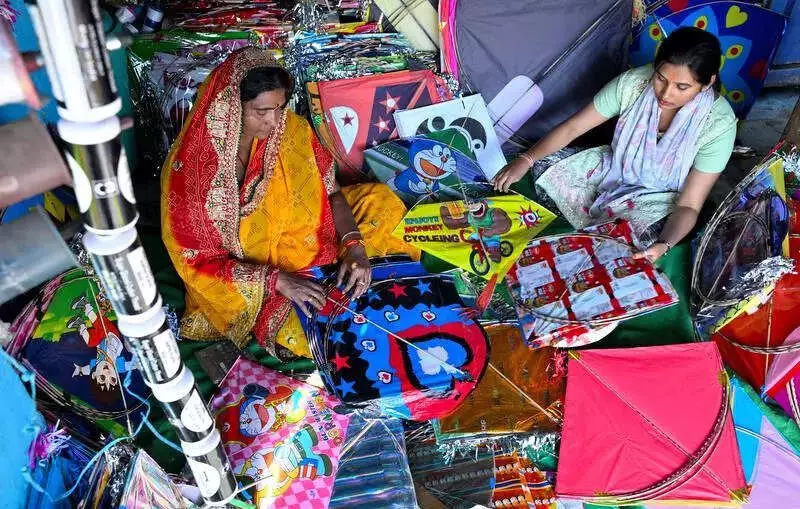
The narrow lanes of Dhoolpet in Hyderabad present a changing scene. For centuries, these streets buzzed with activity before Sankranti. Artisans prepared paper and bamboo sticks for handmade kites. Today, a quiet shift is underway. The tradition of crafting kites by hand is experiencing a slow generational drift.
Young Artisans Choose Corporate Stability Over Family Craft
Younger members of artisan families are turning away from their heritage. They are pursuing careers in corporate sectors instead. This change is not sudden, but it is growing steadily. Many families have practiced kite-making for three or four generations. Now, their children are making different choices.
Dhoolpet was once famous for its handcrafted 'patangs'. The area supplied lakhs of kites across Telangana and neighboring states during festival seasons. That vibrant scene is diminishing as economic realities hit home.

Economic Pressures Drive the Exodus
Young artisans cite several reasons for leaving the craft. Economic uncertainty tops their list. Thin profit margins make sustaining a livelihood difficult. The physically demanding nature of the work adds to their concerns.
Most departing youngsters are in their early twenties. They now work in technology, finance, logistics, and sales. For many, kite-making has become a seasonal engagement rather than a full-time profession.
"I work in a private company in Gachibowli," said Lal Singh, a 24-year-old fourth-generation kite-maker. "But I take leave for three to four weeks during Sankranti to help my family. For the rest of the year, it's not sustainable. The margins are too thin and the work is tedious."
The Labor-Intensive Process Yields Diminishing Returns
Traditional kite-making in Dhoolpet begins months before Sankranti. Families work long hours to meet festive demand. Each handmade kite undergoes multiple stages. Workers cut paper, prepare bamboo frames, paste materials, dry kites, and stack them carefully.
Artisans say effort has increased over years while returns have not kept pace. "Earlier, kite-making could support an entire household," said Chetah Singh, who has practiced the trade for over forty years. "Now, after expenses, very little is left. Youngsters see the uncertainty and naturally want a stable income."
Regulatory Challenges and Market Competition
Regulatory uncertainty adds to artisan concerns. Frequent crackdowns related to banned Chinese manja create fear and confusion. Though kite-making itself remains legal, enforcement drives affect peak season sales.
"Any uncertainty hits business," Chetah explained. "When sales fall, the younger generation feels it's not worth continuing."
Rising competition from plastic kites and cheaper imports further dents demand. Customers often bargain hard without appreciating the skill behind each handmade kite.
"People don't see the skill or time behind each kite," said Balaji Singh, a 24-year-old tech professional and fourth-generation artisan. "That's why we look for stable professions."
Aspirations for Growth and Dignity
For many young people, moving away from kite-making represents aspiration. They have studied and earned degrees. Corporate jobs offer growth opportunities, financial security, and social dignity.
"We studied and earned degrees," said Manish Singh, a commerce graduate working in a finance firm. "Corporate jobs offer growth, security and dignity. Kite-making will always be part of who we are, but we can't depend on it for our future."
The craft continues in Dhoolpet, but with fewer hands each year. As younger generations seek stability elsewhere, a centuries-old tradition faces an uncertain future. The rustle of paper and bamboo may grow quieter in Hyderabad's historic lanes.