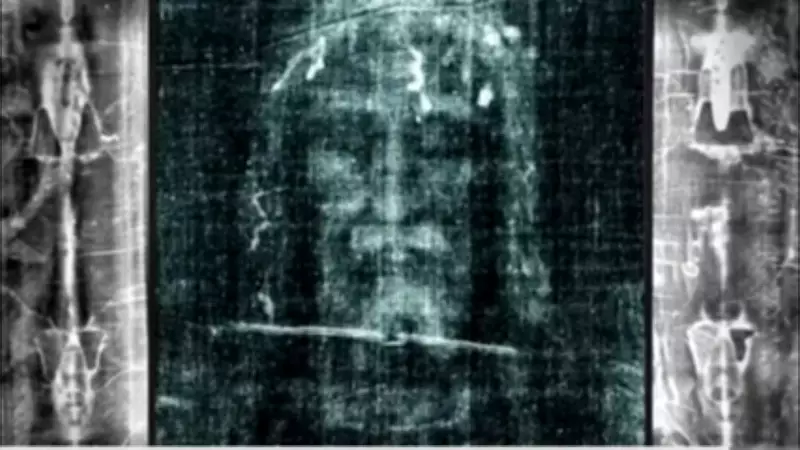
New DNA Evidence Suggests Shroud of Turin May Have Indian Origins
The Shroud of Turin, an ancient linen cloth bearing a faint negative image of a man widely believed by many to be the burial shroud of Jesus Christ, has long been a subject of intense debate and controversy regarding its authenticity. For centuries, scholars and scientists have argued over its origins, with many theories centering on Mediterranean or European production. However, a groundbreaking new study leveraging advanced genomic technologies has introduced a compelling new chapter in this enduring mystery, potentially rewriting the artifact's history.
Genomic Breakthroughs Reveal Global Connections
In a research paper published in Scientific Reports through the Nature portfolio, scientists employed Next Generation Sequencing (NGS) technology to analyze dust particles vacuumed from the Shroud of Turin. This meticulous examination focused on mitochondrial DNA (mtDNA) extracted from both human and plant origins found embedded within the cloth's fibres. The results were startling, revealing DNA lineages that challenge long-held assumptions about the shroud's western origins.
The study identified specific human mtDNA haplogroups, such as R0a, which are primarily associated with the Arabian Peninsula and Horn of Africa, but also include sequences linked to South Asia. Additionally, other haplogroups typical of South Asia and the Middle East were detected, alongside markers from Western Europe. This diverse genetic tapestry suggests the shroud has been exposed to populations from multiple global regions over time.

Plant DNA Links the Shroud to Indian Soil
Beyond human DNA, the research uncovered plant-derived mtDNA from species strongly associated with the Indian subcontinent. Key findings include the detection of Vigna unguiculata (cowpea) and other species from the Fabaceae family, which are commonly found in India. The presence of these plant genetic markers supports the hypothesis that the flax used to create the shroud was native to India, or that the production process occurred there before the cloth was transported elsewhere.
This evidence points toward the shroud having been manufactured in India or spending a considerable amount of time in the region before appearing in Europe. It aligns with historical records indicating that India was a major textile manufacturing center during ancient times, with its products traded extensively along routes like the Silk Road.
Challenging Medieval Origins and Radiocarbon Dating
The DNA findings present a significant anomaly when compared to the 1988 radiocarbon dating study, which placed the shroud's origins in the medieval European period (1260–1390 AD). Researchers involved in the new genomic analysis argue that the diversity of DNA samples—encompassing South Asian, East African, and Middle Eastern ancestries—suggests a timeline that may predate the medieval era. They posit that it would require a substantial amount of time for such a wide array of genetic material from disparate global regions to accumulate on the cloth.
This challenges the notion that the shroud is a medieval forgery, instead painting a picture of an artifact with an extensive and diverse history. The evidence indicates that the shroud likely traveled on ancient trade routes, connecting India to the Levant and beyond, before arriving in Chambery, France, by the 14th century.
Implications for Historical and Cultural Understanding
By identifying these genetic signatures, scientists are effectively remapping the Shroud of Turin's global journey. The study not only questions traditional Mediterranean-centric theories but also highlights the cloth's potential as a 'global' item that moved across continents through commerce and cultural exchange. This research opens new avenues for understanding ancient textile trade, migration patterns, and the interconnectedness of civilizations.
As debates over the shroud's authenticity continue, this DNA evidence adds a fresh layer of complexity, urging historians and scientists to reconsider its origins and significance in a broader, more inclusive context.