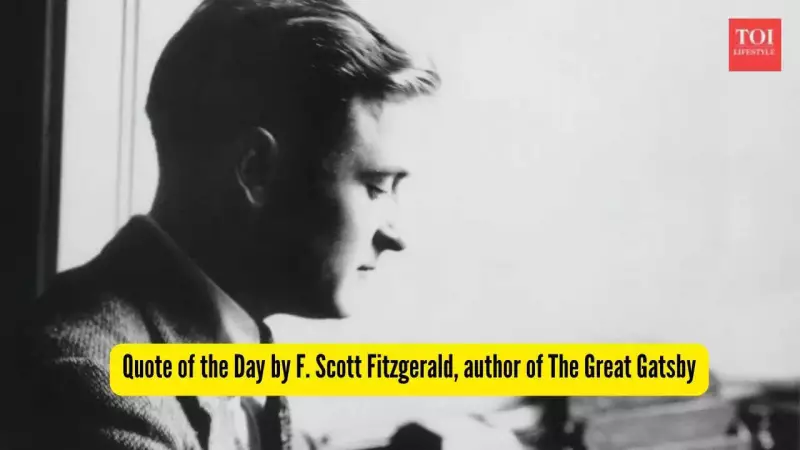
F. Scott Fitzgerald's novel The Great Gatsby remains a powerful classic. It vividly portrays the glitter and hollowness of 1920s America. Fitzgerald himself experienced both dazzling success and deep personal turmoil, shaping this iconic work.
Early Life and Ambitions
Francis Scott Key Fitzgerald entered the world on September 24, 1896, in St. Paul, Minnesota. His family faced financial instability. His father initially sold furniture before securing an uncertain position as a soda company executive.
Fitzgerald attended prestigious institutions like the Newman School and Princeton University. However, he left Princeton in 1917 without completing his degree to enlist in the Army during World War I.

A Fateful Romance
While stationed in Alabama, he met seventeen-year-old Zelda Sayre. She came from a prominent family and embodied the spirited flapper image. Zelda initially rejected his marriage proposal due to his lack of wealth. This rejection fueled Fitzgerald's fierce determination to achieve literary fame and fortune.
Rapid Rise to Fame
Fitzgerald's breakthrough arrived swiftly. As he revised his first novel, This Side of Paradise, Zelda agreed to marry him. This semi-autobiographical story of love and youth at Princeton exploded onto the scene in 1920.
The book sold an impressive 49,000 copies. It catapulted Fitzgerald to overnight celebrity at just twenty-three years old. He married Zelda in April of that year, plunging them both into the whirlwind of the Jazz Age.
The Jazz Age Lifestyle
The couple embraced a lavish life of endless parties, European travels, and prolific writing. Fitzgerald funded their extravagance by writing short stories for magazines like The Saturday Evening Post and through subsequent novels like The Beautiful and the Damned in 1922.
By 1924, they lived on Long Island's North Shore, hosting famously raucous gatherings. Fitzgerald later noted that living among the ultra-wealthy had cured him of his earlier envy for them.
Creating an American Masterpiece
Fitzgerald channeled his personal experiences into The Great Gatsby. Scribner's published the novel on April 10, 1925. The story drew inspiration from his unrequited love for Ginevra King, whose wealthy family deemed him unsuitable, and from Zelda's own insecurities.
He wrote much of the book on the French Riviera, reflecting on the extravagant but ultimately empty parties he had witnessed on Long Island. His editor, Maxwell Perkins, requested revisions to sharpen the prose.
Fitzgerald considered it his finest achievement. Initial sales were modest, around 20,000 copies, and critical reception was mixed. Yet the novel masterfully blended lyrical beauty with incisive social critique.
Struggles and a Premature End
The years following Gatsby brought significant hardship. Fitzgerald battled alcoholism. Zelda suffered severe mental health breakdowns. Stints writing Hollywood scripts provided little financial relief.
F. Scott Fitzgerald died on December 21, 1940, at age forty-four. He believed himself a forgotten author, burdened by debt while Zelda resided in a psychiatric institution.
A Lasting Legacy
World War II sparked a remarkable revival. American soldiers embraced The Great Gatsby as a quintessential story of their nation. By the 1950s, it became a staple on high school reading lists across the country.
The novel endures as a defining portrait of Jazz Age excess, rigid class barriers, and tragic romance. Major film adaptations in 1974 and 2013 introduced the story to new generations. Phrases like "the green light" have entered common cultural parlance.
Today, many hail it as the Great American Novel. Its concise length, roughly 47,000 words, delivers profound insight into the illusions of wealth and the elusive nature of dreams.
Dissecting the Roaring Twenties
Fitzgerald's narrative meticulously examines the era. Gatsby's fortune stems from bootlegging. Flappers dance through a landscape of moral decay. Automobiles symbolize fleeting progress. The green light on Daisy's dock represents aspirations forever out of reach.

His economical prose delivers lasting impact. The closing line—"So we beat on, boats against the current, borne back ceaselessly into the past"—echoes a sense of life's futility and relentless struggle.
Posthumous Recognition
Fame after death ultimately validated his work. Royalties from his writings now fund educational scholarships. One of his most resonant observations captures a profound human experience:
"The loneliest moment in someone’s life is when they are watching their whole world fall apart, and all they can do is stare blankly."
This line evokes the deep isolation felt during catastrophic personal loss. It describes the paralyzing shock when one's carefully constructed life—dreams, relationships, status—collapses beyond control. It reminds us that some forces in life leave us only with the capacity to endure.