Why French Loan of Bayeux Tapestry to England Has Proven Contentious Despite Shared History
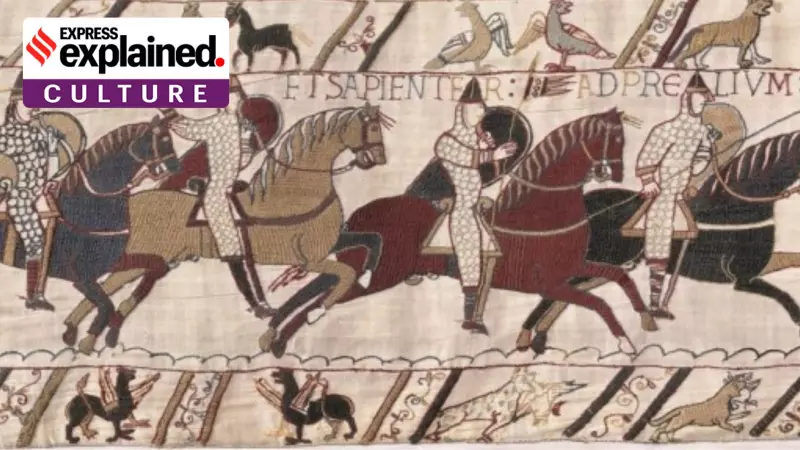
The Bayeux Tapestry, an 11th-century linen embroidery, chronicles the events leading to the Norman conquest of England, culminating in William the Conqueror's ascension to the English throne in 1066. This historical artifact holds profound significance for both British and French histories, symbolizing a pivotal moment that reshaped English law, society, and language.
The Diplomatic Gesture and Its Immediate Backlash
In July 2025, French President Emmanuel Macron announced discussions for a 10-month loan of the Bayeux Tapestry from the Bayeux Museum in Normandy to the British Museum. Intended as a diplomatic move to strengthen ties between Britain and France, this decision was met with significant opposition rather than widespread acclaim.
Petitions swiftly emerged against transporting the antique heritage piece, with critics arguing that the fragile tapestry might not endure the journey, risking the loss of an invaluable historical treasure. Notably, English artist David Hockney labeled the initiative as "madness", reflecting the deep-seated concerns within the art community.

Understanding the Bayeux Tapestry and Its Fragility
Commissioned by Bishop Odo, half-brother of William the Conqueror, the over 70-meter-long tapestry commemorates the Norman victory. It depicts key moments of the conquest and everyday life in Anglo-Saxon society, having been housed in various locations, including the Bayeux Cathedral and the Louvre, before finding a permanent home at the Bayeux Tapestry Museum in 1983.
However, the tapestry's condition is precarious. A 2020 report by Normandy's Regional Directorate of Cultural Affairs detailed extensive wear, including:
- 24,204 stains
- 16,445 wrinkles
- 9,646 gaps in the cloth or embroidery
- 30 non-stabilized tears
Its fragility stems from being an embroidery, where designs are stitched onto existing fabric, making it more susceptible to damage from snags, pulls, and abrasions compared to woven tapestries.
The Weave of Contention: Preservation vs. Accessibility
French art historian Didier Rykner initiated a petition against the loan, describing it as "a true crime against our heritage" and garnering over 77,000 signatures. The petition emphasized that any transport poses a danger to the artifact, which has miraculously survived centuries of vicissitudes.
Conversely, proponents argue that exhibiting the tapestry at the British Museum enhances global visibility and educational value. Art conservator Anupam Sah noted that while concerns are legitimate, the exhibition draws worldwide attention, potentially ensuring better conservation efforts. He stated, "The purpose of an artefact is to be seen by people... being exhibited at a space like the British museum is definitely better than being kept away in storage."
Balancing Risks and Rewards in Cultural Diplomacy
The loan coincides with the Bayeux Museum's renovation, during which the tapestry is stored in a supervised conservation area. Teams in Normandy and Britain are implementing stringent safety measures, with the British government insuring the artifact for approximately £800 million.
This controversy underscores a broader debate: prioritizing the safety of fragile heritage versus leveraging it for cultural diplomacy and public engagement. As the tapestry prepares for its journey, the world watches, hoping that this shared piece of history will be preserved for future generations while bridging historical divides.