The Unflinching Gaze of Frida Kahlo
Frida Kahlo painted herself more than any other artist in history, not out of vanity as she once humorously suggested, but because she was "the subject I know best." This famous line, often repeated, barely scratches the surface of the profound urgency and intensity behind her remarkable gaze. Kahlo did not simply depict her face; she transformed it into a theatrical stage where injury, heartbreak, political conviction, cultural heritage, and fierce defiance could all coexist simultaneously.
A Visual Language Born from Suffering
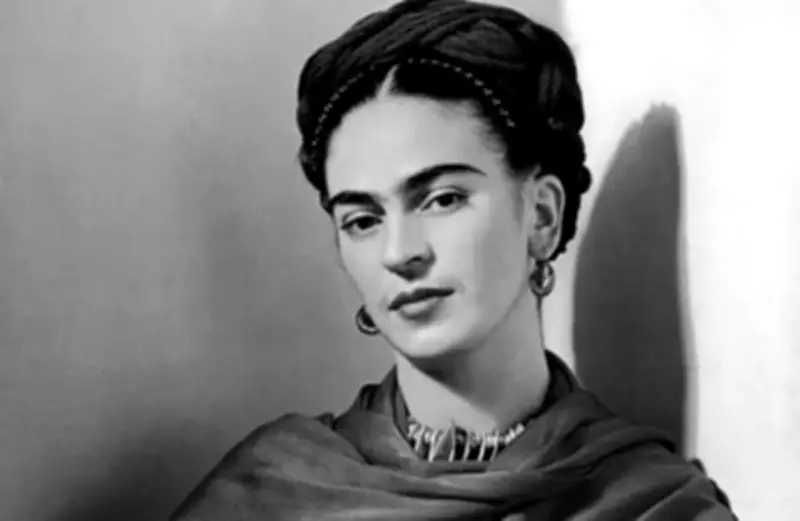
Across approximately fifty-five self-portraits, Kahlo masterfully converted private agony into a visual vocabulary so precise, fearless, and emotionally raw that it continues to resonate with contemporary audiences decades after her death. To stand before a Kahlo self-portrait is to experience the sensation of being intently watched. Her dark, penetrating eyes meet the viewer's directly, creating an almost uncomfortable intimacy. There is no attempt to soften her features, flatter her appearance, or retreat from scrutiny. Instead, viewers encounter a woman who insists on being seen exactly as she is—complete with her wounded body, elaborate traditional dresses, intricately braided hair, and distinctive joined eyebrows.
An Artist Forged by Physical Trauma
Kahlo's relationship with pain was not metaphorical; it was brutally, physically literal. At just eighteen years old, she survived a catastrophic bus accident that shattered her spine, pelvis, and leg. Confined to bed for months in plaster casts and traction devices, she began painting seriously with the aid of a mirror mounted above her. This arrangement—lying flat on her back, brush in hand, with her own face reflected back at her—established the fundamental template for her entire artistic career.

Chronic pain, dozens of surgical procedures, and extended periods of immobility followed her throughout her life. Rather than conceal these experiences, Kahlo deliberately folded them into her art. In powerful works like The Broken Column, her torso splits open to reveal a crumbling Ionic pillar replacing her spine, with nails piercing her flesh and tears streaming down her cheeks. While the imagery appears surreal, its emotional logic remains crystal clear: this is what internal agony feels like when translated onto canvas.
Defiance in the Face of Adversity
Remarkably, even in her most harrowing paintings, Kahlo rarely portrays herself as defeated. She consistently stands upright, her eyes steady and unwavering, refusing the easy comfort of sentimentality. Her body may fracture and suffer, but her stare remains resolute and unbroken. This defiant posture became a hallmark of her artistic identity, transforming personal vulnerability into a source of immense strength.
Clothing as Symbolic Language
In Kahlo's work, clothing functions as another sophisticated language of expression. She frequently painted herself wearing Tehuana dresses, traditional garments from the Isthmus of Tehuantepec in Oaxaca that celebrate matriarchal culture. These voluminous skirts served the dual purpose of honoring her Mexican heritage while concealing her damaged limbs and surgical corsets. Jewelry, ribbons, monkeys, parrots, thorns, and flowers crowd her frames, each element carrying significant symbolic weight.
In Self-Portrait with Thorn Necklace and Hummingbird, a necklace of thorns cuts into her neck while a dead hummingbird hangs at her throat, flanked by a black cat and a spider monkey. The painting functions like a still life of complex emotional states, simultaneously conveying danger, mischief, resilience, and suspended hope. Kahlo borrowed freely from Mexican folk art and religious iconography, creating images that feel both devotional and confrontational in equal measure.

Love, Politics, and Emotional Fracture
Kahlo's tumultuous marriage to famed muralist Diego Rivera provides another powerful current running through her portraits. In The Two Fridas, painted after their divorce, she splits herself into twin figures seated side by side with their hearts exposed. One wears a European-style dress while the other dons a Tehuana costume. A vein connects them, cut and bleeding in one hand while being held steady in the other. This profound image suggests emotional bifurcation, exploring themes of abandonment versus endurance, colonial inheritance versus Indigenous pride, and loss versus survival.
Her political convictions also surface in both subtle and overt ways throughout her work. A committed communist, Kahlo aligned herself with post-revolutionary Mexico's search for national identity, embedding Mexican symbols into her art while rejecting European artistic hierarchies. Although often grouped with Surrealists, she consistently resisted this label, insisting she painted her reality, not her dreams. This insistence matters profoundly—Kahlo's paintings feel strange not because they escape the world, but because they refuse to simplify its complexities.
The Enduring Power of Kahlo's Portraits
What grants Kahlo's self-portraits their lasting power is not merely their autobiographical nature, but their extraordinary precision. She distilled complex emotional states into single, unforgettable images where pain becomes architectural structure, betrayal becomes an exposed heart, and cultural pride becomes woven fabric and vibrant flora. Each canvas functions as a kind of visual poem—compressed, richly symbolic, and completely unsentimental.
In our current age saturated with carefully curated self-images on social media, Kahlo's radical honesty feels more relevant than ever. She did not edit out her scars or sadness; she centered them. She refused to smooth her features into something more conventionally palatable. Instead, she constructed an entire iconography around the unvarnished truth of her own body and personal history.
To engage with her work today is to remember that self-portraiture can be an act of profound courage rather than vanity. Kahlo used the mirror not to escape suffering but to confront it directly, translate it into art, and in doing so, claim complete authorship over her narrative. Her face—steady, luminous, and unsparing—still holds viewers firmly in place. It asks not for pity, but for genuine recognition.
Perhaps this is why these paintings linger so powerfully in the collective consciousness: they demonstrate how personal pain, when shaped by imagination and indomitable will, can be transformed into something strangely beautiful. Not mere decoration, not empty consolation, but something closer to essential truth rendered in vivid color and bold line.