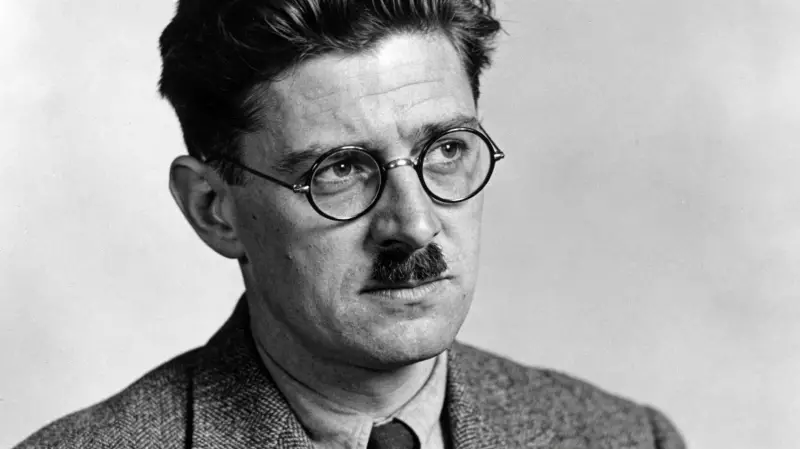
Published in the year 1949, George Orwell's dystopian masterpiece '1984' stands as one of the most powerful and enduring warnings against totalitarian control ever written. The novel, a direct critique of threats like Nazism and Stalinism, continues to hold profound relevance in the modern world, frequently finding itself at the centre of global debates on censorship and bans.
The Man Behind the Name: Eric Arthur Blair
George Orwell was born as Eric Arthur Blair in 1903 in India. He was an English novelist, essayist, and critic who used his writing to relentlessly dissect the structures of power, class, and ideology. Before turning to full-time writing, he served as a colonial policeman in Burma, an experience that cemented his lifelong opposition to imperialism and injustice.
Orwell believed in immersing himself in the subjects he wrote about. He lived among the poor in Paris and London, which inspired Down and Out in Paris and London, and fought in the Spanish Civil War, leading to Homage to Catalonia. These experiences sharpened his deep suspicion of both fascism and authoritarian socialism. While he described himself as a democratic socialist, he was unsparing in his criticism of any regime that crushed individual freedom for ideological ends. His legacy is so potent that the term "Orwellian" is now shorthand for mass surveillance, propaganda, and the manipulation of truth.

1984: A World of Perpetual Surveillance
The novel is set in the fictional superstate of Oceania, ruled by the all-seeing Party and its enigmatic leader, Big Brother. In this world, privacy is extinct. Citizens are monitored every moment through telescreens, and even harbouring rebellious thoughts—a crime known as "thoughtcrime"—can lead to severe punishment.
The story follows Winston Smith, a low-ranking clerk at the Ministry of Truth. His job is to alter historical records so that the Party's version of events becomes the only reality. Winston's quiet disillusionment turns into active rebellion when he falls in love with Julia and begins to dream of freedom. Orwell masterfully explores themes of totalitarian power, the distortion of language through "Newspeak," the destruction of privacy, and the terrifying fragility of objective truth.
The Chilling Vision of Power
What makes 1984 uniquely disturbing is not just its depiction of physical brutality, but the Party's goal to conquer the human mind itself. The regime seeks to rewrite history, drain language of meaning, and twist personal relationships into tools of control. The ultimate aim is a population that no longer remembers freedom and therefore cannot desire it.
This philosophy is captured in one of the novel's most infamous quotes, delivered by O'Brien, a high-ranking Party member who poses as a rebel to entrap Winston: "If you want a picture of the future, imagine a boot stamping on a human face—forever." This line is a stark, physical metaphor for endless, personal domination. O'Brien explains that the Party seeks no utopia, only the perpetual exercise of power for its own sake.
Decades after its publication, George Orwell's '1984' remains a vital cultural and political touchstone. Its warnings about surveillance, manipulated truth, and the erosion of personal freedom continue to resonate, proving that Orwell's dark vision of the future is a cautionary tale for all ages.