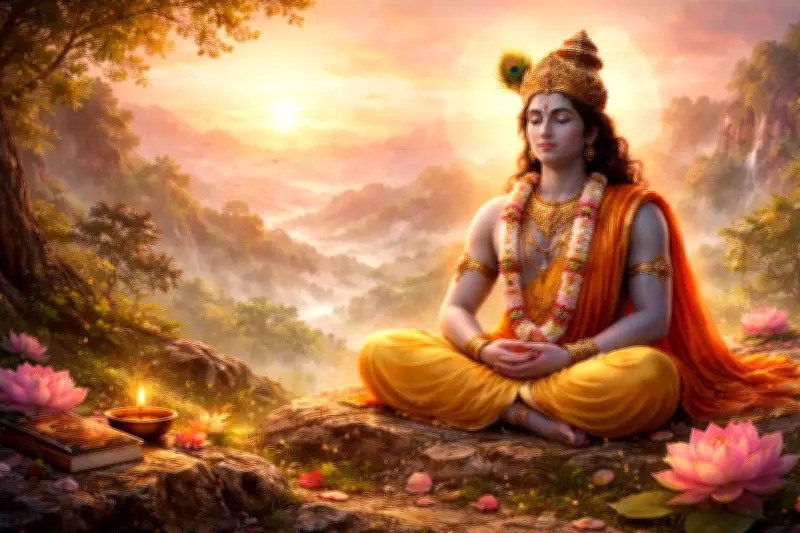
The Bhagavad Gita's Timeless Guidance on Emotional Liberation
In the profound spiritual text of the Bhagavad Gita, Chapter 12, Verse 17 presents a powerful blueprint for emotional freedom that remains strikingly relevant in today's fast-paced, emotionally charged world. The original Sanskrit verse states: यो न हृष्यति न द्वेष्टि न शोचति न काङ्क्षति। शुभाशुभपरित्यागी भक्तिमान्यः स मे प्रियः॥ This is transliterated as: Yo na hṛṣyati na dveṣṭi na śocati na kāṅkṣati, Śubhāśubha-parityāgī bhaktimān yaḥ sa me priyaḥ. The English translation reveals: "One who neither rejoices excessively nor hates, neither grieves nor desires, who has renounced attachment to both good and bad outcomes, such a devoted person is dear to Me."
The Human Struggle with Unfinished Emotional Narratives
Few psychological patterns drain our energy as persistently as the relentless quest for emotional closure. Modern individuals frequently find themselves trapped in mental loops, replaying past conversations that concluded abruptly, awaiting apologies that may never materialize, and seeking definitive meanings in situations that simply faded without resolution. The human mind often operates under the illusion that true peace can only emerge when every question receives an answer and every emotional thread finds a neat conclusion.
However, the Bhagavad Gita introduces a radically different paradigm for achieving inner tranquility. In this specific verse, Lord Krishna describes an individual who has transcended the turbulent swings between longing and regret, someone who has moved beyond the compulsive need for emotional completion. This ancient teaching does not advocate emotional suppression or denial of genuine feelings. Instead, it illuminates how suffering amplifies when we become excessively attached to specific outcomes, explanations, or imagined resolutions. From the Gita's elevated perspective, closure is not an entitlement the external world owes us.

Transcending the Four Emotional Extremes
The verse meticulously identifies four primary emotional movements that dominate most human reactions:
- Excessive Joy (hṛṣyati): The tendency to become overly elated or attached to pleasant experiences
- Dislike or Resentment (dveṣṭi): The impulse to resist or resent unfavorable circumstances
- Sorrow (śocati): The propensity to dwell in grief when situations don't unfold as expected
- Craving (kāṅkṣati): The persistent desire for clarity, validation, or definitive closure
Collectively, these emotional responses create a self-perpetuating cycle that keeps the mind imprisoned within unfinished narratives. When pleasant experiences conclude unexpectedly, we descend into grief. When painful events occur, we instinctively resist and search for logical explanations. During periods of uncertainty, desire emerges—specifically the desire for resolution, understanding, or closure. Krishna's insight is both subtle and transformative: genuine freedom commences when we cease demanding emotional certainty from inherently temporary situations. This approach does not promote indifference but rather cultivates the recognition that emotional equilibrium originates from within, not from external validation or resolution.
The Paradox of Closure: How Seeking It Prolongs Suffering
Ironically, the very pursuit of closure often extends and intensifies emotional distress. The mind operates under the assumption that comprehending why something occurred will automatically dissolve associated pain. Yet, even after receiving explanations or achieving apparent resolution, dissatisfaction frequently persists. The authentic discomfort stems not from informational gaps but from resistance to reality as it exists.

The Sanskrit phrase śubhāśubha-parityāgī—meaning "one who lets go of attachment to both favorable and unfavorable outcomes"—directly confronts this psychological struggle. Humans instinctively categorize experiences as "good" or "bad" and then expect life to justify these classifications. When reality fails to meet these expectations, we experience incompleteness. The Gita systematically dismantles this expectation, suggesting that events do not always arrive packaged with emotional symmetry. Some relationships conclude mid-sentence, some efforts remain unrecognized, and some life chapters close without ceremonial resolution. True peace emerges when we stop insisting that every experience must explain itself.
Emotional Steadiness as the True Measure of Spiritual Maturity
Krishna characterizes such an individual as priyaḥ, meaning "dear to the Divine." This designation carries profound significance because spiritual advancement here is measured not through external rituals or physical renunciation but through cultivated emotional steadiness.
A stable mind permits experiences to flow without clinging. Joy can be appreciated without anxiety about potential loss. Pain can be felt without becoming central to identity. Unanswered questions can exist without constant mental negotiation. In contemporary psychological terminology, this resembles advanced emotional regulation and radical acceptance. The Gita, however, frames this capacity as devotion expressed through internal equilibrium. When we abandon the chase for closure, we cease outsourcing our peace to circumstances beyond our control.
Embracing Life's Inherent Unfinished Nature
One of the most challenging truths to accept is that life rarely provides perfect endings. Conversations remain incomplete, people transform without explanation, and situations resolve externally while emotions require extended periods to settle. This verse teaches that wholeness is not manufactured through external closure but through internal release. When we relinquish attachment to what should have been said or done, the mind gradually loosens its grip on the past. Letting go does not erase memory; it removes the emotional demand that reality must conform to our expectations.
The Quiet Liberation of Acceptance
To embody this teaching is to allow life to remain partially unresolved while maintaining inner peace. It involves trusting that not every experience requires interpretation to possess value. Some encounters shape our consciousness precisely because they remain unfinished. The individual Krishna describes neither suppresses emotions nor becomes dominated by them. Instead, they navigate experiences with mindful awareness, permitting grief, joy, and uncertainty to arise and dissipate naturally.
Through this practice, closure ceases to be something we passively await. It transforms into something we actively generate within—a calm understanding that life's meaning does not depend on tidy conclusions. Perhaps this represents the deeper wisdom of this shloka: peace does not originate from possessing all answers but from no longer requiring every story to conclude before we progress forward.