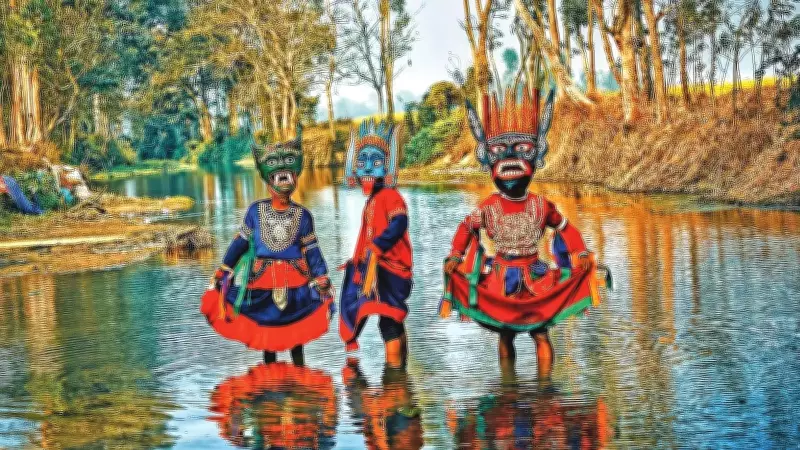
Bengal's Gomira Masked Dance Experiences Social Media Renaissance Following Official Recognition
The Gomira masked dance of Bengal, traditionally considered an intensely local expression of faith practiced by the Rajbongshi and Polia communities, has been experiencing a remarkable surge in popularity across social media platforms. This cultural resurgence gained significant momentum after the distinctive wooden masks used in the performance earned a Geographical Indication (GI) tag from the Government of India in 2018.
A Changing Perspective Through the Lens
"The lens through which we view Gomira has fundamentally transformed in recent years," observes Atreyo Mukherjee, a brand professional who recently participated in a photography tour in Dakshin Dinajpur district. "Gomira masks are trending now primarily because of their extraordinary beauty and the striking, vibrant colours that characterize them," adds Soumyasikha Manna, a schoolteacher and photography enthusiast. Manna further explains that "Gomira invokes the human consciousness presented through dance and drama," highlighting its deep spiritual roots.
A Visually Magnetic Subject for Storytellers
For photographers and visual storytellers, the Gomira dance presents an irresistible subject. The explosive colour palette, intense ritualistic atmosphere, and raw physicality of both the masks and the dance movements create a visually magnetic spectacle. "The vivid colours, rhythmic intensity, and dramatic choreography contribute significantly to its scroll-stopping appeal on digital platforms," notes Atreyo Mukherjee. Sayantan Dhar, a college student and photographer, emphasizes their approach: "As photographers, we strive to present Gomira not merely as a performance but as a living, breathing visual narrative."

The experience proved profoundly moving for international participants like Runa Isabel Lindberg from Germany, who attended a workshop in Kushmandi. "These are not simply masks; they are living characters with their own distinct personalities, mythologies, and ritual functions. I experienced a very powerful sense of being in the presence of something truly meaningful," she shares.
GI Tag as a Catalyst for Curiosity and Engagement
Sayan Bose, an IT analyst and photography enthusiast, credits the official GI recognition for amplifying online visibility and engagement. "Once the wooden masks of Kushmandi received the GI tag, the craft gained substantial official recognition and cultural credibility. On social media, the phrase 'GI-tagged heritage' itself attracts considerable curiosity and drives engagement," he explains. Arpan Basu Chowdhury rightly points out that "the main credit belongs to the incredible craftsmen, the talented performers, and the dedicated villagers" who have preserved this tradition.
Atreyo Mukherjee provides context by comparing Gomira to the globally recognized Chhau dance. "Compared to Chhau, which enjoys widespread international recognition, Gomira has remained underrepresented even within Bengal. Its current popularity represents more of a delayed acknowledgment of its cultural value," he states.
Understanding the Gomira Dance Tradition
Gomira is a masked folk dance originating from Bengal's Dakshin and Uttar Dinajpur districts. It embodies the devotion of the Rajbongshi and Polia communities to Gram Chandi, a fierce deity similar to Kali. The performances, which celebrate the triumph of good over evil, traditionally mark the conclusion of the Gajan festival.
Key characteristics of Gomira include:
- Male performers wear heavy, hand-carved wooden masks depicting deities like Shiva-Parvati as Bura-Buri, tiger spirits, demonesses such as Dakini, and Narasingha avatars.
- It is not a structured dance form and involves no dialogue, songs, or chants.
- The rhythm is carried exclusively by the beats of the khol (drum) and small cymbals.
Shibasish Saha, team lead of a photography society, notes that "Gomira is gaining traction through organized workshops and cultural showcases," indicating a structured effort to promote this heritage.

Folk Masks Trending Across India's Digital Landscape
The online trend extends beyond Gomira, with various traditional Indian masks gaining popularity:
- Purulia Chhau Masks, West Bengal: Dramatic oversized masks depicting mythic warriors and demons are popular in décor and performance photography.
- Theyyam Ritual Face Art, Kerala: Fiery colours and intricate designs inspire festival styling and visual storytelling.
- Majuli Mukha Masks, Assam: Light bamboo-and-clay masks from Vaishnavite theatre traditions are drawing craft tourism interest.
- Bhuta Masks, Karnataka: Spirit worship masks with striking features attract filmmakers and photographers.
This digital renaissance highlights how traditional art forms are finding new audiences and appreciation in the modern era, bridging heritage with contemporary visual culture.