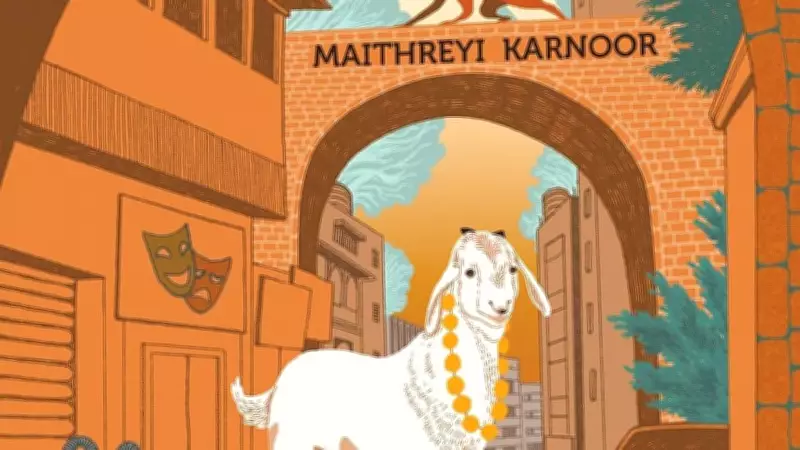
Gooday Nagar: A Nowhere Town and Its Half-Told Tales
The literary world often introduces settings that transcend mere backdrops, becoming characters in their own right. Gooday Nagar, a fictional nowhere town, stands as a prime example of this phenomenon, serving as the central hub for a series of half-told tales that captivate readers with their nuanced exploration of human experiences.
The Essence of Gooday Nagar
Gooday Nagar is depicted as a quintessential nowhere town, a place that exists on the fringes of geographical and societal recognition. This setting is not just a physical location but a metaphorical space where ordinary lives unfold in extraordinary ways. The town's ambiguous nature allows it to represent universal themes of isolation, community, and the search for meaning.
Authors use Gooday Nagar to challenge traditional narrative structures, creating an environment where stories are intentionally left incomplete. This approach invites readers to engage actively, filling in gaps with their interpretations and reflections. The town's very name, "Gooday Nagar," suggests a blend of optimism and mundanity, hinting at the dualities explored within its tales.

The Half-Told Tales: A Literary Device
The half-told tales set in Gooday Nagar are characterized by their open-ended narratives. These stories often:
- Focus on fragmented memories: Characters grapple with past events that are only partially revealed, mirroring the way real-life memories are often incomplete.
- Explore unresolved conflicts: Plotlines may lack clear resolutions, emphasizing the ongoing nature of personal and communal struggles.
- Utilize minimalist prose: The writing style is often sparse, leaving room for readers to infer emotions and motivations.
This literary technique serves to highlight themes of ambiguity and the elusive nature of truth. By presenting tales that are half-told, authors encourage a deeper contemplation of the human condition, where answers are not always readily available.
Themes and Symbolism in Gooday Nagar
Gooday Nagar and its stories delve into several profound themes:
- Identity and Belonging: Characters frequently struggle with their sense of self in a town that feels disconnected from the wider world. This reflects broader societal issues of alienation and the quest for community.
- Memory and Time: The half-told nature of the tales underscores how memories can be selective and how time can distort past events, making absolute truth a challenging concept.
- Hope and Despair: Despite its nowhere status, Gooday Nagar often embodies a quiet resilience, with characters finding glimmers of hope amidst seemingly bleak circumstances.
Symbolically, the town represents the liminal spaces in life—those in-between moments where transformation and reflection occur. Its half-told tales act as mirrors to the incomplete narratives we all carry within ourselves.
Impact on Contemporary Literature
The concept of Gooday Nagar has influenced contemporary literary trends by:
- Promoting reader engagement: By leaving stories unfinished, authors foster a more interactive reading experience, where audiences become co-creators of meaning.
- Challenging conventional storytelling: This approach moves away from linear plots and tidy endings, embracing the messiness of real life.
- Inspiring other works: Similar nowhere towns and fragmented narratives have emerged in modern fiction, showcasing the lasting appeal of this literary model.
In essence, Gooday Nagar serves as a powerful reminder that sometimes, the most compelling stories are those that are only half-told, leaving room for imagination and personal connection.