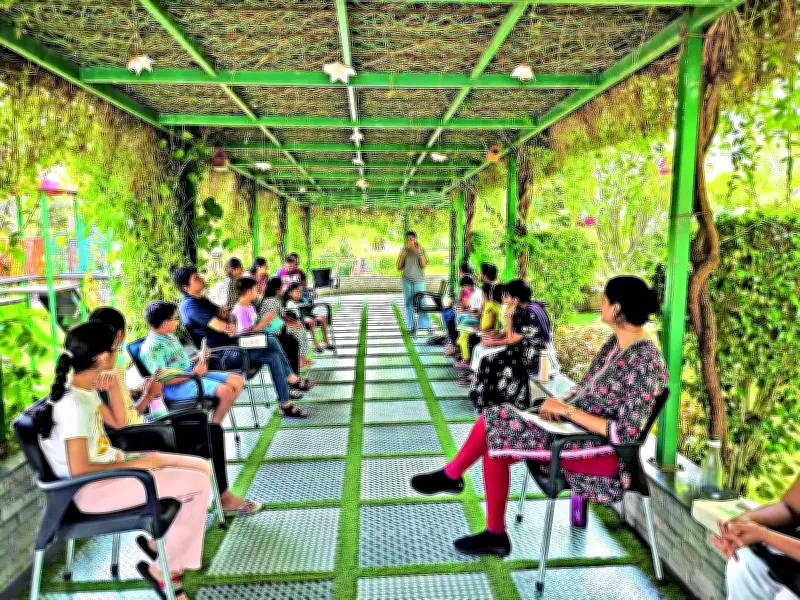
The Silent Reading Revolution Transforming Gujarat's Sundays
Something remarkable is unfolding across Gujarat every Sunday morning. In a state known for its vibrant culture and bustling commerce, a quiet revolution is taking root—one that replaces digital noise with the gentle rustle of turning pages.
Anand's Silent Transformation
In Anand, Gujarat's milk capital, cafes that typically sleep until noon now awaken at 10 AM to an unusual sight. Instead of brunch chatter, these spaces fill with people reading in intentional silence. The Anand Silent Book Club, which began as a Sunday experiment, has grown into one of the town's most distinctive community gatherings.
The format is beautifully simple yet profoundly effective. Participants gather at a different cafe each Sunday from 10 AM to noon. The first thirty minutes allow for settling in, ordering coffee, and casual conversation. At precisely 10:30 AM, all talking ceases. For one full hour, the only sounds are pages turning and occasional sips of coffee.

"We set out to make reading social again," explains Kush Patel, the 35-year-old founder who spent nearly a decade in digital marketing before creating this labor of love. "People hadn't lost their love for reading. They had lost focus. What they needed was one structured, distraction-free hour to rediscover the joy of a book."
The club draws between 30 and 95 readers weekly, with its WhatsApp group swelling to over 1,000 members. The diversity is striking: school students sit beside doctors who read professionally but had forgotten reading for pleasure; architects share tables with retirees.
From Atlanta to Anand: A Global Inspiration
The concept traveled thousands of kilometers before taking root in Gujarat. "I discovered a silent book club chapter in Atlanta while planning a trip," Patel recalls. "I was so captivated by the idea that I started one in Anand even before boarding my flight. If it works in Atlanta, why not here?"
Recognition has followed the initiative's success. In February, Gujarat Chief Minister Bhupendra Patel sent a letter of appreciation, lauding the effort to revive reading culture among youth in the digital age.
Ahmedabad's Diverse Reading Landscape
Ahmedabad boasts multiple reading circles, each with its unique character. Ahmedabad Reads | Ahmedabad Creates, founded in May 2024 by marketing communicator Shreya Bagthariya, draws inspiration from Bengaluru's Cubbon Reads movement.
On Sunday mornings, participants arrive with mats, paperbacks, and flasks of chai to claim patches of grass in public spaces. "We needed this pause in the day," Bagthariya says. "Step outside, move away from screen-filled spaces, and normalize reading in public."
Another significant initiative operates from Navajivan Press, the publishing house Mahatma Gandhi founded in 1929. Every Sunday from 8 AM to 11 AM, readers aged 10 to 80-plus gather at Karma Cafe on the Navajivan campus.
"Ahmedabad has always had a thriving reading culture," says Vivek Desai, managing trustee of Navajivan Trust. "Once you start an initiative like this, people show up. You don't need to convince anyone. You just need to give them a place and a time."
Surat's School-Based Reading Marathon
Perhaps the most sustained initiative comes from Surat, where Countryside International School's Read-A-Thon has continued uninterrupted for 116 Sundays. The school opens its 5,000-book library and peaceful campus every Sunday, drawing students, parents, and professionals alike.
"The idea struck me during a school event," recalls principal Sanjay Mehta. "Students were insisting I sit with them. I told them I would sit with whoever was ready to read with me." That moment inspired what has become a community institution.
The impact extends beyond reading habits. Mehta shares transformative stories: "We had a Class 3 student diagnosed with ADHD whose parents attended 50 consecutive Sunday sessions with him. Gradually, through the rhythm of reading and warmth of interactions, he became far more composed and now delivers speeches confidently."
To mark the initiative's centennial landmark, the school recently published "Read-A-Thon: Symphony of Silent Sundays," a collection of reader testimonials and reflections.

The Human Connection Behind the Pages
What unites these diverse initiatives is their recognition of a fundamental human need. In an age of relentless screen time and fragmented attention, people hadn't stopped wanting to read—they had simply stopped finding reasons to start. The routine had disappeared, and no one around them was reading either.
"Reading together in silence creates a strange but profound sense of belonging," reflects Kush Patel. "You don't need to speak to feel connected. The shared act of being present with a book is enough."
Testimonials from participants reveal the deeper impact:
- Zarna Joshi, a doctor from Anand: "I've been a voracious reader, so discovering this community excited me. People text to see if I'm coming, save me a seat, and ask what I'm reading. That warmth makes all the difference."
- Hemant Mehta, a lawyer: "I keep coming back because of my reader buddies. The conversations after sessions add meaningful social dimension to something otherwise solitary."
- Manashwini Patel, a Class 6 student: "I have attended 90 sessions, reading books borrowed from the school library. The activity introduced me to non-fiction, biographies, and much more. My vocabulary and creative writing skills have improved over two years."
Beyond Traditional Reading
These communities continue evolving. The Anand group recently hosted an "audiobook walk" where participants wore headphones and listened to audiobooks while strolling through the city. A newsletter sharing reading recommendations and club updates helps newcomers and regulars alike discover their next book.
As digital distractions multiply, Gujarat's silent reading clubs offer a compelling alternative: structured time, shared space, and the simple pleasure of a good book. They prove that sometimes, the most powerful response to noise isn't more noise, but intentional silence filled with the possibilities only books can provide.