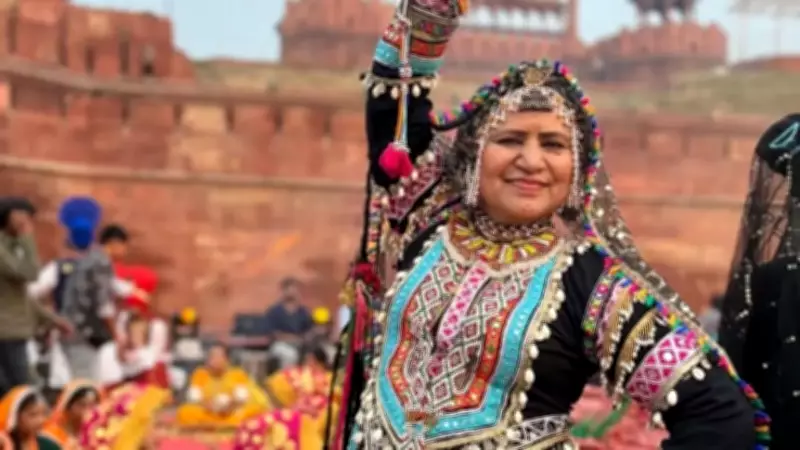
Gulabo Sapera: The Warrior Dancer Who Revived a Banned Art Form
When music ignites and the heart syncs with rhythmic beats, a dancer embarks on a mesmerizing journey, channeling movements passed down through generations and cultures. This language of steps and tempo allows one to soar high and glide freely, immersed in boundless expression. In India, a land steeped in historical heritage, such artistic legacies often emerge from struggle. The nation's fight for freedom from British rule extended beyond land to culture, with countless unsung heroes in its annals. Among them is Gulabo Sapera, a rebel who resurrected a dance once banned by the British and propelled it onto the world stage.
A Miraculous Survival and Early Life
Gulabo Sapera was born in 1973 in Ajmer, Rajasthan, into the Kalbeliya community, originally named Dhanvantri. As the seventh child in a family where female infanticide was rampant and girls were deemed a "burden," she was buried alive just one day after birth. Astonishingly, she survived five hours underground before her mother and aunt rescued her. In a 2021 interview with Brut, Gulabo shared, "My mother and aunt brought me back from there. I stayed in my mother's womb for nine months and in the earth's womb for five hours. So, I have two moms, my mother as well as Mother Earth." Her father, a snake charmer, fiercely defended her life, facing ostracism from their community. He named her Gulabo for her rosy cheeks, while Sapera derives from their traditional profession.
Rise to Global Prominence
Gulabo's journey into dance began early. As a child, she accompanied her father on village rounds with snakes, sparking a fascination that evolved into extraordinary talent. At age five, she performed at the Pushkar Mela, catching the eye of Rajasthan Tourism officials who facilitated more opportunities. By 1985, as a teenager, she traveled to Washington D.C. for the 'Festival of India' at the Kennedy Centre, part of a government initiative to promote cultural dances in the U.S. Her career skyrocketed, with performances on television, in Bollywood, and internationally. In 1991, despite living in a roadside tent due to poverty, her fortunes changed when Maharani Gayatri Devi adopted and supported her. Gulabo even designed her iconic costume—a black-flowing ghagra-choli with dupatta and multi-colored piping—now a hallmark of Kalbelia dance. In 2016, her efforts earned her the Padma Shri for global recognition of this folk art.

Kalbelia: A Tribe and Its Banned Heritage
The Kalbelia community, one of Rajasthan's oldest tribal groups, traditionally worked as snake handlers, reflected in their name: 'Kal' meaning snake and 'Belia' meaning friend. Alternatively, it signifies 'bowl of death,' linked to devotees of sage Kanifnath who consumed poison. The tribe has subgroups like Dhaliwal and Mewara and speaks Sapera. Their golden age in the 12th-13th centuries ended with King Prithviraj Chauhan's defeat, prompting migration to Madhya Pradesh and Gujarat. British colonial rule imposed the Criminal Tribes Act (1871), criminalizing and restricting tribes, including the Kalbelia, whose practices were misunderstood. Early 1900s reports labeled their performances as "sensual" and "dangerous," associating them with folk rituals involving fire and alcohol. The 1972 Wildlife Preservation Act further limited their livelihood by banning wild animal capture. Gulabo's birth in 1973 marked a turning point, transforming a suppressed culture into a globally admired art.

The Kalbelia Dance: Revival and Impact
Gulabo Sapera has not only revived Kalbelia dance but also sustained her tribe and inspired countless girls. The dance is unique: men play instruments like the pungi, cag, and aphl, while women perform fast-paced, acrobatic steps mimicking snake movements. Female dancers wear an angrakhi, odhani, and ghagra, adorned with jewelry. Today, Kalbelia is more than a dance—it's a resilient art preserving tribal identity. Gulabo, a warrior for her community, has performed in over 165 countries, appeared on shows like Bigg Boss, and runs schools in Denmark and Pushkar. In 2010, UNESCO added Kalbelia to its Intangible Cultural Heritage list. Gulabo recalls, "My community made me a leader and asked me to teach their daughters. 'But you don't even save the girl children, you kill them,' I said to them. They said we won't kill girl children from hereon, we also want a Gulabo." Her life embodies revival, representation, and empowerment, echoing Nicole Herbert Dean's words that Gulabo 'dances on her grave.'