Across the vast landscape of India, the mid-January sun heralds a season of joyous thanksgiving. While known by different names—Pongal in Tamil Nadu, Magh Bihu in Assam, Uttarayan in Gujarat, and Makar Sankranti in North India—these festivals share a common soul: celebrating the harvest and paying homage to nature's bounty. Historian Pradeep Chakravarty explains this unity, tracing it back to the nation's agrarian foundations.
"In India, we started as agrarian communities that depended on the sun and water from rivers," says Chakravarty. He points out that rice, a staple crop, requires precise conditions. "Rice is a fussy crop and needs just the right amount of sun and rain, and hence we all celebrate harvest festivals for a good harvest, around the same time. It was also the time when farmers had money, and so it was the time for celebration." This shared origin story unfolds in beautifully diverse rituals, maintained with passion by communities even when they are far from their native soil.
A Tapestry of Traditions: Colours, Prayers, and Pithe Puli
For Bengalis, Makar Sankranti, falling on the last day of the month of Poush, is a day of sacred rituals and vibrant hues. Atri Kumar Sinha, a Bengali resident of Chromepet since 2004, describes the customs. "We are supposed to take a bath in the Ganga or any other holy river on the morning of Makar Sankranti," he says. Since a trip to the Ganges isn't feasible, his family adapts by purchasing a small amount of Ganga water online to use in their bath.

Considering it an auspicious day, the family dons bright colours, a practice common in their community. The culinary highlight is the preparation of pithe puli, a Bengali sweet reminiscent of south Indian kozhukattai. "It's made like a momo, with rice and sweet coconut inside," explains Atri's wife, Joysree. The day involves distributing jaggery to visitors and the needy, followed by pujas dedicated to Saraswati, Lakshati, and paddy plants. "Originally, farmers would bring paddy plants home after prayers," notes Atri. The local Bengali Association Anya Mukh amplifies the spirit by organizing an annual 'Poush Mela' in Chromepet, showcasing traditional items and food.
Bonfires, Kites, and Preserving Roots Away from Home
In Punjabi tradition, Lohri on January 13th is an inseparable blend of dance, fire, and feasting. "Lohri signals the end of winter, on the 13th night," says Manjit Kaur Anand, who moved to Chennai from Chandigarh two decades ago. While bonfires in Punjab are massive, in Chennai they are smaller, yet equally significant. "The bonfire represents thanksgiving for the harvest and also dispelling evil," she states. The family circles the fire seven times, offering plates of popcorn and peanuts sprinkled with jaggery, followed by energetic gidda dances.
The next morning, families cook khichdi and eat it with radish, giving thanks for this key harvest crop—a tradition Manjit's late mother-in-law insisted they continue. The feast includes homemade gachak (a sesame and peanut sweet) and a dinner of makki ki roti with sarson da saag.
For Gujaratis, Uttarayan marks the year's first festival, synonymous with kite flying. Neena Kishore, a long-time Chennai resident, reminisces about childhood days spent on the terrace from dawn till dusk. Though kite flying with manja is restricted in the city, the celebration continues. The day begins with prayers to the sun god and making til (sesame) laddus. "After the puja and distribution of laddus, married women exchange new utensils, to bring luck and prosperity," adds Tanvi, Neena's daughter-in-law. The Kishore family, having lived in Chennai for generations, also incorporates Tamil customs, preparing both ven pongal and sweet pongal.

The Conscious Effort to Keep Heritage Alive
For Assamese families in Tamil Nadu, Magh or Bhogali Bihu is a profound link to their homeland. Manoj Sharma, President of the Assam Spiritual Society, moved from Guwahati to Chennai in 1985. "What matters is that our children know their roots," he emphasizes. The festival, marking the end of the harvest season, is traditionally celebrated with community feasts and grand bonfires called meji.
Celebrating far from Assam presents challenges, primarily in sourcing authentic ingredients. "It's difficult to find ingredients to prepare Assamese food. So, people travelling between the two states sell ingredients through our community WhatsApp group," Sharma explains. Families often innovate with local substitutes; Sharma's wife makes tel pitha using ingredients similar to those in Kerala's unniappam.
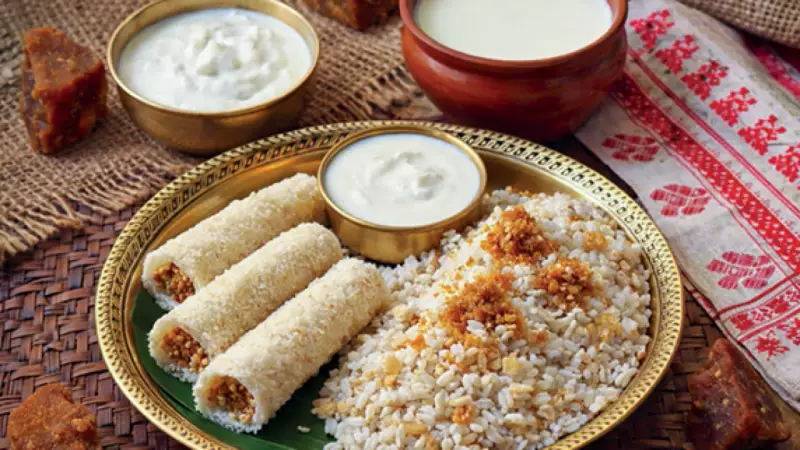
Bishwarupa Borthakur Goswami, who moved to Chennai in 2008, strives for authenticity. Unable to build a large meji due to space and neighbourly concerns, she improvises. "So on the day of Bihu, at 8 am, we light a small meji on our balcony using a clay tawa, so the children know the tradition," she says. The day's customary meal is jolpaan—flattened rice with jaggery and curd or cream.
From the banks of the Ganga to the terraces of Chennai, these harvest festivals illustrate a unifying Indian ethos. They are vibrant testimonies to a shared agrarian past and a resilient cultural present, where communities diligently pass on the warmth of tradition to the next generation, no matter where they call home.