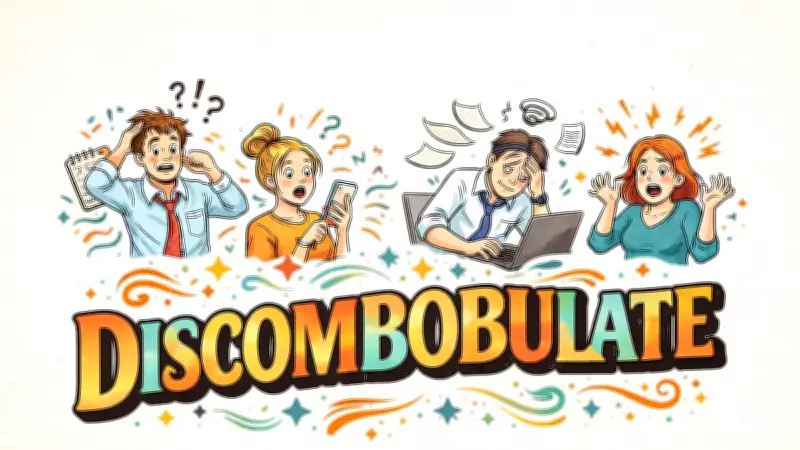
The Curious History of 'Discombobulate': A Word Born from Confusion
In the rich tapestry of the English language, certain words stand out not just for their meaning, but for their whimsical and almost musical quality. One such term is discombobulate, which describes a strange or bewildered state of confusion. This word has captivated linguists and language enthusiasts alike with its playful origins and enduring charm.
Origins in 19th-Century American Slang
The term discombobulate first emerged as lighthearted slang in early 19th-century American English. During this period, American English was rapidly evolving, absorbing influences from various immigrant groups and developing its own unique colloquialisms. Discombobulate was part of this linguistic innovation, crafted to convey a sense of humorous disarray. Its creation reflects the creative spirit of the era, where words were often invented for their expressive power rather than strict grammatical rules.
The Humorous Rhythm and Emotional Conveyance
What makes discombobulate particularly memorable is its exaggerated, nearly humorous rhythm. The word itself seems to tumble off the tongue in a way that mirrors the chaotic emotion it describes. This phonetic playfulness enhances its impact, making it a favorite in casual conversation and literary works alike. Linguists note that such words often gain popularity because they are fun to say and vividly capture complex feelings in a single term.

Over time, discombobulate has maintained its relevance, appearing in dictionaries and everyday usage. It serves as a reminder of how language can evolve to include terms that are both descriptive and entertaining. As we continue to explore the depths of English vocabulary, words like this highlight the dynamic and ever-changing nature of human communication.