Holika Dahan 2026: A Festival of Fire Amidst Celestial Confusion
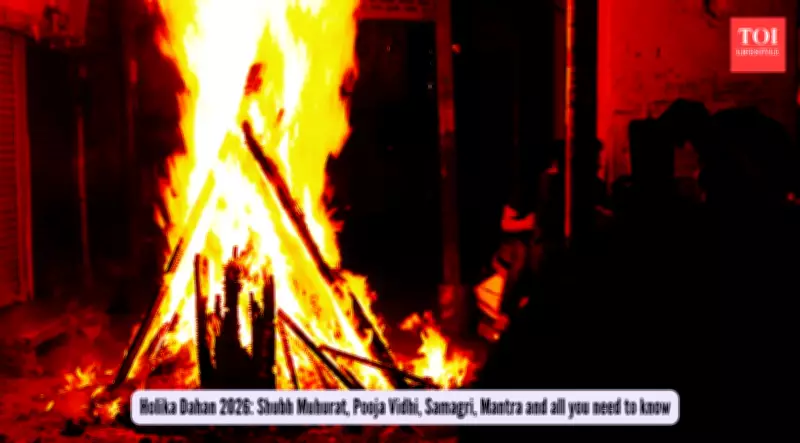
Holika Dahan transcends the simple act of burning a bonfire or performing circular parikramas. It is a profoundly magical evening where the dancing flames symbolically purge winter's lingering gloom, dissolve old grudges, and cleanse life's minor evils, thereby warming hearts in preparation for the vibrant, colorful chaos of Holi. Families traditionally gather around the crackling, sacred fire, sharing tales of faith and triumph as the aromatic scent of woodsmoke intertwines with resonant chants and joyful laughter. This night beautifully bridges ancient mythology with contemporary celebrations, serving as a powerful reminder that goodness always burns brighter.
2026's Unique Challenge: The Lunar Eclipse Overlap
This year, however, the two-day Holi festival is enveloped in significant confusion as it collides directly with a total lunar eclipse, raising critical questions about the precise day and optimal timing for performing Holika Dahan.
Holika Dahan 2026: Exact Date and Timing Clarified
According to authoritative sources like Drikpanchang, Holika Dahan for the year 2026 is scheduled for Tuesday, March 3, across most regions of India, illuminating the sky just before the celebration of Rangwali Holi on Wednesday, March 4. Widespread confusion exists regarding March 2, as the Purnima Tithi technically commences around 5:55 PM on that day. However, this period is marred by the overlap of Bhadra Kaal, an inauspicious phase, rendering it entirely unsuitable for lighting the ceremonial pyre.

Astrological guidance strongly advises prioritizing Pradosh Kaal, the highly auspicious post-sunset window on the actual Purnima day. Consequently, the evening of March 3 will provide the most suitable timing for the ritual, even though the tithi concludes by 5:07 PM on that same day.
Shubh Muhurat for Holika Dahan 2026
Drikpanchang specifies that the most auspicious window, or Shubh Muhurat, for lighting the Holika in 2026 will be from 6:22 PM to 8:50 PM IST on March 3. This provides a total duration of 2 hours and 28 minutes. This Pradosh Kaal period begins immediately after the glow of sunset and concludes before the inauspicious Bhadra period sneaks back in during the early hours of March 4.
Navigating the Chandragrahan: Lunar Eclipse Protocols
On March 3, 2026, the first total lunar eclipse of the year will occur, visible in India from approximately 3:20 PM to 6:47 PM IST, with its peak intensity near 6:33 PM, when the moon may take on a dramatic blood-red appearance.
The associated Sutak period, considered inauspicious, begins at 6:23 AM on that day. This necessitates a pause in temple worship and prohibits the initiation of new rituals, including the main Holika puja, until the eclipse concludes fully around 6:47 PM. During Sutak, activities like cooking meals or undertaking major tasks should be avoided.
Practical Eclipse Guidance for Holika Dahan:
- It is permissible to gather and stack wood for the pyre during the Sutak period, but the fire must not be lit.
- After the eclipse concludes, devotees should take a purifying bath.
- The fire can then be lit precisely at the start of the Shubh Muhurat at 6:22 PM.
- Quietly chanting Vishnu mantras during Sutak can help transform this time into a positive spiritual cleanse.
- Fortunately, since the eclipse finishes just before the muhurat begins, the timings align smoothly without direct conflict.
The Mythological Significance: Why is Holi Celebrated?
Holika Dahan reenacts the timeless victory of devotion and good over evil. The legend tells of the demon king Hiranyakashipu, who, shielded by a powerful boon, demanded to be worshipped as a god. His son, Prahlad, remained a steadfast devotee of Lord Vishnu. Hiranyakashipu's sister, Holika, who possessed a boon making her immune to fire, tricked Prahlad onto a pyre. In a divine twist, the flames consumed Holika instead, sparing the faithful boy. Lord Vishnu later incarnated as Narasimha to vanquish the tyrant at twilight. The bonfire symbolically burns effigies of "Holika," and devotees circle it 3 to 7 times to receive blessings.

Step-by-Step Puja Vidhi for Holika Pujan 2026
- Fire Setup: Select an open area. Stack wood logs along with 5-7 cow dung cakes. Shape the dung to resemble a Holika effigy.
- Thali Preparation: Prepare a ceremonial plate (thali) with roli (sacred powder), rice, a broken coconut, haldi (turmeric), flowers, a moli (sacred thread), ghee-laden sweets, a pot of water, and gulal (colored powder).
- Prayers: Invoke deities Lakshmi and Narasimha, praying, "Protect us like Prahlad." Offer flowers and rice.
- Parikrama: Circle the pyre 3, 7, or 11 times in a clockwise direction, sprinkling a mixture of water and haldi. Tie the moli thread around the Holika structure.
- Ignition: At the designated muhurat, light the pyre from the east or west side. Offer ghee into the fire while praying for prosperity and well-being.
- Aarti and Distribution: Sing devotional bhajans, perform aarti, and distribute prasad, including the prepared sweets and fruits.
Complete Samagri List for Holi 2026 Puja
- Wood logs and/or cow dung cakes
- Roli and chawal (rice)
- Coconut and haldi (turmeric)
- Fresh flowers and traditional sweets
- Moli thread and a water pot
- Gulal (colored powder) and a ghee lamp
- Optional materials for creating an effigy
Essential Precautions and Dos & Don'ts
Dos:
- Take a purifying bath after the Sutak period and lunar eclipse conclude.
- Use eco-friendly logs and materials; strictly avoid plastic.
- Invite neighbors to foster a spirit of community and unity.
Don'ts:
- Do not light the Holika fire during the Bhadra or Sutak periods.
Eclipse-Specific Tips:
- Remain indoors during the eclipse, engage in meditation, and plan donations of food or clothes for afterward.
- Avoid consuming heavy meals until after the muhurat and puja are completed.