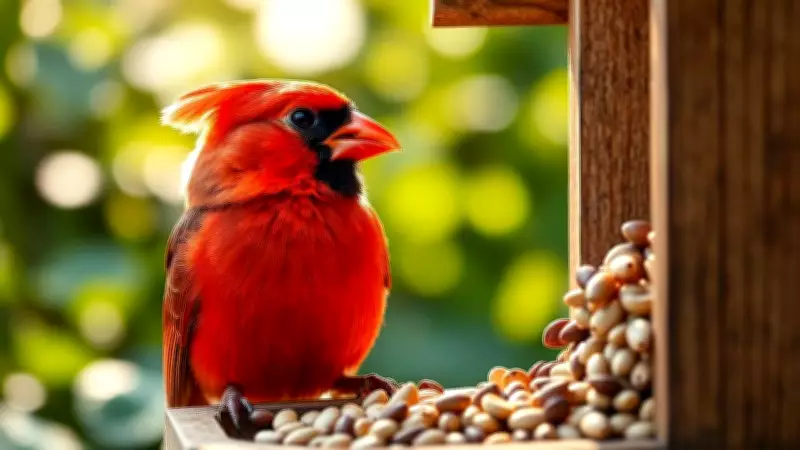
Have you ever seen a beautiful red cardinal land in someone else's yard and wondered why not your yard? You are not alone. Cardinals are among the most familiar backyard birds in the United States for good reason. The males are almost aggressively photogenic, a flash of red so vivid it seems out of place in a grey winter backyard. The females, in their warm tawny tones and rust-tipped crests, have a quieter sort of beauty that grows on you. Many people truly love these birds, and some even find something almost spiritual in the sight of one. The good news is that attracting them is not difficult. It is mostly about one thing: food.
Start with What They Actually Want to Eat
Cardinals are not picky, but they do have preferences, and knowing those preferences is the whole game. Black-oil sunflower seeds are the gold standard. If you are only going to stock one thing, make it this one. Cardinals, with their thick, powerful beaks, can easily break them open, and these birds will reliably return to a feeder that provides them. Another good choice is safflower seeds, which have the added advantage of being less appealing to squirrels, a definite win if you have been losing that battle. Peanuts, shelled or whole, are a good third choice. They are higher in calories, which makes them especially valuable in cold weather when birds are burning more energy just to keep warm, and cardinals will readily go after them. Millet and milo are nice additions to the menu as fillers every once in a while, but they are more of a secondary offering than a main attraction. The takeaway is that a variety helps, but sunflower seeds do most of the work.
The Feeder Type Matters Less Than You Think
One thing that surprises many people is that cardinals are not that picky about the feeder itself. They will eat from platform, hopper, and tube feeders with little argument. They will even pick directly off the ground if the seed is scattered there. That said, platform feeders are especially effective because of their open design. Cardinals are big, heavy birds and need a fairly wide perch to turn around comfortably; smaller birds can cling to a very narrow perch. A wide, stable landing surface makes the whole experience smoother for them, meaning they are more likely to stick around. If you have been obsessing over feeder brands or styles, you can relax. Just make sure it is clean, filled consistently, and well placed. Once a cardinal finds a feeder it trusts, it will keep coming back. Consistency is everything.

Location Is Where Most People Go Wrong
This is the part that often gets overlooked: where you put the feeder matters just as much as what you put in it. Cardinals are naturally cautious birds. They dislike feeding in the open where they feel exposed. What they do like is a quick escape route, a shrub, a hedge, or a low branch to retreat to if something spooks them. In the wild, this instinct is what keeps them alive. In your backyard, a feeder placed right next to some dense shrubbery will almost always outperform one sitting in the middle of an open lawn. If you have any bushes, holly plants, or tree branches that are low to the ground in your yard, that is your best spot. Place your feeder just a few feet from that cover. You can also scatter some seeds directly on the ground near the base of a bush; cardinals naturally forage on the ground and will appreciate the choice.

A Few Small Things That Add Up
Once the food and location are sorted, a few extra habits can help solidify the relationship. Be sure to keep your feeder full. Cardinals are creatures of habit, and once they know your yard is a reliable stop, they will make it part of their everyday routine. Clean the feeder regularly, especially after rain, to prevent mould. According to The Guardian, experts say it is important to feed safely, as dirty feeders, especially those with flat surfaces, can spread diseases like trichomonosis among songbird populations. For an even more attractive option, plant native, berry-producing shrubs such as dogwood or serviceberry to give cardinals a natural food source and even more reason to consider your yard as home territory. There is also science behind the native plant choice — research published in the journal Northeastern Naturalist found that native shrubs have substantially higher fat and energy content than invasive varieties, and songbirds actively preferred them. To us, the berries look the same, but for a bird, the difference is real. But honestly, start with the sunflower seeds and find a spot near some cover. That alone will do most of the work, and once a cardinal finds your yard, they tend to stay.
About the Author: The TOI Lifestyle Desk is a dynamic team of dedicated journalists who, with unwavering passion and commitment, sift through the pulse of the nation to curate a vibrant tapestry of lifestyle news for The Times of India readers. At the TOI Lifestyle Desk, we go beyond the obvious, delving into the extraordinary. Consider us your lifestyle companion, providing a daily dose of inspiration and information. Whether you are seeking the latest fashion trends, travel escapades, culinary delights, or wellness tips, the TOI Lifestyle Desk is your one-stop destination for an enriching lifestyle experience.