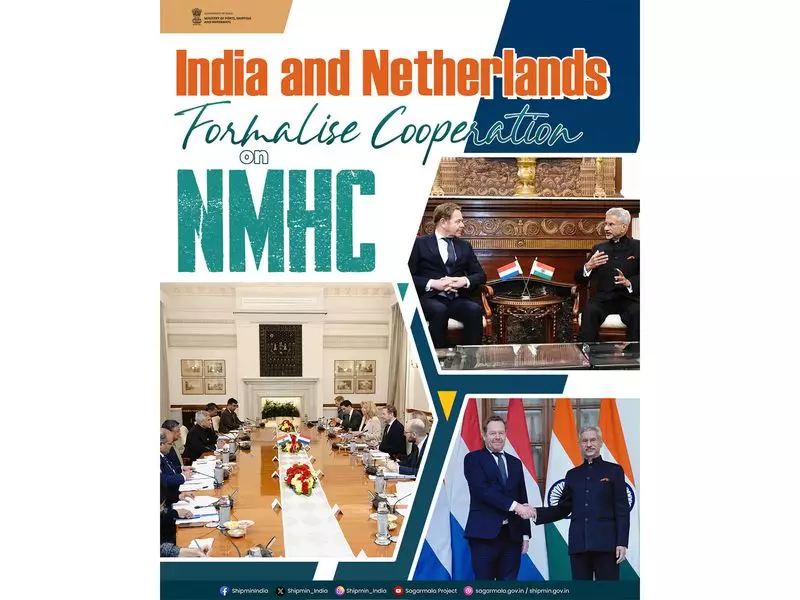
In a significant move to preserve and showcase India's ancient maritime legacy, the governments of India and the Netherlands have entered into a strategic partnership. The two nations signed a crucial Memorandum of Understanding (MoU) to collaborate on the development of the ambitious National Maritime Heritage Complex (NMHC) at Lothal in Gujarat.
A Partnership Steeped in Shared Maritime History
The MoU was formally exchanged between the Ministry of Ports, Shipping and Waterways of India and the Embassy of the Kingdom of the Netherlands in New Delhi. This agreement marks a pivotal step in leveraging Dutch expertise in water management, maritime archaeology, and museum curation to bring India's first-of-its-kind maritime heritage project to life. The collaboration is rooted in a shared history of maritime trade and cultural exchange that dates back centuries.
The signing ceremony took place on Tuesday, February 20, 2024, solidifying the commitment of both countries. The Indian side was represented by the Ministry of Ports, Shipping and Waterways, while the Netherlands' interests were represented by its embassy in the Indian capital.
Reviving the Glory of Lothal: The Heart of the Project
The focal point of this international collaboration is Lothal, one of the southernmost cities of the ancient Indus Valley Civilization. Located in Gujarat, Lothal was a thriving port and engineering marvel around 2400 BCE. The NMHC aims to transform this archaeological site into a world-class tourist and educational destination.
The complex is envisioned to be much more than a traditional museum. Plans include a wide array of modern facilities designed to offer an immersive experience:
- A heritage theme park that recreates the atmosphere of the ancient port.
- Several specialized museums focusing on different aspects of maritime history.
- An amphitheatre for cultural performances and events.
- An innovative light and sound show to narrate Lothal's storied past.
- A coastal museum and an underwater marine museum, which are particularly ambitious components of the plan.
- Essential tourist infrastructure including hotels and resorts to accommodate visitors.
The Netherlands will contribute its renowned proficiency in areas such as water management, maritime museum design, and archaeological research. This expertise is expected to be invaluable, especially for creating the proposed underwater museum and managing the site's interaction with its aquatic environment.
Strategic Importance and Future Implications
This partnership extends beyond cultural preservation. It strengthens the comprehensive strategic partnership between India and the Netherlands, adding a significant cultural and historical dimension to their existing ties in trade, technology, and sustainability. The NMHC is poised to become a symbol of this strengthened bilateral relationship.
The development of the National Maritime Heritage Complex at Lothal is expected to have multiple positive outcomes:
- Tourism and Economic Growth: It will position Gujarat and India as a prime destination for heritage tourism, boosting local employment and the economy.
- Educational Resource: The complex will serve as a central hub for students, historians, and archaeologists to study India's maritime history.
- Global Recognition: By partnering with a nation known for its maritime and museum expertise, India aims to create an institution of global standards, drawing international attention to its ancient civilizational achievements.
The project aligns with the Indian government's vision to develop and promote its rich cultural heritage both domestically and internationally. By bringing the story of Lothal and India's maritime prowess to the forefront, this India-Netherlands collaboration promises to unlock a fascinating chapter of history for future generations, while fostering deeper people-to-people connections between the two nations.