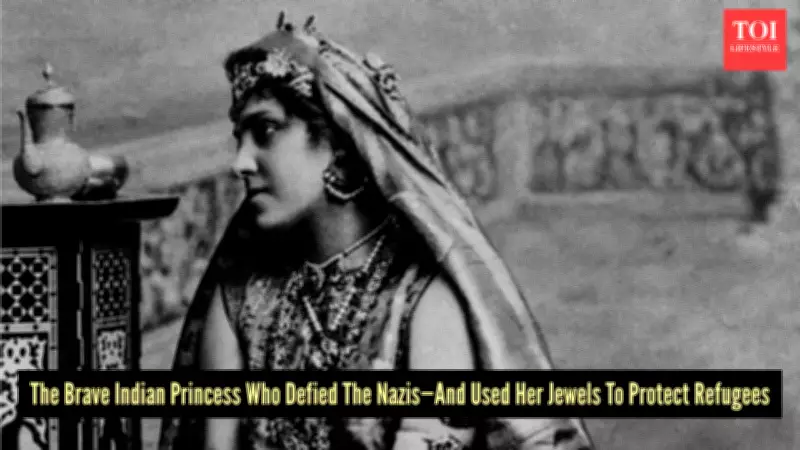
The Indian Princess Who Defied The Nazis with Quiet Courage
If you visit Kensington Palace expecting the typical display of glittering royal diamonds, a new exhibition will completely transform your perspective. Tucked away in a showcase is a mid-19th-century pendant that represents far more than royal opulence. This exquisite piece of jewelry served as a literal lifeline during one of history's darkest periods.
Featured in the highly anticipated The Last Princesses of Punjab exhibition, this pendant is finally receiving public attention. The story behind it unfolds like a cinematic thriller of compassion and bravery against overwhelming odds.
The Untold Story of Royal Protection
In 1938, as the situation in Germany grew increasingly perilous, Catherine Duleep Singh was living in the central German city of Kassel with her partner, Lina Schäfer. During a visit to a local doctor's surgery, Catherine encountered Ilse Hornstein, a Jewish woman in desperate circumstances.

Ilse was frantic with worry—her husband faced imminent danger at the notorious Sachsenhausen concentration camp. Unaware that she was speaking to exiled Indian royalty, Ilse poured out her heart. Catherine responded without hesitation, moved entirely by compassion.
The princess immediately offered to act as a guarantor, enabling the Hornstein family to secure immigration papers to Britain. This royal backing proved crucial in their escape from Nazi persecution.
A Royal Secret from World War II
Armed with Catherine's support, Ilse took an extraordinary risk. She disguised herself and marched directly into local Gestapo offices, where she managed to negotiate her husband's release by citing his service in the First World War. By 1939, the entire family had reached the safety of England.
When Ursula Hornstein, the family's daughter, later converted to Christianity, Catherine gifted her the stunning pendant—a gesture that sealed their lifelong bond. This jewelry piece became a tangible symbol of royal protection and human kindness.
A Quiet Shield for the Vulnerable
Catherine's humanitarian efforts extended far beyond the Hornstein family. She became a quiet but formidable force against the rising Nazi threat, guaranteeing safety for others including Wilhelm Meyerstein and Marieluise Wulff.
The princess opened her doors to shelter additional families like the Reichs and Gurtmanns, ultimately saving dozens of lives from certain danger. Her actions demonstrated that true nobility manifests through compassion rather than birthright.
Michael Bowles, Ursula Hornstein's youngest son, shared the profound emotional significance this history holds for his family today. "It's an incredible testament to someone being kind and generous," Bowles noted, expressing hope that refugees today might receive similar kindness.
A Fierce Family Legacy of Resistance
Courage clearly ran deep in this remarkable family. Curated by Polly Putnam, the exhibition also highlights Catherine's formidable sisters and ancestors. As descendants of Maharaja Duleep Singh, these women lived in exile but refused to fade quietly into British society.
Sophia Duleep Singh, Queen Victoria's goddaughter, became a fierce suffragette. The exhibition features a striking photograph of her selling The Suffragette newspaper outside Hampton Court Palace, alongside a censored 1911 census form protesting women's disenfranchisement.
Bamba Sutherland passionately fought to reclaim her family's taken lands in Lahore, while their grandmother, Jind Kaur—the last Maharani of Punjab—is honored through a portrait by George Richmond. Sketches of Kaur capture the endurance of a woman who walked thousands of miles across mountains after being separated from her child for thirteen years.
Catherine passed away in Buckinghamshire in 1942, but her spirit feels remarkably alive when viewing that single, beautiful pendant today. It reminds the world that true royal legacy isn't about the gold one wears, but about the quiet, profound humanity that can alter the course of history.