New Delhi's historic Travancore Palace is currently hosting a profound cross-cultural dialogue this January. The exhibition, titled 'Inheritances of Light, Geographies of Loss', opened its doors, presenting a unique multidisciplinary exploration of centuries of artistic interaction between India and the Netherlands.
A Dialogue Beyond Diplomacy
Curated by Myna Mukherjee and presented by Engendered in association with the Embassy of the Netherlands, the exhibition was conceived for a special cultural delegation from the European nation. This delegation included directors from prestigious institutions like the Mauritshuis Museum and the Drents Museum, alongside senior cultural diplomats. Moving beyond formal diplomatic exchanges, the display poses deeper questions about inheritance, memory, and ethical ways of seeing art and history.
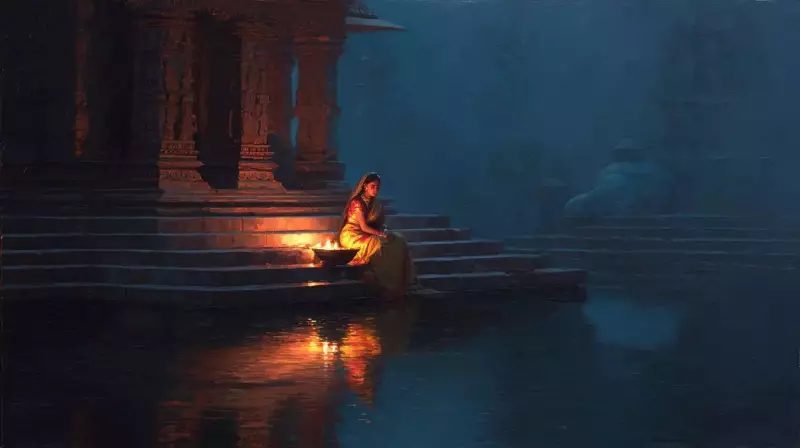
The core idea challenges the perception of light as merely a physical or optical phenomenon, proposing it as a cultural and conceptual medium. The narrative begins with the legacies of European masters like Rembrandt and Vermeer, whose revolutionary use of light transformed painting. It then traces how these artistic sensibilities journeyed to India, first through Raja Ravi Varma's groundbreaking synthesis of European realism with Indian mythology, and later through modern and contemporary practices.

Tracing the Journey of Light and Exchange
Instead of showcasing classic European works, the exhibition highlights pivotal moments of cross-cultural exchange. The story opens with Mughal miniature paintings, reminding viewers that Rembrandt himself studied and reinterpreted Mughal figures through 17th-century prints. This early connection unfolds further into Dutch Bengal goddess paintings and Varma's iconic oleographs, which introduced the dramatic interplay of light and shadow (chiaroscuro) into India's popular devotional culture.
Contemporary artists engage with this rich lineage not as a closed tradition, but as a living, unresolved presence. Artists like Shiblee Muneer, Noureen Rashid, and Anindita Bhattacharya present Neo-Mughal miniatures that look beyond modern borders to shared South Asian visual histories. Raghava KK takes this further by translating miniature consciousness into speculative digital spaces.
Material Histories and Ethical Illumination
The exhibition also grounds the dialogue in tangible history. Displays of indigo-dyed textiles, carpets, terracotta, and glass foreground the labour, trade, and passage of time inherent in the Indo-Dutch mercantile past, particularly under the Dutch East India Company.
Powerful themes of ecology and survival emerge in works like Supriyo Manna's reed installation, which reframes destruction as an act of care, and Alex Davis's steel poppies that reference the historical opium trade. Across diverse mediums—photography, AI, sculpture, architecture, and video—light is presented as a form of ethical attention, quietly illuminating marginalised lives, erased histories, and fragile ecosystems, rather than serving as mere spectacle.
The opening evening featured a panel discussion titled 'Light Between Empires: Reimagining Dutch Indian Artistic Dialogues Today', bringing together museum directors, ambassadors, artists, and thinkers. The night concluded with a live presentation by couturier JJ Valaya, whose exploration of Mughal couture extended the exhibition's inquiry into craftsmanship and continuity.
The exhibition is open to the public from January 12 to 14, 2024, at Travancore Palace, New Delhi. Public viewing hours are from 10 am to 6 pm on January 13 and 14.