Iranian Cinema: The Art of Subtle Resistance Through Film
In pivotal moments, a civilization often expresses its deepest truths through art. For Iran, poetry has long served this role, but Persian cultural expression extends far beyond verse. The intricate geometry of architecture, the meditative discipline of calligraphy, and the luminous abstraction of miniature painting reveal a society where beauty, philosophy, and moral reflection are intertwined. Through cinema, Iranian society continues to contemplate themes of power, suffering, and endurance, making it one of the subtlest languages of resistance in the contemporary world.
The Dual Heritage of Modern Iranian Cinema
Iran now faces war not as a distant threat but as a present reality. In this turbulent landscape, the nation frames its stance as resistance against external domination, whether viewed as strategic defiance or civilizational stubbornness. This posture reflects a society that sees the current struggle as part of a longer contest against imperialism and hegemonic power. Notably, artists and intellectuals who have long criticized internal restrictions—such as censorship, surveillance, and moral policing—often find themselves aligning with broader national sentiment during times of acute external confrontation.
The poetic temperament of Persian culture has nurtured a subtle yet resilient intellectual independence. Modern Iranian cinema inherits this dual heritage, cultivating a slower form of resistance embedded in gestures of persistence, ethical responsibility, and human dignity, rather than staging dramatic confrontations.

Iconic Films and Their Philosophical Depths
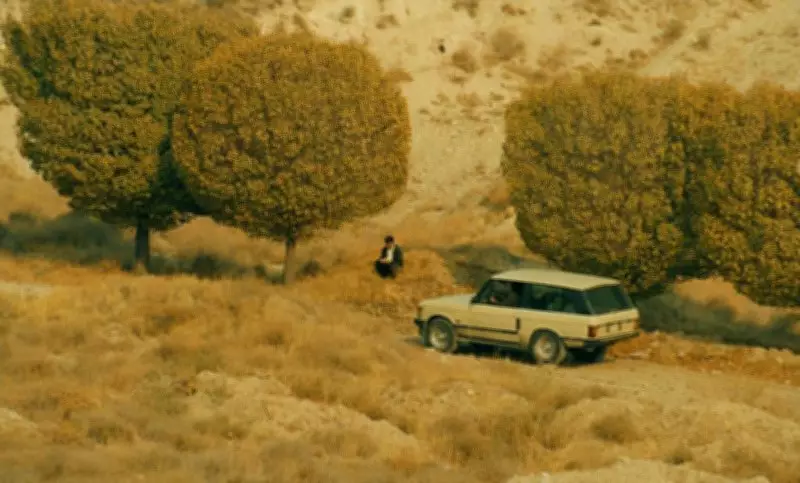
The works of Abbas Kiarostami exemplify this cinematic philosophy. In Taste of Cherry (1997), a solitary man drives through Tehran's outskirts, seeking someone to bury him after his planned suicide. The film unfolds through sparse conversations with strangers who briefly enter his car. In a quietly luminous moment, a taxidermist persuades him to reconsider life by recalling the taste of mulberries experienced after despair. Meaning returns not through spectacle but through the rediscovery of small, fragile pleasures.
Similarly, Where Is the Friend's House? (1987) portrays a young boy's evening search for his classmate's home to return a misplaced notebook and prevent punishment. This journey through winding village alleys becomes an ethical pilgrimage, where the boy's persistence in fulfilling a quiet responsibility affirms moral courage amidst indifferent adults.
Resilience in the Face of Constraint
For decades, filmmakers like Jafar Panahi, Rakhshan Bani-Etemad, and Samira Makhmalbaf have extended this tradition by exploring how dignity survives within constraints. Their works illuminate the lives of workers, children, and women navigating social limitations without surrendering their humanity. These narratives rarely celebrate spectacular victories; instead, they reveal resilience through everyday acts of persistence.
Panahi's own life powerfully illustrates this ethos. After challenging political authority, he was arrested, imprisoned, and placed under house arrest, barred from filmmaking. Yet, his creative imagination refused silence. During confinement, he collaborated on the documentary This Is Not a Film (2011), filmed largely inside his apartment, transforming restriction into a narrative form. In a legendary episode, a copy was smuggled to the Cannes Film Festival on a USB drive hidden inside a cake, turning potential silence into an act of imaginative defiance.
Endurance as a Cultural Argument
Jafar Panahi's gesture reveals a fundamental aspect of Iranian cinema: obstacles rarely produce surrender; they provoke ingenuity. Constraint becomes a creative challenge rather than a terminal barrier. This sensibility resonates beyond art, as Iranian political discourse frames resistance against geopolitical influences like the US and Israel as part of a broader struggle against imperialism. Whether one agrees or not, it reflects a cultural disposition that treats endurance as a form of argument.

It is no coincidence that one of Iranian cinema's enduring images captures this quiet art of negotiating obstacles. In The Bread and Alley (1970), a young boy carrying bread home encounters a barking dog blocking his narrow passage. He hesitates, retreats, gathers courage, and eventually offers the animal a piece of bread to negotiate his way forward. The obstacle is neither destroyed nor avoided; it is patiently negotiated.
Within that narrow alley, one glimpses a deeper civilizational instinct. Iranian culture has long cultivated strategies of endurance grounded in patience, ingenuity, and moral persistence. The boy's predicament may seem trivial, but his gesture carries symbolic force. Faced with an obstruction larger than himself, he advances cautiously until the path opens, embodying a civilization that has learned to move through history calmly, stubbornly, and strategically, without surrender.