Jagannath Temple's Ratna Bhandar Inventory to Proceed in Three Phases
The managing committee of the historic Jagannath Temple in Puri has approved a detailed plan for inventorying the jewels and valuables stored in the Ratna Bhandar. This crucial process will unfold in three distinct phases, ensuring systematic and respectful handling of the temple's treasures.
Three-Phase Inventory Process
According to the finalized plan, the inventory work will begin with the chalanti bhandar, which is the active chamber of the treasury. Following this, officials will move to the bahara bhandar, or outer chamber. The final phase will involve the bhitar bhandar, the inner chamber where the most precious items are kept.
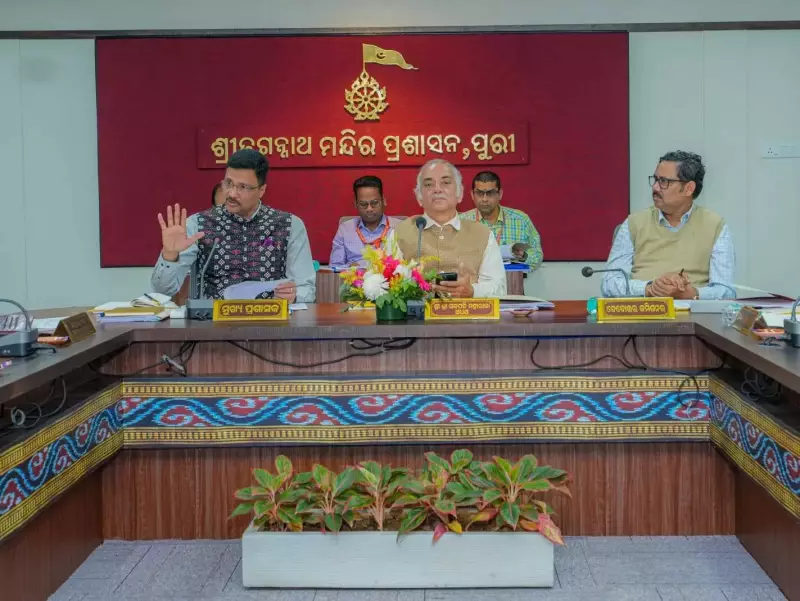
The managing committee, chaired by Gajapati Dibyasingha Deb, met in Puri on Saturday to approve this decision along with several other important matters related to the 12th-century temple.

Standard Operating Procedure Finalized
A high-level panel known as the Shree Jagannath Temple Ratna Bhandar inventory committee prepared an 11-page draft Standard Operating Procedure (SOP) for the inventory. The managing committee reviewed and finalized this SOP during the meeting.
Temple chief administrator Arabinda Padhee explained that the SOP will now be sent to the state government for final approval. Once approved, authorities will select an auspicious date to commence the inventory work.
Padhee emphasized that the committee made specific decisions regarding the number of authorized persons involved in the process. They also planned how to conduct the inventory without disrupting temple rituals or devotee movements for darshan.
Background on Ratna Bhandar
The Archaeological Survey of India (ASI) recently completed repair and renovation work on the Ratna Bhandar. Last year, all valuables were transferred from temporary strong rooms back into the bahara and bhitara chambers. This preparation sets the stage for the upcoming inventory.
Other Key Decisions
The managing committee also finalized the SOP for reopening the Shree Gundicha temple to devotees. The temple will open its doors soon with a nominal entry fee of Rs 10. However, this fee will not apply to senior citizens over 80 years old, differently-abled individuals, or children.
To enhance visitor convenience, the temple will provide free shoe and mobile stands for devotees.
MoU Cancellation
In another significant decision, the committee voted to cancel the Memorandum of Understanding (MoU) with GD Birla Medical Research and Education Foundation. This MoU aimed to establish Srimandir Adarsha Gurukul, a proposed model school in Puri for the children of temple servitors.
Due to insufficient progress under the existing agreement, the committee decided to terminate it. They plan to sign a new MoU with another organization to advance the school project.
These decisions reflect ongoing efforts to manage and preserve the cultural and religious heritage of the Jagannath Temple while addressing practical needs of devotees and temple servitors.