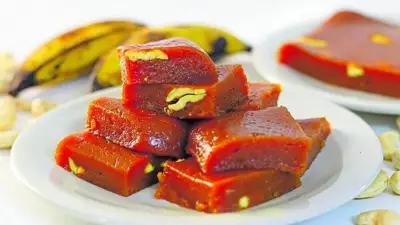
Among the many soft, hazy memories of childhood, one stands out vividly: that girl in my class who brought banana chips for lunch every single day. I must have been around seven or eight years old at the time, and I negotiated with her eagerly to be allowed at least a few chips from her tiffin each afternoon. Until then, the only other kind of chips I had ever tasted were the ubiquitous "Uncle Chipps" available everywhere.
There was something unusually delectable about those banana chips: the mild sweetness of ripe bananas, a clean and brittle crunch, and the nutty fragrance of coconut oil that lingered pleasantly. I remember little else about her, except that she was from Kerala, and she served as my very first introduction to a cuisine far removed from my traditional Bengali palate—one I would come to cherish deeply over the years.
Kerala Cuisine as a Gateway to Cultural Discovery
Kerala cuisine was merely one of the many cultural introductions I encountered while growing up in Jamshedpur, the renowned steel city where I spent a significant portion of my childhood. I moved there from Kolkata at the tender age of four, when my father secured a promising job with one of the Tata-owned companies. He was among the countless young men from across India whose professional aspirations and dreams took them to this fast-growing industrial town, seeking opportunity and a better future.

The Founding Vision of Jamshedpur
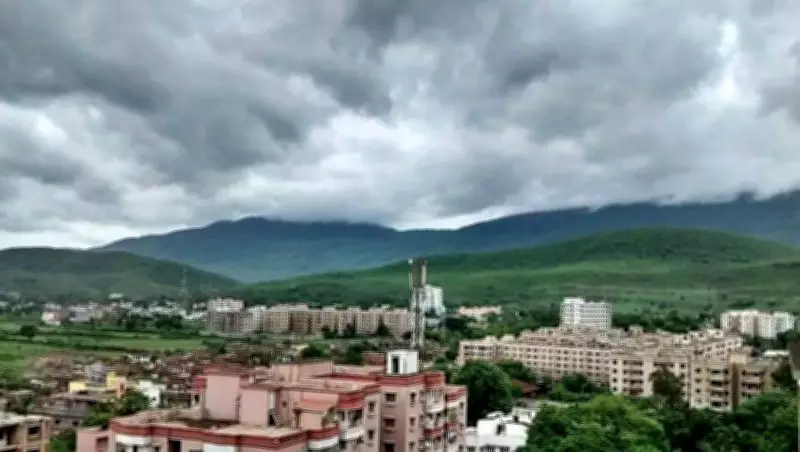
Jamshedpur was not even a century old during those formative years. Founded in 1907 by the visionary Jamsetji Nusserwanji Tata in a bowl of forested hills on the Chhotanagpur Plateau, it was meticulously envisioned as the site of India's first large-scale steel plant. Within just a few decades, the city emerged as the country's pioneering planned industrial township, drawing skilled and unskilled workers from every corner of the Subcontinent.
Although Jamshedpur lay first in Bihar and later in the newly carved state of Jharkhand, it gradually came to embody something much larger than mere regional identity. It transformed into a city relatively unanchored from language, caste, religion, or community, shaped instead by the powerful forces of work and shared aspiration. As children, we were not consciously aware of this profound dynamic, yet as witnesses to our parents' middle-class ambitions in a newly liberalising India, we absorbed a sense of pluralism that feels increasingly fragile in today's polarised climate.
Friendships That Mirrored Diversity
My childhood friendships beautifully reflected that rich diversity. Tanya, whose family hailed from Uttar Pradesh, introduced me to the simple joys of kadhi-chawal, chaat, and dahi vada. We had little in common beyond the fact that our fathers worked for the same company, a coincidence that was often more than enough to forge lasting and meaningful friendships in such industrial townships.
The same held true for Vunshi, my dear Kashmiri Pandit friend. We spent countless long afternoons playing with dolls at each other's homes, and at her dining table, I first tasted exquisite dishes like mutch (Kashmiri meatballs), yakhni, and khatte baingan. Years later, when I stumbled upon a Kashmiri restaurant in Delhi's Pamposh Enclave, the very first bite felt like a warm and nostalgic return to childhood.
There was also my Sikh school friend, whose long, beautifully braided hair was the object of teenage envy among many. She taught me gracefully that pride in one's own language and faith could coexist easily with genuine respect for others. From her, I learned gidda, the lively Punjabi folk dance we performed enthusiastically at a school concert, giddy with excitement over our new parandis and elegant Patiala suits.
Community Celebrations and Shared Festivities
Company-hosted gatherings for employees' families were another defining and cherished feature of life in industrial towns. Festivals—whether Holi, Diwali, Independence Day, or Vishwakarma Puja—were marked joyously by music, abundant food, and large communal celebrations that brought everyone together. I remember especially the delightful litti parties hosted by one of my father's colleagues, where laughter and camaraderie flowed as freely as the food.

Jamshedpur's Unique Historical Context
In some respects, Jamshedpur can indeed be compared to major metropolitan cities like Delhi or Mumbai, themselves renowned as cultural melting pots. However, the crucial difference lies in historical depth and origin. The cosmopolitanism of those older cities is the product of centuries of migration and evolution; in contrast, Jamshedpur actively sought migrants, rather than migrants seeking the city, and was built brick by brick by those who came specifically to work there.
Its residents remained proudly rooted in their identities as Bengali, Punjabi, or Kashmiri, but they were equally proud of their shared identity as dedicated Tata employees. In a country emerging painfully from the deep trauma of Partition and reorganising itself diligently along linguistic lines, Jamshedpur stood apart remarkably. Its most binding allegiance was not to language or faith, but to work—and to the collective idea of building a better, more prosperous future together.
Through shared lunch boxes and communal celebrations, Jamshedpur taught invaluable lessons about belonging that transcended traditional boundaries, fostering a unique unity forged in the heart of industry.