Poet Kanji Patel Advocates for Oral Traditions at Kochi World Poetry Day Programme
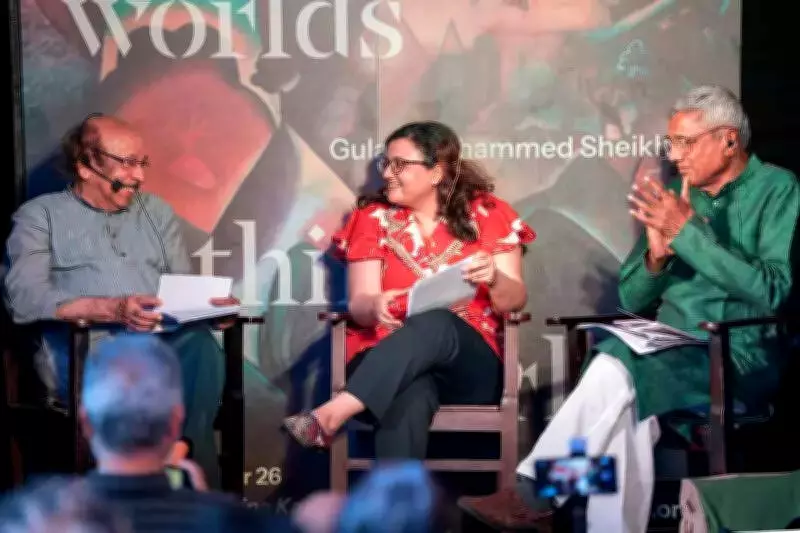
In a compelling address at a World Poetry Day event in Kochi, Gujarati poet and Indigenous peoples' activist Kanji Patel highlighted the enduring power of oral expression, arguing that it often loses its essence when converted into written language. The programme, held at Durbar Hall Art Gallery, was part of the exhibition 'Of Worlds Within', curated by Roobina Karode, and organized by the Kiran Nadar Museum of Art in connection with the ongoing Kochi-Muziris Biennale.
Emphasizing Authenticity in Adivasi Communities
Patel shared insights from his work with Adivasi communities, stating, "In my experience with the Adivasi community, I have been trying to bring the power of the oral world into my poems. Among Adivasi communities, they mean what they say, which is not always the situation in modern-day cities." He emphasized that oral traditions foster a deeper sense of truth and connection, often diluted in written forms.
Dialogue with Poet K Satchidanandan
Patel was joined by renowned poet K Satchidanandan, who reflected on his long association with artist and poet Gulamohammed Sheikh. Satchidanandan noted that Sheikh skillfully expressed his ideology and life through both painting and poetry, showcasing the interplay between visual and literary arts.

The event featured moderated conversations and readings of Sheikh's poems in their original and translated versions, fostering a rich exchange on coastal histories, linguistic crossings, and the role of translation in cultural contexts.
Exploring Translation as Ethical Practice
Patel and Satchidanandan engaged in a dialogue that delved into translation as an ethical practice, multilingual literary traditions, and poetry as a tool for navigating uncertainty across languages and cultures. Patel also recited Gujarati translations of Satchidanandan's poems, illustrating the dynamic process of linguistic adaptation.
The session underscored how translation serves not just as a mechanical task but as a way of living within shifting historical and cultural landscapes, promoting cross-cultural understanding and preserving oral heritage.