Kartavya Path: The Historic Avenue at India's Republic Day Core
Every year when India commemorates its Republic Day on January 26th, national attention converges on Kartavya Path, the magnificent ceremonial boulevard situated at the very heart of New Delhi. This iconic avenue represents far more than just a thoroughfare—it functions as both the symbolic and practical epicenter of the country's most significant annual celebration, embodying the nation's journey and democratic spirit.
From Kingsway to Kartavya: A Journey Through History
Kartavya Path stretches approximately three kilometers from Rashtrapati Bhavan atop Raisina Hill in the west to India Gate in the east, passing by the National War Memorial and National Stadium along its route. Originally constructed during British colonial rule and named Kingsway, this avenue was designed as a central axis of imperial power. Following India's independence in 1947, it was renamed Rajpath to signify the transition from foreign rule to governance by the people.
In a significant development in September 2022, as part of the ambitious Central Vista Redevelopment Project, the avenue received its current name—Kartavya Path, meaning Path of Duty. This renaming reflects a deeper philosophical shift toward emphasizing civic responsibility and national service.

Architectural Grandeur and Ceremonial Significance
The avenue's origins trace back to the early twentieth century when, following the 1911 Delhi Durbar, British authorities decided to relocate India's capital from Kolkata to Delhi. Renowned architects Edwin Lutyens and Herbert Baker masterminded New Delhi as an imperial showcase, with Kingsway serving as its central architectural spine—a wide, straight boulevard intentionally designed to project authority and order.
The road's distinctive east-west orientation, descending gently from Raisina Hill, creates a dramatic visual axis that has become instantly recognizable. Flanked by broad green lawns, shimmering water channels, and neatly aligned trees, the avenue fosters an atmosphere that balances authority with accessibility—a design philosophy that has remarkably endured into India's democratic era.
Vijay Chowk: The Ceremonial Heartbeat
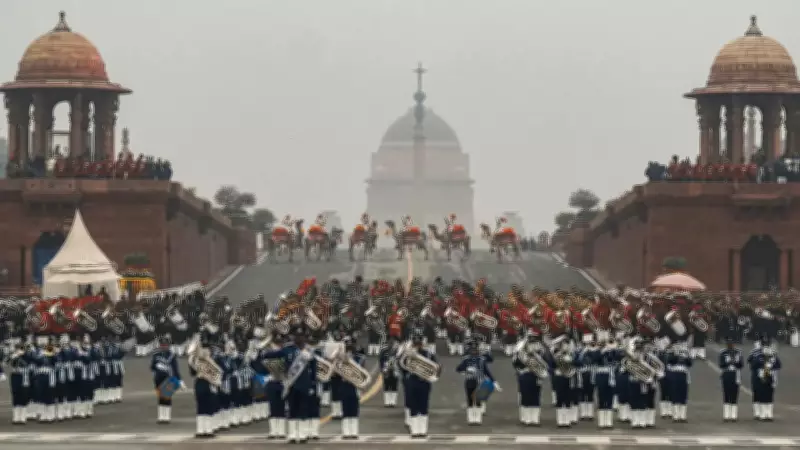
At the very heart of Kartavya Path lies Vijay Chowk, the pivotal venue where the President of India, serving as Supreme Commander of the Armed Forces, receives the ceremonial salute during Republic Day celebrations. This strategic location, flanked by the imposing North Block and South Block—which house critical government ministries—becomes the focal point of the entire parade.
Dignitaries, foreign guests, and thousands of spectators line the avenue each year, while television viewers across the nation witness the spectacular event unfold against this backdrop of grandeur and precision. The first Republic Day Parade in 1950 took place at the Irwin Amphitheater (now the Major Dhyan Chand National Stadium), but from 1951 onward, the celebration shifted permanently to what was then Rajpath, allowing for larger-scale military displays combined with vibrant cultural presentations.
The Unsung Builders: Labor and Ingenuity
While Lutyens and Baker are widely recognized for their architectural contributions, less celebrated in popular narratives is the crucial role played by Indian labor and engineering expertise in constructing this enduring infrastructure. The roads of New Delhi—including Kingsway—were constructed under the supervision of contractors like Sardar Narain Singh, a skilled Punjabi contractor who had previously arranged logistics for the 1911 Delhi Durbar.
Employing advanced techniques for that era—including layering heavy stones, gravel, and charcoal for stability—his team produced avenues remarkably durable for their time, capable of supporting the monumental scale of the new capital. Workers from Rajasthan and Uttar Pradesh contributed significantly to paving hundreds of miles of metalled roads that would become central to Delhi's infrastructure.

Modern Transformation and Engineering Advancements
In recent years, Kartavya Path has undergone significant modernization as part of the Central Vista project. The redevelopment introduced state-of-the-art bituminous surfacing, which offers greater resilience, cost-effectiveness, and improved capacity for heavy loads. This engineering advancement has proven particularly valuable during Republic Day celebrations.
Today, the avenue withstands the parade's immense demands—marching contingents, horses, elephants, motorcycles, heavy military trucks, and even massive battle tanks roll across its surface without causing the extensive damage witnessed in earlier decades. Whereas pre-bituminous reconstructions often required substantial post-parade repairs, the current road remains largely intact following celebrations, serving as a testament to engineering progress.
Beyond Republic Day: Continuing Ceremonial Importance
Kartavya Path's ceremonial role extends well beyond January 26th. The avenue also hosts the poignant Beating Retreat ceremony on January 29th, formally concluding Republic Day festivities. Held at Vijay Chowk as evening descends, this centuries-old military tradition features massed bands from the Army, Navy, Air Force, and paramilitary forces performing stirring patriotic melodies.
The ceremony includes performances of beloved compositions like Sare Jahan Se Achha and Vande Mataram, accompanied by synchronized drills and illuminated fountains. The President arrives escorted by the Presidential Bodyguard, and the ceremony culminates with the national anthem as the national flag is lowered—a moment that evokes deep pride and reflection among participants and spectators alike.
Symbolic Evolution: From Imperial Axis to Democratic Stage
Ultimately, Kartavya Path transcends its physical form to embody India's transformative journey as a nation. What began as Kingsway—an axis of imperial dominance designed to showcase colonial power—evolved into Rajpath, symbolizing sovereign self-rule following independence. Today, it stands as Kartavya Path, reminding citizens that true national strength lies in service, responsibility, and unity.
Every Republic Day, this living boulevard becomes the nation's ceremonial heartbeat, where the spirit of the Indian Republic marches proudly forward. The avenue inspires generations to uphold their kartavya (duty) toward building a stronger, more inclusive India—a continuous journey reflected in both the physical transformations of the path and the evolving ceremonies it hosts.