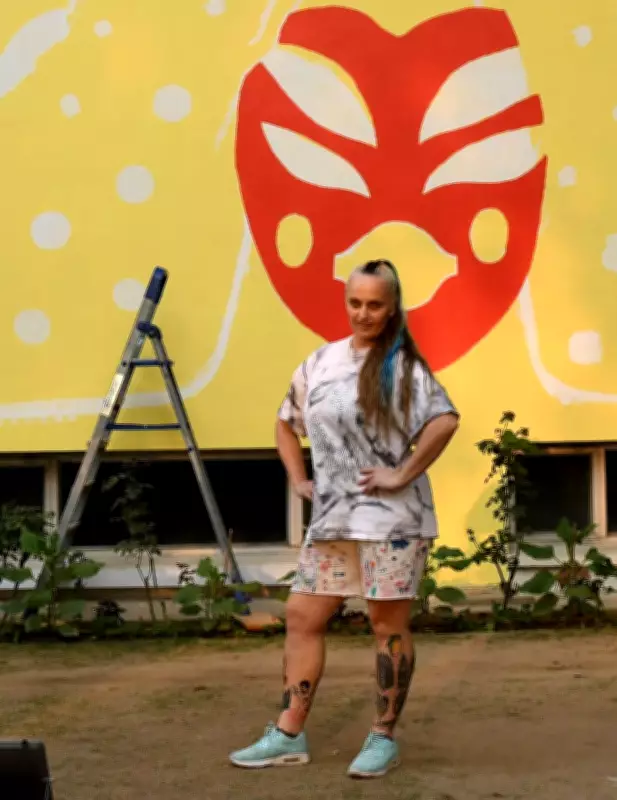
French Street Artist Kashink Transforms Chandigarh with Vibrant Murals
Chandigarh, known for its modernist architecture, has recently been infused with a burst of color and creativity thanks to the renowned French street artist Kashink. The artist, celebrated globally for her distinctive style, has painted the town red—and many other hues—with a series of large-scale murals that are captivating residents and visitors alike.
Bringing Art to Public Spaces
Kashink's work in Chandigarh represents a significant addition to the city's cultural fabric. Her murals, characterized by bold lines, vibrant colors, and intricate patterns, are not just aesthetic enhancements but powerful statements. By placing her art in public spaces, she aims to make art accessible to all, breaking down the barriers often associated with traditional gallery settings.
The murals cover various themes, with a strong focus on identity and visibility. Kashink often incorporates elements that challenge societal norms, using her art as a platform to promote equality and inclusivity. In Chandigarh, her pieces have sparked conversations among locals, encouraging dialogue on important social issues.

Sparking Conversations on Identity and Equality
One of the core aspects of Kashink's art is its ability to provoke thought and discussion. Her murals in Chandigarh delve into topics such as gender identity, cultural diversity, and social justice. Through vivid imagery and symbolic representations, she invites viewers to reflect on their own perceptions and biases.
"Art has the power to transform not just spaces but minds," Kashink has been quoted as saying. Her work in Chandigarh exemplifies this belief, as it has become a focal point for community engagement. Residents have been seen gathering around the murals, sharing their interpretations and experiences, thus fostering a sense of collective awareness.
Impact on Chandigarh's Urban Landscape
The introduction of Kashink's murals has added a new dimension to Chandigarh's urban environment. Known for its planned design by Le Corbusier, the city now boasts contemporary art that complements its modernist roots. This fusion of old and new highlights the evolving nature of public art in India.
- Enhanced Cultural Appeal: The murals have attracted art enthusiasts and tourists, boosting Chandigarh's reputation as a cultural hub.
- Community Involvement: Local artists and students have been inspired by Kashink's work, leading to workshops and collaborative projects.
- Social Dialogue: The art has initiated discussions on equality and identity, contributing to a more inclusive community spirit.
Kashink's visit and artistic contributions underscore the growing trend of international artists engaging with Indian cities. By bringing her unique perspective to Chandigarh, she has not only beautified the city but also enriched its social and cultural discourse.
As the murals continue to draw attention, they serve as a reminder of the transformative power of art in public spaces. Kashink's work in Chandigarh is a testament to how creativity can bridge gaps, inspire change, and paint a brighter, more colorful future for all.