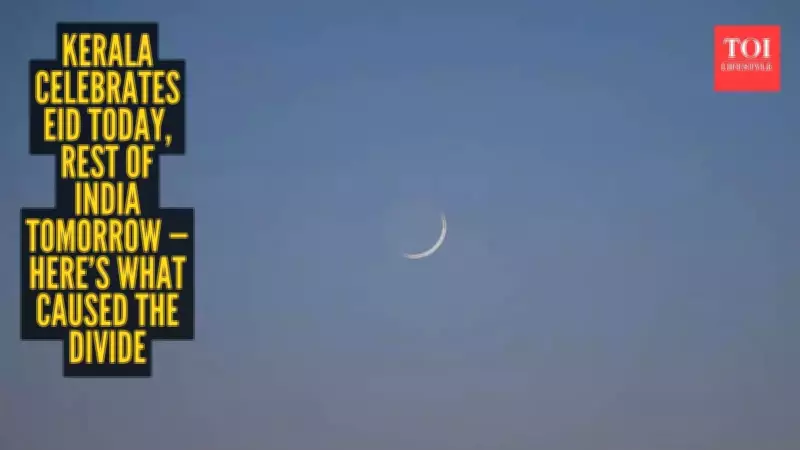
Kerala Celebrates Eid Today While Rest of India Observes Final Fast
If you have been browsing through social media platforms today and experiencing a sense of calendar confusion, you are certainly not alone. While a significant portion of India is currently preparing for one final day of fasting during Ramadan, your friends and contacts in Kerala are likely already immersed deeply in the festive celebrations. They are sharing vibrant photographs of elaborate Biryani spreads, stylish new clothes, and joyful family gatherings across various platforms.
It feels somewhat like Kerala is living in a future timeline, does it not? However, there exists a poetic and age-old reason behind this noticeable timing gap. This discrepancy is not about different religious rules or interpretations; rather, it revolves around the simple, profoundly human act of looking up at the night sky and observing celestial bodies.
The Geography and Tradition of Moon Sighting
In our current era of high-tech smartphone applications and precise astronomical data, the commencement of Eid-ul-Fitr still fundamentally relies on a deeply traditional practice: the physical sighting of the Shawwal crescent moon. This year, Kerala received a fortunate break in this regard. On Thursday evening, religious authorities and dedicated moon-sighting committees across the state, particularly along the lush and scenic coastal belts, confirmed that the thin, delicate sliver of the new moon had graced the horizon successfully.

Within the Islamic lunar calendar framework, the confirmed sighting of the crescent moon serves as the definitive green light. Once that crescent is spotted and verified, the holy month of Ramzan concludes immediately, and the first day of the subsequent month, Shawwal, begins officially the following morning, marking Eid-ul-Fitr celebrations.
Why the Majority of India is Still Waiting
While the skies above the Arabian Sea near Kerala were sufficiently clear to permit a successful moon sighting, the situation unfolded differently across the rest of the country. In major metropolitan hubs such as Delhi, Mumbai, and Lucknow, the Hilal committees, which are the groups responsible for conducting the official moon sighting, diligently scanned the western horizon but returned empty-handed without a confirmed visual.
Whether this was due to specific geographical positioning, atmospheric haze, cloud cover, or other visibility factors, the Shawwal moon remained elusive for these regions. Because a lunar month cannot exceed thirty days according to Islamic tradition, the lack of a confirmed sighting on Thursday meant that for most of India, Friday automatically became the thirtieth and final day of fasting, with Eid-ul-Fitr consequently scheduled for Saturday.
A Tale of Two Distinct Timelines
This annual variation in Eid dates frequently sparks curiosity and questions, but it actually represents a beautiful reflection of how deeply intertwined these religious traditions are with the natural world and local observations. Below is a concise breakdown illustrating how the two primary timelines appear for this particular year:
- Last Day of Roza (Fasting): Kerala - Wednesday; Rest of India - Friday
- Duration of Fasting: Kerala - 29 Days; Rest of India - 30 Days
- Eid Celebration Day: Kerala - Friday; Rest of India - Saturday
- Sighting Basis: Kerala - Local Crescent Sighting; Rest of India - Lack of Sighting/Calendar Completion
The Universal Spirit of Eid Remains Unchanged
It is easy to become preoccupied with the logistics and specifics of when Eid occurs, but the fundamental why of Eid remains universally consistent and heartfelt. For those in Kerala celebrating today, the immense joy and festivity arrive after completing twenty-nine days of spiritual discipline, reflection, and fasting. For those across the rest of India observing the additional thirtieth day of Roza, this final day is widely viewed as a precious, final opportunity for deep personal reflection, sincere prayer, and spiritual preparation before the grand celebration commences.

Respected religious leaders and scholars have been quick to remind communities nationwide that a difference in celebration dates does not translate to a difference in devotion, faith, or religious commitment. Eid-ul-Fitr is, at its very core, a profound masterclass in several essential virtues:
- Gratitude: Cultivating thankfulness for the strength, patience, and perseverance to complete the rigorous fast.
- Charity: Ensuring through Zakat al-Fitr and other acts that those who are less fortunate can also participate fully in the festive meals and celebrations.
- Unity: Connecting meaningfully with neighbors, friends, and community members, irrespective of which specific day they commenced their festivities.
So, if you are currently in Kerala, Eid Mubarak to you and your loved ones! If you are situated elsewhere in India, please hang in there with patience and anticipation. The wait is almost over, and the forthcoming celebrations will undoubtedly be just as sweet, joyous, and spiritually fulfilling when they arrive tomorrow.