Khelat Bhawan: A Living Chronicle of Bengal's Aristocratic and Cultural Legacy
Nestled in the historic Pathuriaghata neighborhood of Kolkata, Khelat Bhawan stands as a magnificent testament to Bengal's rich aristocratic and cultural heritage. This architectural marvel serves as a living chronicle, preserving stories of faith, music, and memory within its walls. The journey of this iconic mansion began with Ram Lochan Ghosh, who arrived from Benares in the early 1700s to serve as dewan to Warren Hastings and purchased the family's initial residence at 46 Pathuriaghata Street.
The Grand Architectural Legacy
According to Samar Singha, accountant of Khelat Bhawan, the present mansion at 47 Pathuriaghata Street was constructed around 1845 by Khelat Chandra Ghosh, grandson of Ram Lochan Ghosh. Designed by the renowned architectural firm Martin & Burn, the structure embodies aristocratic splendor at its zenith. Spread across an impressive 2.5 bighas and inspired by Jaipur architecture, the mansion features two distinctive nahabat khanas at its entrance.
Architectural marvels include:

- A structure that, though two-storied, equals a modern four-storey building in height
- An underground level that provided shelter during the Calcutta Bombings of World War II
- A dance hall in the eastern corner where performers were said to dance on kheer sweets without crushing them
- The thakur dalan still housing two idols of Shadashiva
The family once owned over 100 houses across Kolkata, demonstrating their significant influence and wealth during the peak of their prominence.
Cultural and Historical Significance
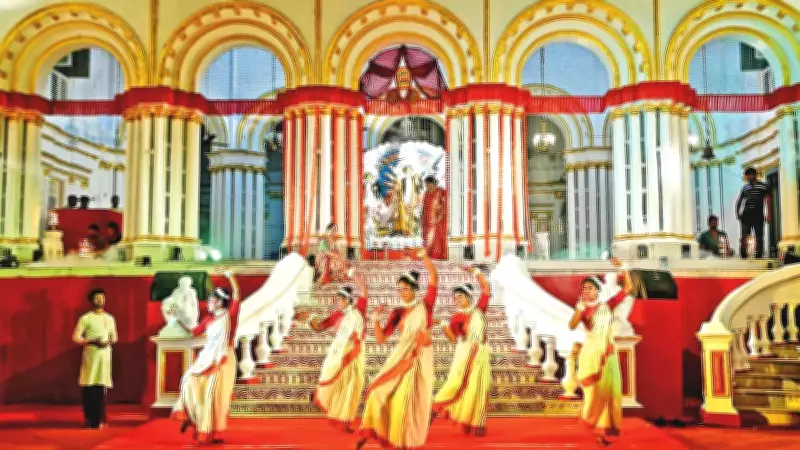
Khelat Bhawan has been the epicenter of numerous cultural and historical milestones that have shaped Bengal's identity. Durga Puja has been celebrated here without interruption since 1855, making it one of the oldest continuous celebrations of its kind in Kolkata. The mansion witnessed the formation of the Bongiyo Kayastha Samaj and hosted spiritual leader Ramakrishna Paramahamsa during his 1881 visit.
Cultural milestones include:
- The All Bengal Music Conference inaugurated by Nobel laureate Rabindranath Tagore
- Performances by legendary artists including Bade Ghulam Ali Khan, Sandhya Mukhopadhyay, and Pt Ajoy Chakrabarty
- Association with novelist Bibhutibhushan Bandyopadhyay, who served as family dewan and wrote Pather Panchali from their Bhagalpur residence
Despite facing multiple inheritance disputes over generations, the family has consistently protected their cultural legacy, ensuring that traditions like Durga and Jagaddhatri Pujas continue to be observed with reverence.
Revival and Restoration Efforts
Today, Khelat Bhawan is experiencing a remarkable revival after years of gradual decline. Since 2019, Karabi Ghosh has spearheaded comprehensive efforts to restore both the mansion's architectural integrity and its cultural legacy. The restoration initiative represents a conscious effort to preserve north Kolkata's bonedi culture for future generations.
Current cultural initiatives include:
- Theatre productions like Lakshmaner Shaktishel
- Exhibitions such as Haraf showcasing artistic works
- Diaspora presentations by Kolkata Unforgettable
- Musical events in collaboration with DAG Museums
These cultural events, which began gaining momentum from 2024, serve dual purposes: they promote Bengal's rich artistic traditions while generating funds to support ongoing restoration work. The initiative has attracted active participation from family members like Samar and represents a community effort to preserve this invaluable heritage site.
Why Khelat Bhawan Matters
Khelat Bhawan refuses to be forgotten because it represents more than just architectural restoration—it serves as an archive of Bengal's cultural consciousness. As Pradipta Ghosh, a sixth-generation family member, expresses, there's a profound sense of responsibility to preserve this legacy, though greater support from the community and cultural institutions remains essential.

The mansion stands as a unique space where history, faith, music, and memory coexist harmoniously. From spiritual visits by Ramakrishna Paramahamsa to musical movements that continued until 2015, Khelat Bhawan has witnessed the evolution of Bengal's cultural landscape while maintaining its traditional roots. It represents not merely a mansion of once-crumbling walls restored with care, but a living institution that continues to inspire cultural preservation across generations.