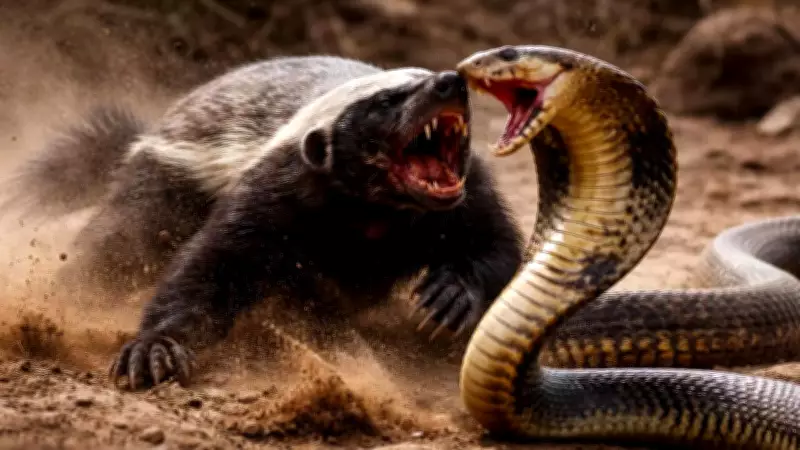
King Cobra vs Honey Badger: The Ultimate Animal Showdown
In the fascinating world of wildlife confrontations, few matchups capture the imagination like a potential battle between the formidable king cobra and the tenacious honey badger. Both creatures are legendary in their own right, but when pitted against each other, which would emerge victorious? This comprehensive analysis examines their physical attributes, hunting techniques, and defensive capabilities to determine the likely outcome.
Size and Physical Characteristics
The king cobra holds the distinction of being the world's longest venomous snake, with some specimens reaching an astonishing 18 feet in length. Despite this impressive stature, these reptiles are surprisingly lightweight, typically weighing around 13 pounds. Their primary advantages lie in their extensive reach and potent venom rather than physical bulk.
In stark contrast, the honey badger presents a completely different physical profile. Measuring approximately three feet in length and weighing between 13 and 35 pounds, these mammals are compact, muscular, and built like miniature tanks. Their stocky frame and dense muscle mass give them significant physical advantages in close combat situations.

Dietary Habits and Hunting Techniques
King cobras specialize in consuming other snakes, including rat snakes, pythons, and even venomous species. They employ their forked tongues to detect prey, deliver lightning-fast strikes, inject neurotoxic venom, and swallow their victims whole. This specialized diet has made them apex predators within their ecological niche.
Honey badgers, conversely, are opportunistic omnivores with remarkably diverse diets. They consume rodents, eggs, insects, and various small animals, including snakes. Their thick, loose skin and documented resistance to venom allow them to confront and consume snake species that would deter most other predators.
Speed, Agility, and Movement Capabilities
Both animals demonstrate impressive mobility in their respective environments. Honey badgers can achieve speeds of 16 to 19 miles per hour in short bursts and possess remarkable versatility, including climbing trees, digging extensive tunnel systems, and swimming proficiently.
King cobras can strike with incredible speed, covering distances at up to 12 miles per hour when necessary. However, they are not pursuit predators and typically rely on ambush tactics rather than extended chases.
Habitat and Geographic Distribution
King cobras inhabit various regions across South and Southeast Asia, favoring forests, bamboo thickets, mangrove swamps, and riverine environments. They prefer warm, humid climates with dense vegetation but occasionally venture into agricultural areas.
Honey badgers demonstrate greater habitat flexibility, occupying territories across Africa, India, and Southwest Asia. They thrive in diverse environments including savannas, forests, deserts, and mountainous regions, utilizing burrows, rock crevices, and abandoned dens for shelter.
Defensive Strategies and Special Adaptations
The honey badger's defensive capabilities are truly extraordinary. Their thick, loose skin allows them to twist and contort when grabbed, making them difficult to restrain. They possess documented resistance to various venoms and toxins, complemented by sharp claws and jaws powerful enough to crush tortoise shells.
King cobras employ intimidation tactics including distinctive hissing sounds and hood flaring to deter potential threats. Their neurotoxic venom represents their primary defense mechanism, capable of killing large animals with a single bite.
The Hypothetical Confrontation: Who Would Prevail?
When envisioning a direct confrontation between these two remarkable animals, several factors suggest the honey badger would likely emerge victorious. The badger's aggressive nature, combined with its speed and fearlessness, would probably lead it to target the cobra's head immediately in an attack.

Field observations and wildlife documentation consistently show honey badgers actively hunting and consuming venomous snakes. Their combination of physical toughness, aggressive temperament, and venom resistance provides significant advantages in such encounters. Wildlife experts recognize honey badgers as among the few mammalian species that regularly prey on venomous snakes, further supporting their potential dominance in this matchup.
While the king cobra's venom represents a formidable weapon, the honey badger's ability to deliver damaging bites and claw attacks before the venom takes full effect could prove decisive. The badger's compact, muscular build and specialized adaptations for confronting dangerous prey give it a distinct edge in what would undoubtedly be a dramatic wildlife encounter.