Kishanganj's Little Iran: The Enduring Legacy of a Small Persian Community in Bihar
India is a land of diverse communities, many with histories that extend well beyond its national boundaries. In the district of Kishanganj, Bihar, nestled near the borders of West Bengal and Nepal, a small but fascinating group lives quietly, often referred to locally as Little Iran. This Iranian community, with roots tracing back to Persia, has maintained a unique cultural presence for decades, blending ancient traditions with modern Indian life.
The Historical Roots of Kishanganj's Irani Community
Trade between India and Persia dates back centuries, flourishing during the Mughal era with exchanges of spices, textiles, metals, and precious stones across the Arabian Sea and Central Asia. The Irani community in Kishanganj is believed to have originated from these historical movements. According to the Azad India Foundation, this group numbers roughly 800 to 1,000 people, with community accounts suggesting migration from the nearby Purnia district in the early 1980s. Over time, they established settlements known as Irani Bastis, such as Motibagh Karbala, where they purchased land and built their lives.
Most members are Shia Muslims, and while their ancestry lies in Persia, they largely identify as Indian today. Their daily existence has gradually integrated with local culture, yet they strive to preserve key aspects of their heritage.

Evolution of Trade and Livelihood
Older generations often recount a nomadic past, where families traveled in caravans called khafilas, setting up temporary tents known as khemas. Trading was their primary livelihood, initially centered on horses sold at fairs and to wealthy landlords. As transportation evolved and demand shifted, the community adapted, turning to selling knives, glass frames, and small household goods. In recent years, the gemstone trade has gained prominence, with semi-precious stones sourced from markets in Jaipur and Kolkata and sold in local towns and villages. Many Iranian men continue to travel regularly for trade, while women typically manage household responsibilities.
Cultural Traditions: Language, Clothing, and Food
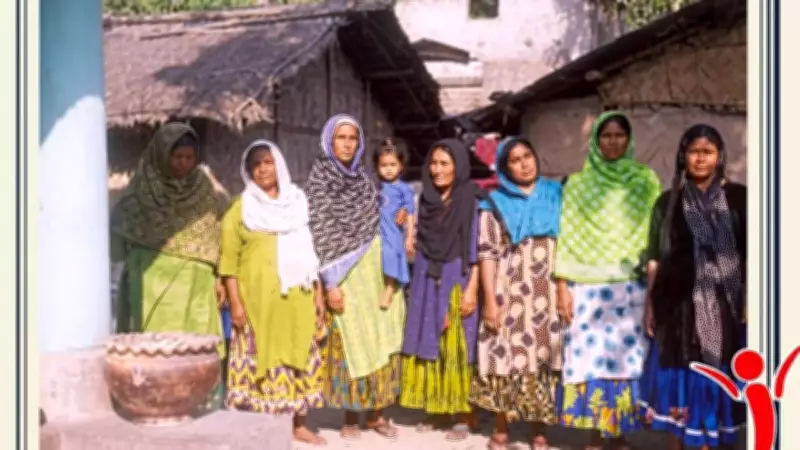
The community's language reflects its mixed heritage, blending Persian, Hindi, and Urdu in everyday conversations, influenced over time by local dialects. Irani women maintain traditional attire, wearing lehengas and kurtas, a style dating back to the colonial period and once indicative of traveling traders. Men generally adopt the clothing styles of the surrounding region.
Food habits are a distinctive feature, with meat commonly included in daily meals. Dishes like halwa puri, degh pulao, halim, and dal gosht are prepared with generous spices for rich flavors. Old cooking traditions persist, such as preparing up to one hundred rotis on a large upside-down tawa during weddings or festivals, using long rolling pins to serve guests efficiently.
Marriage Customs and Community Structure
Marriage traditions within the Iranian community remain strict, with a preference for intra-community unions. Girls are expected to marry Iranian men, while boys have slightly more flexibility, sometimes marrying women from other Iranian groups. Marrying outside the community can lead to social exclusion for girls. Notably, there is no dowry system; instead, the groom provides a small amount called meher, typically Rs. 5,001 or Rs. 10,001, to the bride. Proposals begin with family discussions before being presented to the community leader.
Education and Socioeconomic Challenges
Education levels are limited, with about half of boys completing studies up to matriculation. Girls' education is even lower, often not progressing beyond classes six or seven, as many focus on household work or basic religious education. There is no strict purdah system, allowing women relative freedom of movement.
Economically, most families face difficulties, relying on small trade and traveling businesses that offer unpredictable income. With households often comprising seven or eight members, achieving financial stability is a constant challenge.

Balancing Heritage and Modernity
Despite these challenges, the Irani community in Kishanganj has become an integral part of the local fabric, celebrating festivals together, hosting joint feasts, and maintaining close associations. Their culture, reflected in language, food, and marriage customs, serves as a living reminder of the historical ties between India and Persia. In Kishanganj, the legacy of Little Iran endures, a testament to resilience and cultural preservation in a rapidly changing world.