Kolkata's Chinese Community Honors Founder Tong Achew at Historic Achipur Temple
On Friday, members of Kolkata's Chinese community made a poignant pilgrimage to the historic Chinese temple in Achipur, located on the city's outskirts. The visit was organized to observe the birth anniversary of Tong Achew, recognized as the first known Chinese trader to arrive in India. This significant day also coincided with the closing of this year's Chinese New Year celebrations, adding a layer of cultural resonance to the event.
A Mix of Remembrance, Ritual, and Homecoming
Organized by members of the Gee Hing Chinese Temple in Tiretta Bazar's Chinatown, the journey to the over 300-year-old shrine near Budge Budge was a profound blend of remembrance, ritual, and homecoming. For a community with roots in Bengal stretching back more than three centuries, this annual visit serves as a vital link to their heritage.
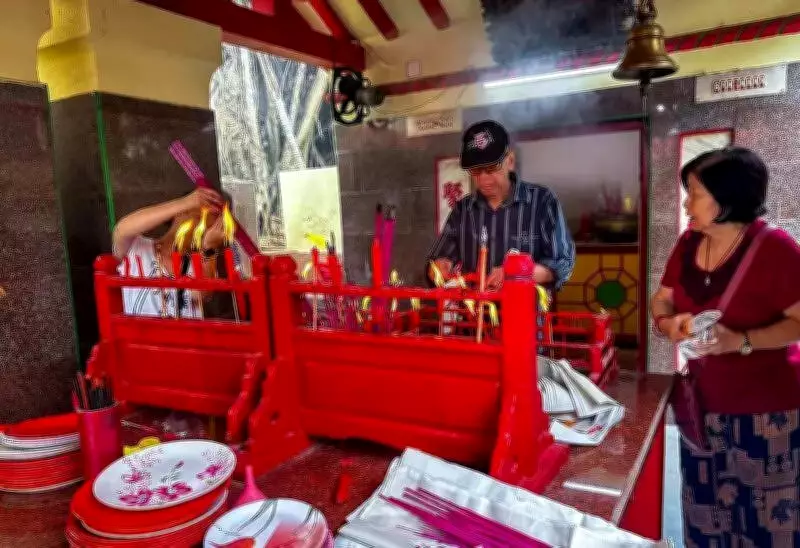
Carrying food, fruits, flowers, and other offerings, community members gathered in the temple courtyard. There, they engaged in traditional practices such as laying flowers, lighting incense sticks and candles, offering food, and singing religious hymns. For many attendees, this was not merely a ceremonial act but a deep reconnection with their origins.

Historical Significance of the Temple and Achew's Legacy
The temple, built in 1718 to mark Kolkata's first Chinese settlement, was established by Tong Achew in the early 18th century. The village of Achipur is believed to derive its name from Achew, who pioneered sugarcane cultivation and set up a sugar-manufacturing plant in the area. He employed Chinese workers who followed him to India, laying the foundation for the community's presence in the region.
"This place is where our history began," emphasized Hsieh, highlighting the site's importance as the birthplace of Kolkata's Chinese diaspora.Renewed Significance Through Temple Restoration
The annual visit has gained greater importance following the recent restoration of the temple. Christopher Ian Alpin, a community member who documented the restoration efforts, noted that the revival of the shrine has renewed the emotional bond many feel with Achipur.
"The restoration was not just about saving an old structure. It was also about restoring memory," Alpin explained. "When people came here with flowers, incense, and offerings, you could see that it was much more than a ritual. It was reconnecting with the land where our story began."A Temporary Chinatown and Community Decline
Once a thriving Chinese settlement, Achipur now stands as a mere community landmark. However, during the Chinese New Year period, the village briefly transforms into what community members often refer to as a "temporary Chinatown." Families gather to honor their ancestors and celebrate Achew's enduring legacy.
Despite this vibrant celebration, the occasion also served as a somber reminder of the community's decline in Kolkata. From an estimated population of nearly 100,000 in the 1960s and 1970s, the community has dwindled to just a few thousand today. Reflecting this shift, the temple's daily upkeep is now managed by Faruqul Haque, whose family has been associated with the site for seven generations, underscoring the changing dynamics of preservation and community involvement.