Kolkata Exhibition Reveals Palestinian Lives Beyond War Imagery
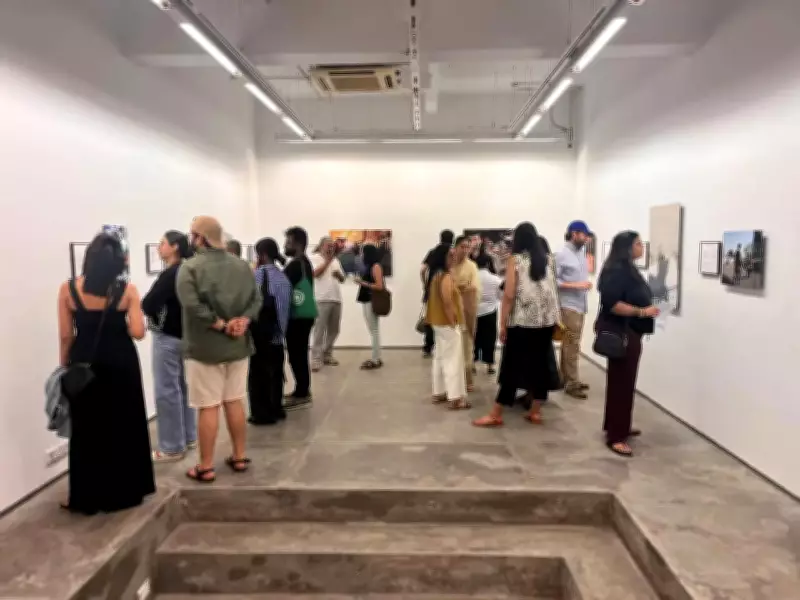
In an era where warfare is consumed through real-time alerts and repetitive visuals of destruction, a groundbreaking exhibition at Kolkata's Experimenter gallery deliberately slows down the narrative. Emily Jacir's Where We Come From presents a profound departure from conventional war representation, offering no explosions or dramatic spectacle. Instead, the exhibition meticulously assembles fragments of daily existence, personal requests, cherished memories, and subtle gestures that collectively unveil what conflict erodes long before it claims lives: fundamental human rights to belong, to return home, and to remember one's heritage.
Immediate Emotional Impact on Visitors
For numerous attendees, the exhibition's effect is both instantaneous and deeply personal. "It makes me so angry... it makes me sad," expressed designer Bashubi Tiwari while observing one artwork. This emotional response is not incidental but intricately woven into the project's very framework. Originally created between 2001 and 2003, the series centers on Jacir fulfilling simple, intimate requests for Palestinians denied access to their homeland. Viewed through today's lens, these acts carry amplified weight. "We're accustomed to witnessing only war and devastation," Tiwari noted. "These pieces evoke memories... reminiscent of individuals who may no longer be alive." This transition from visible imagery to palpable absence delivers the exhibition's most powerful impact.
Reclaiming Identity Through Memory and Absence
The potency of Where We Come From lies significantly in what it deliberately omits. Photographer Bitan Basu, another visitor, highlighted the rarity of such representations. "You don't anticipate encountering visuals like these from Palestine," he remarked. "It revolves around memory, yearning for home." This focus strikes a particularly resonant chord in a global context where Palestine is frequently reduced to statistics and ruin. Jacir's work advocates for a quieter, more enduring perspective: that a place transcends mere territory, embodying lived experiences and collective memory.

The exhibition refrains from simplifying or explicating political complexities. Instead, it challenges viewers to confront a profoundly uncomfortable reality: that entire histories can be obliterated in real-time, and that the act of remembering itself constitutes a form of resistance. In Kolkata, a city with a rich legacy of engaging political art, the show transcends a mere exhibition, evolving into a collective reckoning with loss, identity, and resilience.