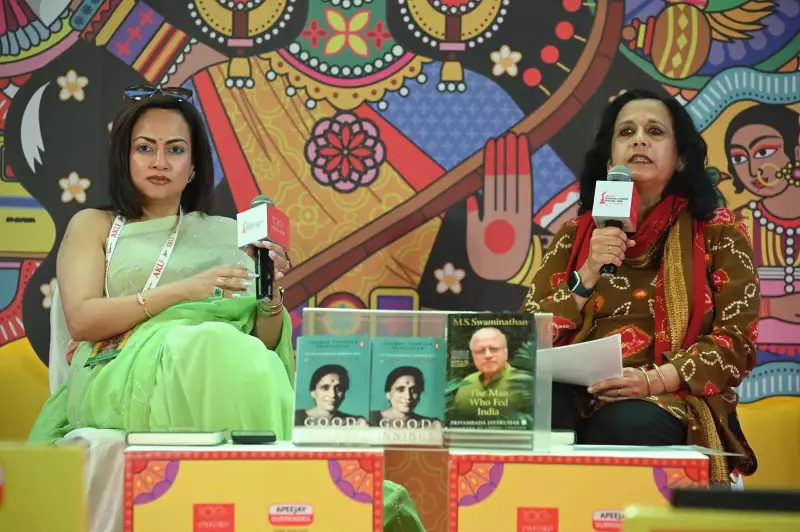
The Kolkata Literary Festival 2026 dedicated a powerful session to celebrating the monumental legacy of agricultural scientist M.S. Swaminathan. Held at the historic Alipore Museum, the discussion titled 'M.S. Swaminathan: The Man Who Fed India' brought together his niece and biographer, Priyambada Jayakumar, with noted author and editor Shobha Tharoor Srinivasan.
Personal Insights Into a Scientific Giant
Priyambada Jayakumar drew extensively from her acclaimed biography of Swaminathan. She meticulously traced his journey, focusing on how his farmer-centric scientific interventions fundamentally reshaped India's food security landscape in the post-Independence era. Jayakumar shared intimate, personal anecdotes that illuminated the human dimension behind his towering achievements.
She recounted how Swaminathan personally engaged with farmers across the country to build trust and promote high-yielding seed varieties. This hands-on approach was a cornerstone of his philosophy, demonstrating that scientific progress must connect directly with the people it aims to serve.

From Green Revolution to Evergreen Vision
The conversation naturally progressed to Swaminathan's later visionary work. The session placed a strong emphasis on his pioneering ideas for sustainable agriculture. Jayakumar and Srinivasan explored his influential concept of the "Evergreen Revolution," which advocates for productivity that works in harmony with ecology.
They discussed the global impact of these ideas, highlighting how Swaminathan's foresight continues to guide agricultural policy and research worldwide. Shobha Tharoor Srinivasan skillfully steered the dialogue toward deeper questions of legacy and biography. She prompted reflections on the challenges of capturing such a vast life in writing and the enduring power of Swaminathan's personal narrative.
Relevance for Contemporary Challenges
A significant portion of the session was devoted to the renewed urgency of Swaminathan's work. The panelists connected his decades-old principles to today's most pressing global issues. They argued that his integrated approach to farming offers crucial lessons for tackling modern crises like climate change and fragile food systems.
The ideas of sustainability, farmer welfare, and ecological balance he championed are now more relevant than ever. The engaged audience participated actively during the interactive segments. Their questions and comments reflected a deep appreciation for Swaminathan's enduring impact. Many attendees shared how his life and values continue to inspire and offer practical guidance for future generations facing an uncertain agricultural future.
The session at the Kolkata Literary Festival served as a timely reminder. It celebrated not just a historical figure, but a living legacy whose scientific wisdom and humanistic values remain essential blueprints for building a food-secure and sustainable world.