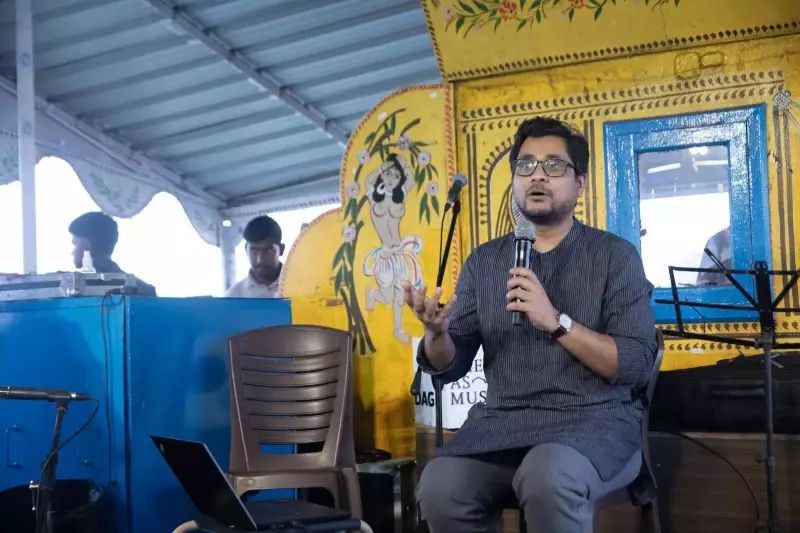
While it physically dominates the city's geography, Kolkata's Fort William remains a curiously absent presence in the public consciousness. A recent event, a history walk titled 'By the Bastions', sought to change that by exploring the fort's profound yet overlooked impact on the city's development, power dynamics, and relationship with labour and migration.
The Strategic Invisibility of New Fort William
Historian Kaustubh Mani Sengupta, speaking from a steamer on the Hooghly river, presented a fascinating analysis. He explained that the New Fort William represented a radical break from traditional fort design in the Indian subcontinent. Unlike imposing Mughal or regional forts meant to be seen from afar, this structure was deliberately built low and concealed.
Its design followed European principles suited for the age of gunpowder and cannons, making it impossible to spot from a distance. Sengupta emphasized that this invisibility was not an accident but a core strategic choice—an architectural adaptation to modern warfare.

Constructed over nearly two decades under the supervision of figures like Robert Clive, the fort was completed just as the East India Company's power had solidified. The need to hide had vanished. This newfound confidence soon manifested in grand, visible structures like the Governor's House, marking a clear shift from defensive secrecy to overt imperial display.
An Absent Presence in Kolkata's Narrative
Paradoxically, as Fort William faded from public view, its influence on the city's future grew. Sengupta pointed out that because the fort remains a heavily secured military zone, its history is often excluded from popular narratives about Kolkata. "These spaces exist, but they are absent," he observed, arguing that such architectures demand detailed archival study precisely because the public cannot access them directly.
Yet, these very spaces were central to the making of early Calcutta and to the spatial logic that governed the city throughout the late 18th and 19th centuries. The fort quietly reconfigured the riverfront, established new power structures, and dictated patterns of labour and migration.
Echoes of History Through Music and Reflection
The historical discussion was followed by a poignant musical performance by Arko and Friends, which drew on musical traditions shaped by the very forces of labour, migration, and displacement that built Fort William. The music echoed the colonial networks that made the fort's construction possible.
Artist Rajeev Dutta, who documented the event, described it as "reminiscing forgotten cartographies and narratives along the riverfront." For attendees, the unique setting on the Hooghly amplified the experience.
"By the Bastion was truly mesmerising," said teacher Devina Gupta. "The talk revealed how Fort William shaped Calcutta's ideologies, architecture and power structures, followed by music that carried those histories forward."
Entrepreneur Kunal Mandal reflected, "Learning Kolkata's history on a sunset boat ride revealed the city's beauty through its stories." From the vantage point of the river, Fort William emerged not as a mere monument but as a powerful idea—one that permanently reshaped visibility, authority, and memory in Kolkata, all while remaining stubbornly out of sight.