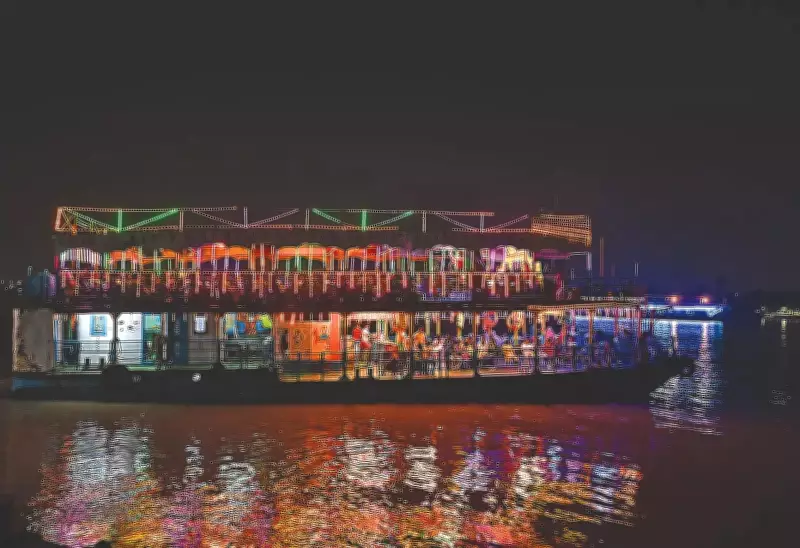
Kolkata's Hooghly Riverfront Transforms from Neglect to Vibrant Cultural Hub
For decades, Kolkata developed along the banks of the Hooghly River, yet the riverfront remained one of the city's most underutilized public spaces. Historic ghats dating back to the 18th and 19th centuries gradually fell into disrepair as urban life shifted away from the water's edge. In recent years, however, a remarkable transformation has begun, driven by conservation efforts, private initiatives, and a surge in cultural activities. This revival is turning the riverfront into a dynamic center of heritage, hospitality, and public engagement.
A Social and Cultural Venue Reborn
As Kolkata's riverfront evolves into a premier cultural space, festivals and performances are becoming integral to its new identity. For musicians, the Hooghly offers an unparalleled atmosphere that few venues can match. Sukrit Sen of the Living Waters Museum explains, "When you host a music festival by the river, the experience becomes bigger than the stage." Piyush Singhee of The Barge Company adds, "Spiritual rituals at dawn, ferry commuters, and now concerts, private events, and wellness gatherings — culture here is central, not incidental." He notes there is something profoundly poetic about art unfolding on water, enhancing the riverfront's allure.
Ghats as Civic Heritage Spaces
Just over two decades ago, Kolkata's riverfront ghats were rarely places where people would linger. Mudar Patherya, a restorer and conservation enthusiast, recalls, "Twenty-five years ago, the typical condition of a Kolkata ghat was dirty and unsafe — not somewhere people would visit." For most residents, the ghats served purely functional purposes, such as bathing or other daily needs. Patherya notes that for many in south Kolkata, the ghats entered public consciousness mainly during Mahalaya. The most significant change, he says, is in perception. "The decisive improvement is that the ghats have come into public currency." Today, restoration efforts increasingly treat these structures as vital civic heritage spaces, preserving their historical significance while making them accessible to all.

A Much-Needed Restoration Initiative
Several key ghats along the Hooghly are undergoing extensive redevelopment to restore their former glory and enhance public use:
- Kumartuli Ghat: Located beside the idol-makers' quarter, this ghat is being redeveloped with plans to restore historic steps, strengthen the embankment, and create a landscaped promenade along a 300-meter riverfront stretch.
- Mayer Ghat & Suriname Ghat: Both are being upgraded under a Corporate Social Responsibility initiative by Garden Reach Shipbuilders and Engineers in collaboration with Syama Prasad Mookerjee Port. The project aims to improve access, clean the river edge, and upgrade public infrastructure.
- Chotelal Ki Ghat: Indian Hotels Company Limited has partnered with the port to restore this heritage ghat from the 1870s. Plans include conserving the structure while developing the riverfront as a recreation and tourism zone.
Kolkata and the Hooghly: An Evolving Relationship
For much of the recent past, Kolkata's relationship with the Hooghly remained largely utilitarian. Rishika Das Roy of The Barge Company observes, "The Hooghly River has always been the spine of Kolkata's history — trade, migration, culture, spirituality — everything flowed through it. Yet, for years, the river was seen mainly as industrial or functional." The introduction of hospitality barges aims to reimagine the river as an experiential space. Over the last decade, this perception has begun to shift significantly, with conservation efforts, curated public spaces, and new hospitality concepts reviving the riverfront. Roy sees floating venues as part of this broader change. "Kolkata's riverfront has slowly begun reclaiming its vibrancy — from restored ghats to public spaces," she says. "Revival isn't just about beautification — it's about activating spaces."

The transformation is also evident in the rise of riverfront dining establishments such as Dockyard & Co., Polo Floatel, and Bageecha Cafe. Manish K Pandey of Dockyard & Co. notes, "People are rediscovering the river as a space of pause and pleasure. The ambience is intentionally unhurried, allowing the river to be the protagonist." This shift reflects a deeper reconnection between the city and its aquatic lifeline.
Revitalizing Heritage Through Collaboration
Revitalizing Kolkata's ghats is fundamentally about renewing the city's connection with its river. Through art and public engagement, initiatives seek to restore their vibrancy while making heritage meaningful for contemporary audiences. Laily Thompson, Founder of Kult X Heritage Foundation, which organized the River Festival, emphasizes, "This initiative, organized with support from and in association with Syama Prasad Mookerjee Port, reflects the power of collaboration in shaping a culturally connected future for the city." As Kolkata continues to embrace its riverfront, the Hooghly stands as a striking symbol of the city rediscovering its roots and forging a vibrant, heritage-rich future.