From Viral Dance to Cultural Obsession: Korea's Growing Influence in India
For millions of Indians, the journey began with an infectious beat and a quirky dance move. When Psy's Gangnam Style exploded onto the global scene in 2012, it became an inescapable phenomenon across the country. The distinctive horse-riding dance routine became a staple at weddings, college festivals, street performances, and television shows, representing the ultimate symbol of global virality.
What many initially dismissed as a passing novelty would later be recognized as a significant cultural inflection point. More than a decade later, Korean culture is experiencing a powerful resurgence in India, but with a distinctly darker undertone. The tragic triple suicide of sisters in Ghaziabad has captured national attention, generating continuous headlines with grim revelations about their shared obsession with Korean dramas, films, and pop culture.
The Transformation of South Korea's Image in India
South Korea has undergone a remarkable transformation in the Indian consciousness. No longer viewed merely as a distant East Asian economy known primarily for electronics and automobiles, Korean influence now permeates multiple aspects of daily Indian life. Korean instant ramen and kimchi have found their way into Indian kitchens, while multi-step skincare routines dominate beauty aisles across urban centers.

Korean dramas dominate streaming histories, and K-pop groups headline playlists for millions of young Indians. Cafes in Delhi, Mumbai, and Bengaluru now serve tteokbokki and kimchi pancakes alongside traditional pizza and pasta offerings. Bookstores increasingly stock Korean fiction in translation, catering to growing demand.
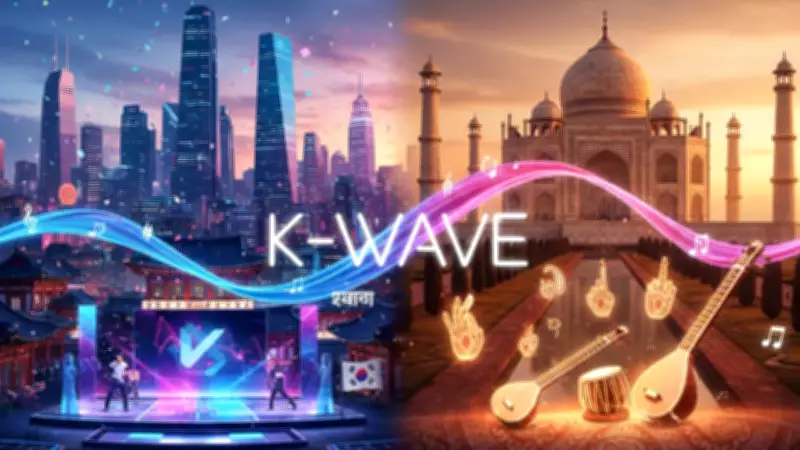
For a significant segment of India's urban youth, South Korea represents more than just a country—it has become an aesthetic, an aspiration, and a daily consumption choice. The Korean Wave, known as Hallyu, has successfully transitioned from subculture to mainstream phenomenon.
The Strategic Expansion of Soft Power
The expansion of Korean cultural influence is neither accidental nor organic. It exists at the precise intersection of culture, commerce, and deliberate state policy. For India, South Korea's rising soft power presents both a compelling example of successful cultural diplomacy and a revealing case study in how global influence now travels—primarily through screens, social media platforms, and aspirational content.
The concept of soft power, coined by American political scientist Joseph Nye Jr. in the 1980s, refers to a country's ability to shape the preferences of others through attraction rather than coercion. Unlike hard power—which relies on military strength or economic sanctions—soft power operates through cultural appeal, political values, and foreign policy credibility.
Much of this influence originates far from government offices. Schools, charitable organizations, religious institutions, and community programs all contribute to shaping how a country is perceived internationally. Music, sports, films, and major industries like Silicon Valley or Hollywood amplify this effect exponentially. These cultural exports don't merely entertain or innovate; they communicate powerful messages about ways of life, national values, and societal priorities.
Government Involvement in Cultural Diplomacy
This doesn't mean governments remain passive observers. Many nations actively cultivate soft power as an integral component of their international diplomatic strategies. The Cold War provides a vivid historical example, with both the United States and Soviet Union employing cultural festivals, sports competitions, films, and educational exchanges to showcase their societies as models worthy of admiration.
In South Korea's case, soft power evolved from economic strategy to sophisticated diplomatic instrument. Emerging from the devastation of the Korean War, the country transformed itself within decades into a major global economy and thriving democracy. Its 1996 entry into the OECD marked a significant milestone, and today South Korea ranks among the world's largest economies.

Global brands like Samsung and Hyundai established its industrial reputation, but from the late 1990s onward, successive governments recognized cultural industries as strategic national assets. Laws were enacted to protect domestic film markets, budgets for cultural exports were substantially increased, and dedicated departments for Hallyu were created within the Ministry of Culture, Sports and Tourism.
Measurable Results of Cultural Strategy
Research published in the Journal of Indo-Pacific Affairs notes that this policy shift coincided with a strategic move from export-led economic strategy to comprehensive national branding. Under successive administrations, culture became an integral component of public diplomacy.
The results have been both remarkable and measurable. In 2021, members of the global phenomenon BTS addressed the United Nations General Assembly on Sustainable Development Goals. Blackpink has participated in climate advocacy initiatives linked to major global forums. Cultural icons have been strategically positioned as international messengers.
According to Guinness World Records, BTS has set multiple global records in music and social media engagement. Spotify data reveals exponential growth in K-pop streaming worldwide since 2018. The global success of the film Parasite—which won four Academy Awards including Best Picture—and Netflix's Squid Game, which became one of the platform's most-watched series, further cemented South Korea's cultural footprint.
Cultural Hegemony and India's Position
The concept of cultural hegemony refers to the dominance of one culture's narratives and values over others, often achieved subtly through media and consumption patterns. For decades, Western—particularly American—culture occupied this dominant global position.
India has experienced this influence firsthand. English-language music, Hollywood films, and Western fashion have significantly shaped urban consumption patterns. Simultaneously, India has exported its own cultural products globally. Bollywood cinema enjoys substantial audiences across West Asia and Africa, yoga has achieved global institutional recognition, and Indian cuisine and festivals travel extensively with the diaspora.
Professor Mayukh Lahiri of the University of Calcutta argues that while Korean culture has emerged as significant soft power, it hasn't yet replaced Western dominance in India. "Korean culture has arguably emerged as a soft power, but it hasn't really escalated to the zone of 'dominance'; the expression 'dominance' is particularly applicable in majoritarian aspects and Korean culture hasn't yet overwhelmingly replaced the Western culture," he states.
The Three Phases of Korean Wave Expansion
The Korean Wave is typically categorized into three distinct phases. The first phase (late 1990s to mid-2000s) centered on television dramas popular primarily in East Asia. The second phase witnessed the rise of K-pop groups leveraging social media and YouTube to expand into European and American markets. The third phase, from the mid-2010s onward, has been driven by OTT platforms and sophisticated global fandom ecosystems.
In India, this third phase coincided perfectly with affordable data plans and widespread smartphone penetration. Streaming platforms significantly reduced language barriers through comprehensive subtitling and dubbing options.
Kshitij Mishra, a young journalist, describes how boredom led him to discover Korean shows, with Descendants of the Sun serving as a turning point. "It completely drew me in and sparked an obsession with K-dramas and Korean culture," he explains. He particularly admires how Korean dramas "never forget their roots, yet they don't let tradition hold them back from embracing and exploring modernity."
The Cultural Engine: K-pop and K-drama
At the center of the Korean Wave stand two powerful cultural industries: K-pop and K-drama. K-pop's remarkable rise from regional genre to global phenomenon has been defined by meticulous training systems, synchronized choreography, and sophisticated fan engagement strategies.
Groups like Blackpink and BTS have topped international charts, broken streaming records, and cultivated vast digital fandoms that mobilize effectively across multiple platforms. Social media has enabled fans in India to participate actively in global comeback events, streaming campaigns, and virtual concerts in real time.
K-dramas, meanwhile, offer tightly written narratives typically limited to 16–20 episodes—a format that contrasts sharply with the long-running serial structure of Indian television. Series such as Crash Landing on You and Goblin have attracted substantial Indian viewership with their distinctive blend of romance, melodrama, and social commentary.
Beyond Entertainment: Lifestyle and Consumption
The cultural spillover extends far beyond entertainment into lifestyle and consumption patterns. Multi-step skincare routines, glass-skin aesthetics, and minimalist fashion are marketed aggressively in Indian metropolitan areas. Domestic brands increasingly employ Korean terminology to signal trend alignment and modernity.
Food represents another significant vector of cultural influence. Korean restaurants have multiplied across metropolitan cities, while ramen brands have become widely available through e-commerce platforms. What distinguishes Hallyu is its comprehensive ecosystem effect: music drives interest in dramas, dramas influence food and fashion preferences, and dedicated fandom communities sustain continuous engagement.
The Dark Side: Pressure and Perfection
The global polish of K-pop and K-drama often conceals an industry built on intense competition, rigid hierarchies, and relentless scrutiny. Entry barriers remain exceptionally high, with only a small fraction of trainees achieving successful debuts. Performance standards are exacting and demanding.
Behind the synchronized choreography and cinematic storytelling lies a system that has drawn increasing criticism both within South Korea and internationally. Observers have repeatedly raised concerns about mental health pressures within the entertainment industry, citing strict contracts, intense public scrutiny, and persistent online harassment as significant contributing factors.
High-profile celebrity suicides in recent years have prompted serious debate within South Korea about industry reform and improved support systems. Virochini Shandil, an MBA student, articulates this concern clearly: "Amid the all starry and glorious facade, one thing that immediately comes to mind thinking of Korea is 'no free will.' In the North there is dictatorship so you can't expect anything, but in the South the way they have made the system twisted, with contracts, obligations, fandom, stardom that an artist or media face just can't even have a private life."
Social Impact and Beauty Standards
The aspirational lifestyle promoted through K-pop and K-dramas—featuring flawless skin, coordinated fashion, and disciplined bodies—can create substantial pressure among young audiences. Professor Lahiri specifically warns of "peer pressure" and risks of "compulsive buying/consumption."
The aesthetic standards projected through Korean media—pale skin, slim figures, symmetrical features—have created ripple effects across Asia and beyond. South Korea maintains one of the world's highest rates of cosmetic procedures per capita, a statistic often linked to competitive beauty norms.
As K-beauty and K-fashion spread globally, these standards travel with them. In India, where colourism already shapes beauty hierarchies, the promotion of "glass skin" and flawless complexions can reinforce narrow, often unattainable ideals. Young fans may internalize these expectations, potentially blurring the line between cultural admiration and harmful self-criticism.
Adaptation Versus Displacement
Does this growing popularity threaten local Indian industries? A Media, Culture and Fashion Professor at Delhi University believes Indian industries demonstrate remarkable adaptability rather than retreat. "Indians are very adaptable and would hardly lose out to Korean culture because Indians have time and again jumped into the mainstream and reshaped themselves with time," she observes.
Many Indian brands, she notes, strategically sell domestic products under Korean-sounding labels to capitalize on current trends. Professor Lahiri observes that mediated global cultures have long overshadowed folk traditions, suggesting that Korean influence may intensify this existing dynamic but represents part of a larger globalization process rather than a singular cultural takeover.
Geopolitical Realities and Cultural Influence
South Korea's soft power has undoubtedly enhanced its global image, but it cannot replace hard power realities. Surrounded by China, Japan, and Russia, and maintaining a crucial alliance with the United States, Seoul operates within a complex geopolitical environment. North Korea's nuclear program remains a central security concern that cultural influence cannot resolve.
Analysts such as Chung Min Lee argue that while soft power cannot resolve fundamental geopolitical tensions, it can expand diplomatic space and create opportunities for engagement. South Korea's leadership in digital technology, development cooperation, and human rights advocacy could potentially complement its cultural influence effectively.
From Trend to Template: Lessons for India
South Korea's cultural ascent illustrates how middle powers can leverage creativity, technology, and coordinated policy to amplify international influence. It demonstrates the powerful convergence of economic growth, democratic consolidation, and digital innovation.
For Indian audiences, the Korean Wave represents less about cultural displacement and more about welcome diversification. Bollywood and cricket continue to dominate domestic cultural conversations, but Seoul now shares significant space in the cultural imagination of millions.
Soft power travels primarily through digital bandwidth today. A dance challenge can move from Seoul to Jaipur within hours. A drama released on an OTT platform can trend in Mumbai overnight. Influence no longer depends fundamentally on geographical proximity.
The future of the Korean Wave in India will likely depend on continued digital access, evolving consumer tastes, and the ability of both countries to engage beyond entertainment—in technology, education, and policy collaboration. While soft power has clear limits and cannot erase geopolitical fault lines, it can build valuable familiarity, open new markets, and create narratives of international partnership.
From Gangnam Style to Squid Game, from ramen shelves to UN podiums, South Korea's remarkable rise as a cultural power reflects a broader shift in global influence—one where attraction, rather than coercion, increasingly shapes international conversations and connections.