Ladakh's Textile Heritage Illuminated in Delhi Exhibition
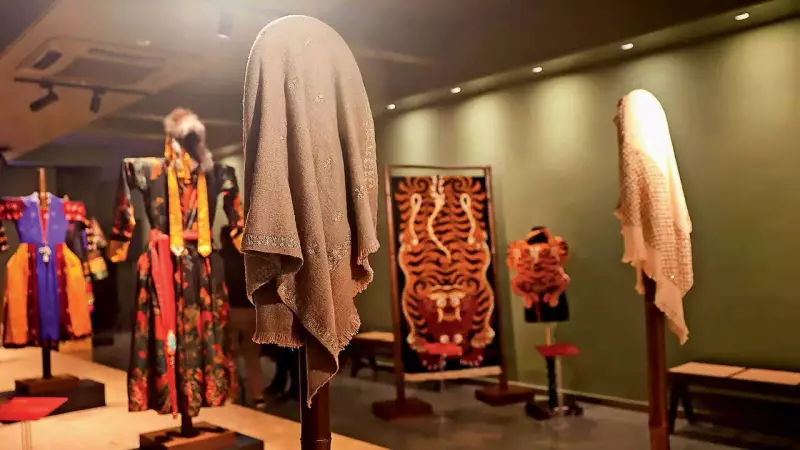
The vibrant colours, intricate textures, and rich traditions of Ladakh have journeyed far beyond the Himalayan mountains to captivate audiences in the national capital. A groundbreaking exhibition titled Between Wind And Wool: Ladakh Design Today is currently on display at the Innovation Gallery within the National Crafts Museum & Hastakala Academy in Delhi. This showcase presents a compelling exploration of Ladakhi textiles through a contemporary lens, offering visitors a unique perspective on the region's design evolution.
Official Inauguration and Curatorial Vision
The exhibition was formally inaugurated with distinguished guests in attendance. Ladakh Lieutenant Governor Kavinder Gupta served as the chief guest for the event, while Amrit Raj, Development Commissioner (Handicrafts), joined as the guest of honour. The curation has been masterfully handled by Sunil Sethi, Chairman of FDCI, supported by his dedicated team. This exhibition forms part of the Innovation Gallery housed within Textile Gallery II: Tradition & Innovation – a platform specifically dedicated to contemporary interpretations of India's diverse craft traditions.
Designers Redefining Ladakhi Textile Traditions
The exhibition prominently features works by several talented designers from Ladakh who are reimagining their heritage for modern audiences. The participating designers include:

- Padma Saldon
- Jigmat Norbu
- Jigmat Wangmo
- Padma Yangchan
- Stanzin Palmo
These creators are working primarily with wool and pashmina, which form the foundational materials of Ladakh's textile culture. Their innovative approaches demonstrate how traditional crafts can evolve while maintaining cultural authenticity.
Padma Saldon's Cultural Synthesis
Designer Padma Saldon describes her exhibited work as resembling a mood board that captures the essence of Ladakhi culture. "It represents the amalgamation of different Ladakhi cultures," she explains. "Starting with the silhouette, which remains authentic, I have incorporated colours inspired by Ladakh's monasteries and motifs that serve as auspicious symbols in our ceremonies."
She specifically highlights the inclusion of the bok, a traditional cloak worn during ceremonies, as a key element. "I have tried to pick up different elements from various parts of Ladakh and combine them together to represent this piece," Saldon adds. Her work aims to shift focus beyond Ladakh's famous landscapes toward its textile heritage. "Ladakh has so much to offer other than the landscape, which is beautiful, but I am trying to shine a light on textiles. Since it is a travel destination, people see locals wearing traditional dress, but as a designer, I try to promote it more intentionally."
Stanzin Palmo's Innovative Pashmina Approach
Designer Stanzin Palmo is undertaking a significant redefinition of Ladakhi pashmina by emphasizing its authentic texture and craftsmanship. Her displayed pieces utilize local sheep wool and pashmina shawls that are notably thicker than conventional varieties, featuring handspun, hand-woven construction with hand embroidery.
"Usually, Ladakhi pashminas are not embroidered in plain form," Palmo notes. "I wanted to introduce innovation since embroidery is traditionally absent from Ladakhi pashminas. To achieve this, I collaborated with Kolkata artisans, incorporating pitta and zari work to combine craft traditions from two distinct regions."
Her exclusive pashmina shawl collection serves an educational purpose, challenging common misconceptions. "This collection aims to educate people that pashmina is not supposed to pass through a ring, and it requires proper lab testing. Not all pashmina is meant to be thin. I wanted to convey that this thicker, embroidered version also represents authentic Ladakhi pashmina," she emphasizes.

Celebrating Craft Evolution and Regional Identity
The Between Wind And Wool exhibition represents more than just a display of textiles; it signifies a dynamic conversation between tradition and innovation. By bringing contemporary Ladakhi design to Delhi, the showcase enables broader recognition of the region's artistic contributions beyond its geographical boundaries. The exhibition successfully demonstrates how traditional materials like wool and pashmina can be transformed through creative vision while maintaining cultural integrity.
Through the works of designers like Padma Saldon and Stanzin Palmo, visitors gain insight into Ladakh's multifaceted identity – one that encompasses not only breathtaking landscapes but also sophisticated textile traditions that continue to evolve. The exhibition stands as a testament to the resilience and adaptability of India's craft heritage in the modern era.