The Accidental Discovery That Changed Archaeology
In the quiet French countryside near Montignac in 1940, an ordinary day turned extraordinary when 18-year-old Marcel Ravidat followed his dog, Robot, into a mysterious hole near a fallen tree. What he found inside would become one of the most significant archaeological discoveries of the entire 20th century.
The Initial Discovery
The forested hills above Montignac gave no indication of the treasure hidden beneath. The slope appeared completely ordinary, and the entrance—once concealed by a tree—was barely noticeable. For thousands of years, the cave remained perfectly sealed until Marcel and his curious canine companion stumbled upon it.
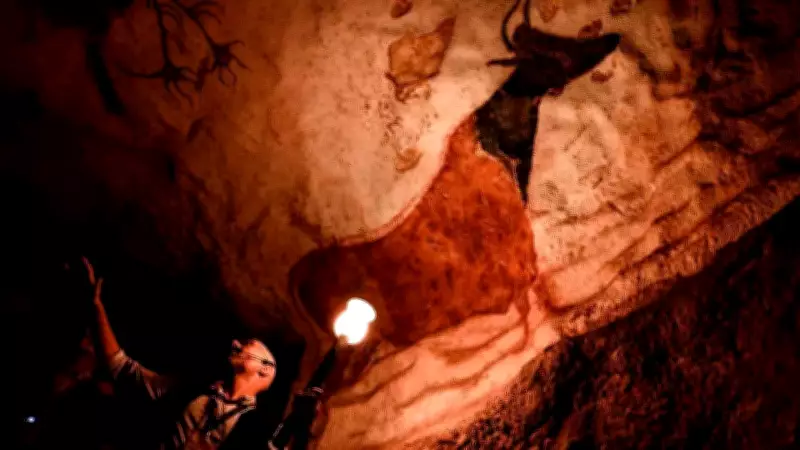
Inside, Marcel discovered walls covered in breathtaking paintings, some stretching over six feet in length. These ancient artworks depicted various animals in dynamic motion, preserved in remarkable condition despite their incredible age.

The Return With Friends
On September 12, 1940, Marcel returned to the site with three friends: Jacques Marsal, Georges Agnel, and Simon Coencas. Together, the four teenagers widened the hole and ventured deeper into the cave system. They found multiple chambers filled with wall paintings that had remained untouched for millennia.
The boys immediately recognized the importance of their discovery and contacted Léon Laval, a local teacher and amateur prehistorian. Laval visited the cave and identified the images as prehistoric. He then contacted Henri Breuil, a prominent French archaeologist, who confirmed the cave's extraordinary significance just two days later.
The Magnitude of Lascaux Cave
The Lascaux cave contains an astonishing collection of over 2,000 images and approximately 6,000 figures painted or engraved across nine distinct sections. Key areas include The Hall of the Bulls, The Nave, and The Shaft, each containing remarkable artwork.
Archaeologists attribute these creations to the Magdalenian culture, dating them between 17,000 and 19,000 years ago. The paintings feature:
- Horses in various poses
- Aurochs (ancient wild cattle)
- Deer and ibex
- Felines and other predators
- Various symbolic shapes and patterns
Artists used natural pigments including red ochre, hematite, charcoal, and manganese oxide to create these masterpieces. Some figures measure more than six feet in length, suggesting that prehistoric artists likely used scaffolding to reach ceilings and employed firelight or oil lamps for illumination.
From Public Access to Preservation Challenges
Initial Public Opening
Lascaux opened to the public in 1948, quickly becoming a major tourist attraction with visitor numbers exceeding 1,200 people per day. However, this popularity came at a cost. Changes in temperature, humidity, and carbon dioxide levels began affecting the delicate cave environment.
Conservation Crisis
The French government made the difficult decision to close the cave to the public in 1963 after green algae appeared on the walls. The conservation challenges continued in 2001 when a Fusarium fungus spread during air-conditioning maintenance. Conservationists used fungicides and Polymexin to control the growth, but access remains strictly limited to researchers and conservation staff.
Modern Replicas and Digital Access
To allow public viewing while protecting the original, several replicas have been created:
- Lascaux II opened in 1983, recreating major sections of the cave
- Lascaux III became a traveling exhibition
- Lascaux IV opened in 2016 at the Centre International de l'Art Pariétal, featuring 3D reconstructions and spatial sound
The French Ministry of Culture also offers a comprehensive digital tour of all nine galleries, providing remote access without compromising conservation efforts.
The Enduring Mystery of Prehistoric Art
The purpose of these ancient paintings remains a subject of ongoing debate among researchers. Several theories have emerged:

- Ritual or ceremonial purposes
- Symbolic communication
- Spiritual or religious significance
Some figures, particularly the "birdman" depicted near a wounded bison, strongly suggest ceremonial use. Many images are located deep within the cave, requiring artificial lighting and constructed pathways to access, indicating these were not casual creations.
Despite decades of study, interpretations remain speculative. What is certain is that Lascaux preserves a unique and invaluable record of prehistoric life and artistic expression—a window into humanity's distant past that continues to fascinate and inspire.