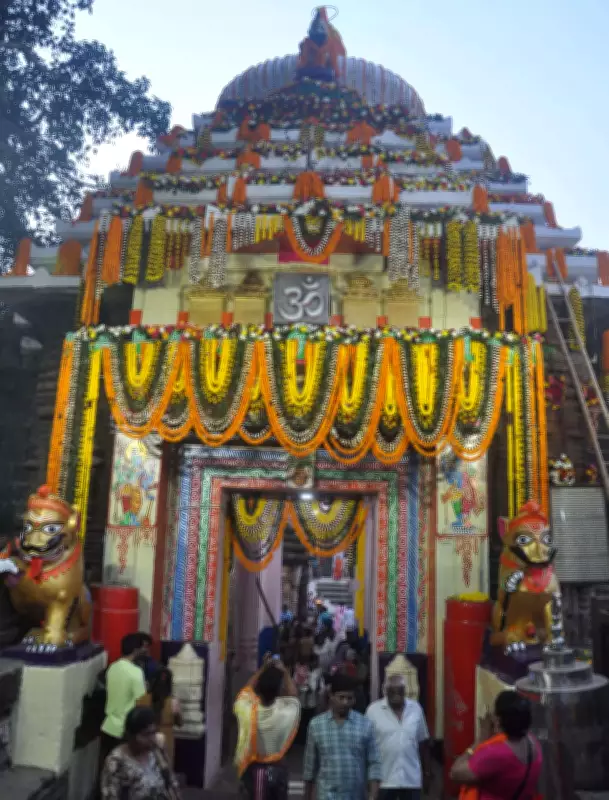
Lingaraj Temple Unveils Comprehensive Crowd Control Strategy for Maha Shivaratri Celebrations
In anticipation of lakhs of devotees converging at the historic Lingaraj Temple in Bhubaneswar this Sunday for the Maha Shivaratri festival, temple authorities have meticulously crafted an extensive crowd management blueprint. This plan is specifically designed to guarantee seamless movement and enhanced safety within the confines of the revered 11th-century shrine.
One-Way Movement System Implemented to Prevent Chaos
Under the newly instituted arrangements, all devotees will be permitted to enter the temple complex exclusively through the Lions’ Gate, which serves as the primary entrance. Following their prayers at the sanctum sanctorum, worshippers must exit via the Dakshina Dwara, commonly known as the south gate. This establishes a strict one-way circulation pattern across the temple premises, aimed at eliminating congestion and streamlining the flow of pilgrims.
This revised procedural framework has been introduced directly in response to last year's unfortunate incident, where several devotees sustained injuries due to severe overcrowding near the south gate. Previously, both pass holders and non-pass holders were allowed to utilize the same gate for both entry and exit, resulting in significant disorder and safety hazards. To avert any recurrence, authorities have now decisively prohibited entry through any gate other than the designated Lions’ Gate.

QR-Coded Passes and Limited Access for Enhanced Security
Ekamra-Bhubaneswar MLA Babu Singh provided detailed insights into the security enhancements. He confirmed that the number of special passes granting entry into the sanctum sanctorum during the festival has been strictly limited to 1,500 for this year. These passes will be allocated to devotees, VIPs, servitors, and other essential stakeholders.
"All passes have been integrated with QR code technology and are designed to be scanned only a single time," Singh emphasized. "The implementation of QR codes will effectively prevent any unauthorized reuse or duplication of passes, thereby ensuring tighter access control."
Furthermore, Singh added that only a specifically authorized and necessary number of servitors will be allowed to ascend the shrine to perform the crucial ritual of placing the ‘Mahadeepa’. This ceremonial act marks the grand culmination of the Maha Shivaratri festivities.
High-Level Review and Government Oversight for Rituals
Earlier this week, Chief Minister Mohan Charan Majhi personally reviewed the comprehensive preparations for Maha Shivaratri at the Lingaraj Temple. During the review, he strongly urged all servitors to rigorously adhere to the predetermined schedule established for the lifting and placement of the Mahadeepa.
This year, the ritual of positioning the Mahadeepa atop the shrine is officially scheduled for 10 pm. To ensure meticulous execution, the government has constituted a special monitoring team tasked with overseeing the proper implementation of all associated rituals. Devotees have also been earnestly requested to refrain from carrying flowers and ‘prasad’ in single-use plastic bags, promoting environmental consciousness during the celebrations.
Multi-Agency Coordination for Traffic and Amenities
To effectively manage the enormous expected footfall, a coordinated effort involving the commissionerate police, the Bhubaneswar Municipal Corporation (BMC), and the temple administration has been mobilized. Elaborate arrangements have been put in place, including regulated vehicular movement towards the temple at key strategic points.
Additionally, eleven dedicated parking spaces have been clearly earmarked around the temple's periphery to accommodate vehicles. A substantial force of forty-three platoons of police personnel will be deployed to ensure smooth traffic flow and orderly darshan for all devotees. Concurrently, the BMC will oversee critical amenities such as reliable drinking water supply and comprehensive sanitation measures throughout the event.

Maha Shivaratri stands as one of the most significant annual festivals at the Lingaraj Temple, traditionally attracting a vast multitude of pilgrims from across Odisha and neighboring states. The implementation of this robust crowd management plan reflects a proactive approach to safeguarding devotees while preserving the sanctity of this major religious observance.