From Stolen Glances to Sunset Proposals: The Changing Language of Love in Lucknow
In the 1960s, uttering "I love you" was often considered taboo. Romance thrived on fleeting glances, clandestine meetings behind landmarks like Chattar Manzil, and the occasional rose or perfumed letter passed discreetly through friends or siblings. By the early 2000s, love found its voice through SMS texts, borrowed mobile phones, shared chocolates, pizza dates, and choco lava cakes that could mend almost any quarrel. Fast forward to 2024, and expressions of affection manifest as lengthy digital messages, sunset proposals on mountain peaks, orchids replacing roses, and conversations emphasizing respect and emotional availability alongside romance.
This Valentine's Day, we delve into the stories of three couples from Lucknow, spanning generations, to uncover how the language of love has evolved over the decades. From cycling to a college for a mere glimpse to secret pizza dates and photographed proposals, the formats have shifted dramatically, yet the core feelings—devotion, understanding, and mutual respect—remain steadfast.
'We Would Sit by the River Behind Chattar Manzil and Just Talk'
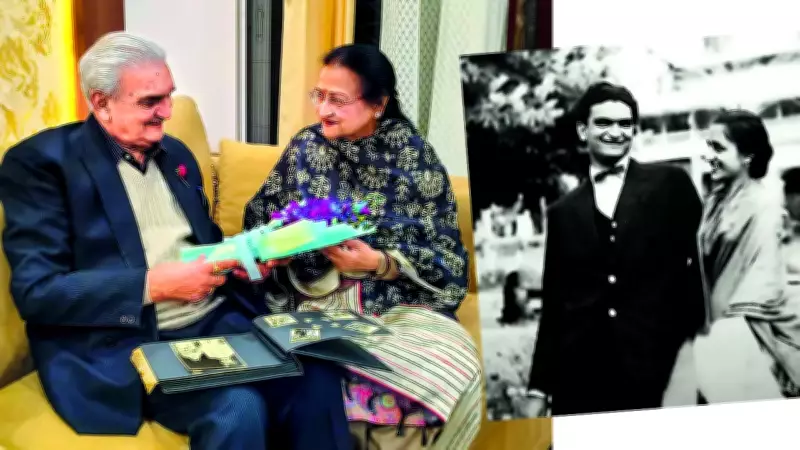
For veteran actor and Padma Shri awardee Dr. Anil Rastogi and his wife Dr. Sudha Rastogi, romance blossomed at ages 19 and 16, respectively. "We had an early arranged marriage in 1962, and love developed gradually afterward. She was 16, and I was 19 when we married, which was the socially acceptable age in those days," Rastogi recalls. "My wife was among the most beautiful girls I had ever seen. There was no concept of pre-marital meetings like today; people only saw each other briefly, without interaction."

Sudha Rastogi echoes this sentiment, reminiscing, "My mother insisted I return home before sunset, leaving no opportunity to meet Doctor sahab alone. In those times, even catching a glimpse of a loved one was a challenge!" She laughs, adding, "One of my fondest memories is cycling to Lucknow University just to see her," Dr. Rastogi shares.
Reflecting on their favorite city spots, Rastogi notes, "Honeymoons weren't common in the 1960s. After marriage, we frequently visited Shaheed Smarak or Chattar Manzil, where we'd sit and converse. When her classes ended, she'd come to my office, and we'd head home for lunch together."
Love in the 1960s was remarkably simple. Gifts typically consisted of a single rose, while friends exchanged perfumed letters delivered secretly through intermediaries. Open declarations of affection were rare or nearly absent. Dr. Anil Rastogi, part of the Silent Generation married in 1962, emphasizes, "An open expression of love was rare or almost negligible in our younger days."
When Choco Lava Cake and SMS Fixed Everything for Gen Z
For Gen Z entrepreneur Rohit Gurnani, 44, love sparked with a brief glance at a wedding in the late 1990s. He has been with Suhani Gurnani, 38, since 2002, and they will celebrate 19 years of marriage this December. Their romance unfolded during the era of SMS, handwritten letters, and borrowed phone calls.
"WhatsApp didn't exist back then. We used our fathers' or friends' mobile phones to talk. Letters played a significant role in our love life, and chocolates and pizza were central expressions of affection," Rohit explains. What he treasures most are the long, uninterrupted conversations. "We'd sit for hours during a single meeting. There was a shyness and fear of being caught that added excitement to love, common among dating couples then. Today, people focus on checklists of traits and compatibility; for us, it was purely about love, as it still is."
"A chocolate or pizza felt like a grand romantic gesture compared to today's luxury gifting. I cherish the lengthy talks Suhani and I had, without selfies or social media confessions," Rohit adds.
'Our Generation Wants Respect, Not Just Romance'
Jump to 2024. Millennials and entrepreneurs Nikita, 28, and Harshit, 29, met through a family-arranged introduction in Delhi. "I was from Delhi, and he from Lucknow. Our families connected after my father noticed him at a political event. We exchanged numbers and began communicating immediately, engaging in nearly two months of texts, calls, and video calls."

Unlike earlier generations reliant on stolen moments, Nikita and Harshit's courtship involved travel and shared experiences with parental awareness. "Harshit visited me in Delhi, and we took several trips together, all known to our parents. Ours was an open relationship, visible to everyone despite minor complexities," Nikita clarifies.
She highlights that the language of love for millennials differs significantly. "We communicate extensively via WhatsApp. My messages are concise, while Harshit's are lengthy and expressive. His expressions of love are luxurious, often involving expensive gifts," Nikita laughs.
When defining love for her generation, Nikita states, "Love today is about granting women independence and time. We refuse to settle for the bare minimum. I expect the same respect I give my partner, and effort must be mutual. Emotional availability is crucial, and we recognize that my work is as important as his. Financial independence is viewed with respect, not as a threat or arrogance."
This exploration reveals that while the methods of expressing love have transformed from the 1960s to 2024—from hidden letters to digital intimacy—the essence of devotion, understanding, and mutual respect endures across generations in Lucknow.