

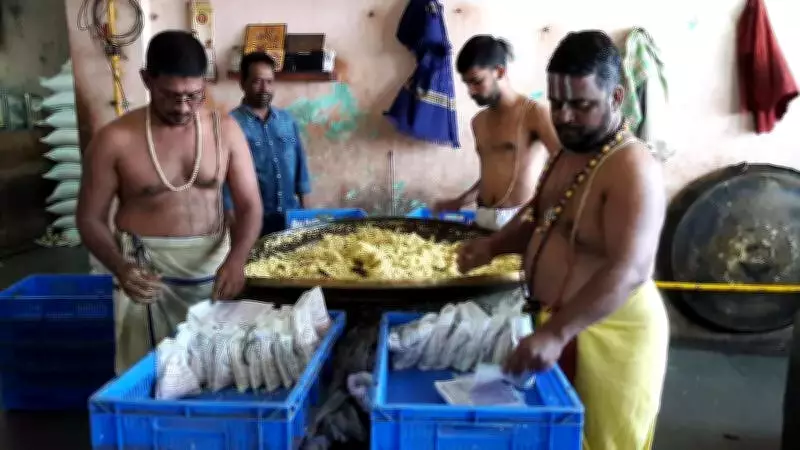
LPG Shortage Disrupts Temple Services in Hyderabad, Affecting Daily Annadanam
The ongoing LPG cylinder shortage in Hyderabad has begun to severely impact religious institutions, with temple kitchens facing operational challenges that have forced the suspension of essential community services. The iconic 200-year-old Sri Ganesh Temple in Secunderabad has temporarily halted its daily annadanam (free food distribution) and prasadam offerings due to the unavailability of cooking gas.
Temple Authorities Confirm Service Suspension Due to Gas Unavailability
Temple chairman P Prabhakar confirmed to media sources that the services have been paused for the next couple of days because of the critical shortage of gas cylinders. "We typically use around 10 cylinders every two to three days to prepare food for annadanam and prasadam distribution. With the current shortage situation, we had no alternative but to temporarily suspend these essential services," Prabhakar explained.
Every day, hundreds of devotees and community members depend on the temple for annadanam. "Approximately 100 people participate in our daily annadanam program, while about 50 more receive kichidi prasadam regularly," Prabhakar detailed. The temple also normally sells traditional prasadam items including pulihora, vada, and laddu, all of which have been temporarily discontinued due to the cooking gas crisis.

Exploring Alternative Cooking Methods to Resume Services
Temple authorities are actively investigating alternative cooking solutions to restore their community services as quickly as possible. "We are currently exploring practical alternatives such as traditional firewood stoves so we can resume cooking operations soon. However, we first need to identify a feasible and safe location within the temple premises to establish these cooking facilities," Prabhakar stated. The temple has also temporarily stopped distributing free prasadam at its counters while the shortage persists.
Major Temples Implement Contingency Plans Amid LPG Crisis
At Sri Peddamma Thalli Temple in Jubilee Hills, temple authorities are preparing comprehensive contingency plans to address the escalating gas shortage. Executive officer G Srinivas Raju revealed that the temple may need to transition to alternative cooking methods within the next three to four days if the situation doesn't improve.
"Our temple requires over 150 cylinders monthly, typically supplied by two different agencies. One supplier has already completely stopped deliveries. We are now actively exploring various options including steam cooking systems and traditional firewood methods to ensure that both annadanam and prasadam distribution continue without significant disruption," Srinivas Raju explained, noting that the temple currently has only about 10 cylinders remaining in stock.
Annadanam at Sri Peddamma Thalli Temple occurs three times weekly, serving between 1,500 to 1,800 devotees during each session. While laddu, pulihora, and vada are traditionally offered as prasadam, the menu may undergo modifications if the gas shortage continues. "Vada preparation will likely be the first item eliminated if we need to adjust our prasadam offerings. For annadanam services, we may need to reconsider including items like papad, various sweets, and certain curry preparations," Srinivas Raju elaborated.
Statewide Temple Operations Show Mixed Impact
Despite the challenges faced by Hyderabad temples, major religious institutions across Telangana state report different circumstances. Temples including Bhadrachalam, Vemulawada, Yadagirigutta, and Kaleswaram have indicated they currently maintain sufficient LPG stocks to continue annadanam and prasadam distribution without interruption. This suggests the gas shortage impact may be more localized to urban centers like Hyderabad rather than affecting religious institutions statewide.
The situation highlights how essential commodity shortages can unexpectedly affect cultural and religious practices, forcing ancient institutions to adapt traditional operations to modern logistical challenges while maintaining their community service commitments.






