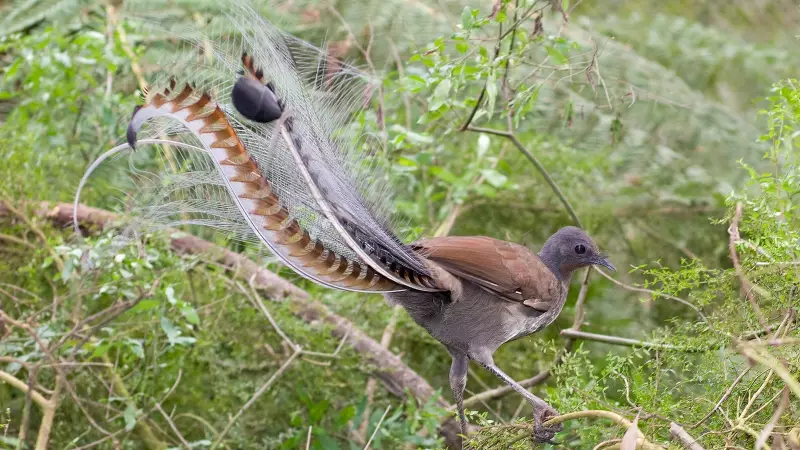
Deep within the lush Australian rainforests resides an avian virtuoso whose talent for imitation is so extraordinary it often leaves listeners utterly bewildered. This is the story of the lyrebird, a creature whose vocal prowess goes far beyond simple bird song, seamlessly replicating the mechanical and human sounds of the modern world.
More Than Just a Songbird
What truly distinguishes the lyrebird is not merely the wide range of sounds it can produce, but the stunning accuracy of its mimicry. Possessing a highly sophisticated vocal organ known as the syrinx, these birds can produce near-perfect copies of almost any sound they hear.
Their repertoire is astonishingly diverse, including the calls of other forest inhabitants like kookaburras and cockatoos. Yet, their talent extends to human-made noises, from the jarring roar of chainsaws and the click of camera shutters to the blare of car alarms, the distinct ring of mobile phones, and even the convincing cry of a human baby.

A Mesmerizing Courtship Display
The male lyrebird's mimicry skills are central to one of nature's most elaborate courtship rituals. During the breeding season, he performs a complex show, combining his vast library of sounds with a captivating dance.
As part of this display, he dramatically arches his magnificent, lyre-shaped tail feathers over his head. This carefully choreographed performance is designed to attract females and establish dominance over rival males. In the world of the lyrebird, being a master vocalist directly translates to mating success.
Fascinatingly, some lyrebirds mimic bird calls they have never personally encountered, a skill believed to be inherited from their ancestors. A prime example exists in Tasmania, where local lyrebirds sing calls of bird species that are now only found on the Australian mainland.
Habitat and Conservation Concerns
These remarkable birds primarily inhabit the dense rainforests and eucalyptus woodlands of southeastern Australia, with some populations also located in Tasmania. There are two known species: the more common superb lyrebird (Menura novaehollandiae) and the rarer Albert's lyrebird (Menura alberti), which was named in honour of Prince Albert.
While the superb lyrebird has a relatively broad range, Albert's lyrebird, with its more subdued plumage, is confined to a small pocket of subtropical rainforest in Queensland. This limited distribution makes it a species of conservation interest.
Sadly, both species face significant pressure from habitat destruction. Though not currently classified as critically endangered, ongoing deforestation and the escalating impacts of climate change pose serious threats to their long-term survival. Conservation groups are actively advocating for the protection of their ancient habitats, emphasizing that the loss of the lyrebird would mean losing a unique and magical piece of our planet's natural heritage.
The lyrebird stands as a powerful reminder that the natural world holds complexities and wonders far beyond our everyday perception, with an ability to imitate life in all its forms.